Hail Damage Roofing: Does Insurance Cover It in Virginia?
Hail Damage Roofing: Does Insurance Cover It in Virginia?
Key Takeaways
- Homeowners insurance in Virginia typically covers hail damage roofing repairs and replacements because hail qualifies as a sudden, accidental covered event under most standard policies
- Hail damage on asphalt shingles appears as dark bruise marks, displaced granules, cracked ridge caps, and dented flashing — not all damage is visible from the ground
- Having your hail damage roofing contractor in NoVA present during the insurance adjuster inspection significantly increases the chance of full claim approval
- Class 4 impact resistant shingles cost 15 to 30 percent more upfront but can earn insurance premium discounts of 5 to 28 percent and resist future hail damage far better than standard shingles
- File your hail damage claim within 30 days of the storm and document everything — delays give insurers grounds to question whether the damage came from the reported event
Yes, homeowners insurance in Virginia typically covers hail damage to your roof. Hail is classified as a sudden, accidental event under standard homeowners policies, which means the cost of repairing or replacing your damaged roofing materials — minus your deductible — is generally covered. But "typically covered" and "smoothly paid" are two different things. The gap between filing a hail damage claim and actually getting your roof replaced at full value depends on how well you document the damage, how quickly you file, whether your hail damage roofing contractor in NoVA is involved in the adjuster inspection, and whether you know how to push back when a claim comes in lower than it should.
Northern Virginia sits in an active hail corridor that stretches from the Blue Ridge foothills through the Piedmont and into the Coastal Plain. The National Weather Service records an average of three to five significant hail events per year across the NoVA region, with hailstones ranging from pea-sized to golf ball-sized. Prince William County, Fairfax County, Loudoun County, and the surrounding areas all see regular hail activity, particularly during the spring and summer thunderstorm season from April through September. Homes along the I-95 corridor through Woodbridge, Dale City, and Lake Ridge are hit just as often as those farther west in Manassas, Centreville, and Chantilly.
This guide covers everything a Northern Virginia homeowner needs to know about hail damage and roofing: how to identify hail damage on your roof, the step-by-step insurance claim process, how to work effectively with adjusters, what Class 4 impact resistant shingles offer and whether they're worth the investment, and what to look for in hail damage roofing contractors in NoVA when it's time to get the work done. If a hailstorm just hit your neighborhood or you're planning ahead for when one does, this is the information that protects your home and your wallet.
How to Identify Hail Damage on Your Roof
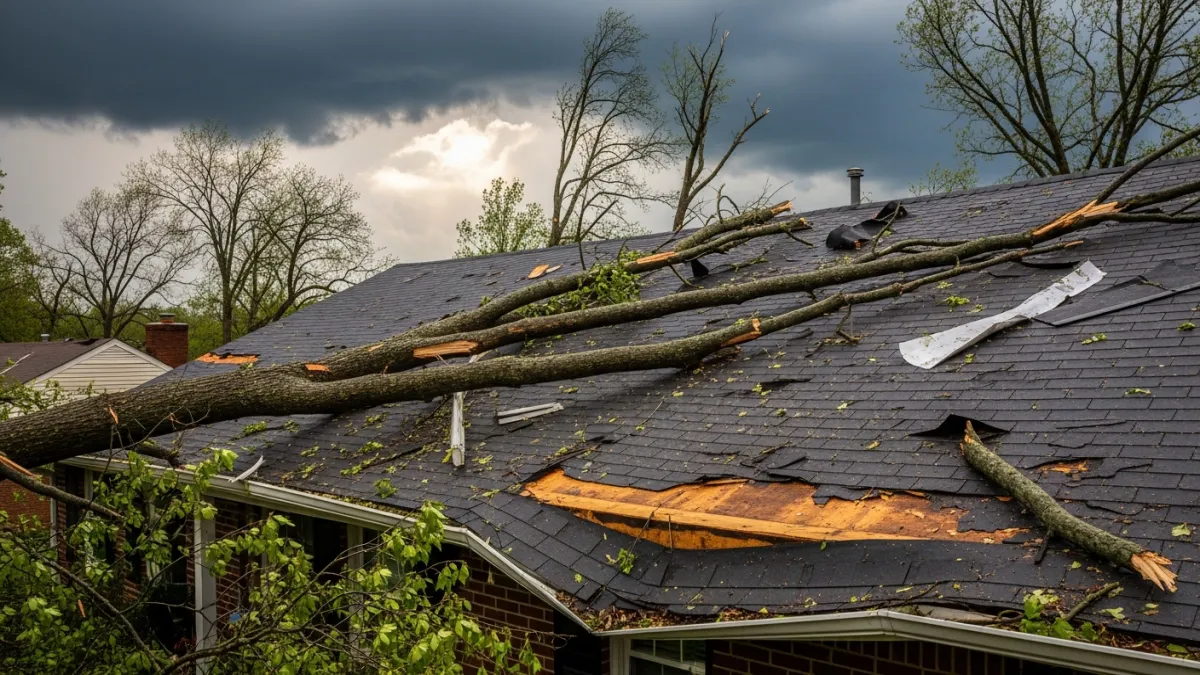
Hail damage is not always obvious from the ground. Small hailstones can leave marks that compromise the integrity of your shingles without creating visible holes or missing pieces. Understanding what to look for — and what to have a professional confirm — is the first step toward protecting your investment and filing a successful insurance claim.
Hail Damage Signs on Asphalt Shingles
On standard architectural asphalt shingles — the type installed on most Northern Virginia homes — hail damage shows up in several characteristic ways:
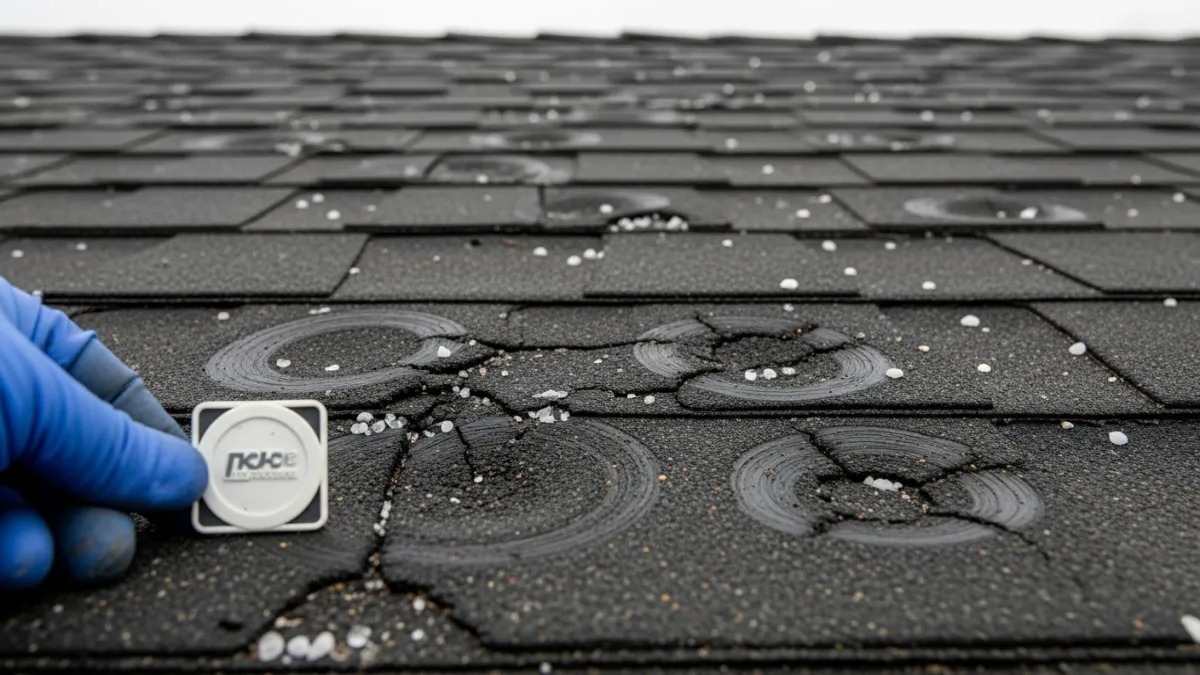
- Granule displacement: The most common indicator. Hailstones strike the shingle surface and knock loose the protective ceramic granules, exposing the black asphalt mat underneath. These marks appear as dark, circular spots scattered randomly across the roof surface. Unlike wear-related granule loss, which follows patterns along drip lines and high-traffic areas, hail damage creates an irregular, random distribution of exposed spots
- Bruising: Press your thumb into the center of a suspected impact mark. If the shingle feels soft or spongy compared to the surrounding material, the fiberglass mat beneath the granules has been fractured by the impact. This is called a bruise, and even though the shingle may still look intact on the surface, its waterproofing integrity is compromised
- Cracking: Larger hailstones, typically one inch or more in diameter, can crack shingles outright. You'll see splits or fractures radiating from the impact point, sometimes with pieces of the shingle material displaced or missing entirely
- Exposed fiberglass mat: Severe impacts strip the granule layer completely, leaving the underlying fiberglass reinforcement visible. These areas are extremely vulnerable to UV degradation and water penetration and will fail rapidly if not addressed
Hail Damage on Other Roof Components
Shingles aren't the only roof components affected by hail. A thorough inspection examines every element:
- Metal flashing: Check for dents, dimples, and deformation around chimneys, wall transitions, valleys, and pipe penetrations. Dented flashing can break its seal against the surrounding materials and create leak paths
- Gutters and downspouts: Aluminum gutters dent easily under hail impact. Look for rows of small dimples along the top edges and the faces of gutters. Severely dented gutters can affect water flow and drainage performance
- Ridge cap shingles: These sit at the highest point of the roof and take direct impacts without any slope to deflect the hailstones. Ridge caps crack and split at higher rates than field shingles during hailstorms
- Roof vents and pipe boots: Metal and plastic roof vents dent and crack under hail impact. Pipe boots — the rubber flanges around plumbing vent pipes — can be split or torn by direct hits, creating an immediate leak pathway
- Skylights: Hail can crack or chip skylight glazing, damage the frame seals, and compromise the flashing collar around the skylight perimeter
Ground-Level Indicators
Before anyone climbs on your roof, several ground-level clues can confirm that hail damage has likely occurred:
- Dented siding or window trim: If your vinyl or aluminum siding shows impact marks, your roof — which took the same hits from above — almost certainly has damage
- Dings on your car: Vehicles parked in the driveway during the storm that show dents or paint chips provide physical evidence of the hailstone size and force
- Damaged outdoor equipment: Air conditioning units, mailboxes, fence caps, and deck railings with fresh dents or cracks all corroborate the severity of the event
- Granule accumulation in gutters: Check your gutters and the splash pads at the base of your downspouts for excessive granule deposits after a hailstorm. Some granule loss is normal over time, but a sudden influx after a storm indicates impact damage across the roof surface
- Marks on painted surfaces: Freshly painted wood surfaces like window sills and fascia boards may show circular impact marks where hailstones struck
Even if you spot these indicators, a professional roof inspection by an experienced hail damage roofing contractor is essential. Not all hail damage is visible from the ground, and trained inspectors know the specific patterns, textures, and distributions that distinguish genuine hail damage from normal wear, foot traffic marks, or manufacturing defects. This distinction matters enormously when filing an insurance claim.
The Hail Damage Insurance Claim Process in Virginia
Filing a hail damage insurance claim in Virginia follows a specific sequence. Knowing each step in advance helps you avoid the mistakes that slow down or reduce claim payments. Here's how the process works from start to finish.
Step 1: Document the Storm and Initial Damage
As soon as it's safe after a hailstorm, document what you can see from the ground. Take photos and video of any visible damage to your siding, gutters, windows, outdoor equipment, and vehicles. Note the date and approximate time of the storm, the estimated size of the hailstones if you saw them, and any weather alerts or warnings issued by the National Weather Service for your area. This contemporaneous documentation establishes a clear connection between the storm event and the damage you're claiming.
Do not attempt to climb on your roof to take photos or assess damage yourself. Wet and hail-covered roof surfaces are dangerously slippery, and walking on damaged shingles can worsen the existing damage and complicate the insurance assessment. Leave the roof inspection to your contractor.
Step 2: Contact Your Insurance Company
File your claim as soon as possible — ideally within a few days of the storm. Most Virginia homeowners policies don't specify an exact filing deadline, but insurers have internal timeframes, and delays create opportunities for them to question whether the damage resulted from the reported storm or from a previous event or general wear. Filing within 30 days is a reasonable standard that most claims professionals recommend.
When you call your insurance company, provide the date of the storm, a general description of the damage you've observed, and your policy number. The company will assign a claim number and schedule an adjuster to inspect your property. Ask for the adjuster's contact information and the anticipated inspection timeline so you can coordinate your contractor's presence.
Step 3: Schedule a Professional Roof Inspection
Before the insurance adjuster arrives, have your roofing contractor perform their own independent inspection. An experienced hail damage roofing contractor in NoVA will document every area of damage with photos, measurements, and notes, then prepare a detailed scope of work and repair estimate. This documentation serves two purposes: it gives you an accurate understanding of the damage and its repair cost, and it provides professional evidence that supports your claim during the adjuster inspection.
Your contractor's inspection should cover every roof slope, all flashing points, ridge caps, vents, pipe boots, gutters, and any collateral damage to siding or trim. They should note the hail hit pattern, estimate the number of hits per test square (a 10-foot by 10-foot area), and identify the approximate hailstone size based on the diameter of the impact marks. Insurance companies use these metrics to determine the severity of the damage and the appropriate scope of the claim.
Step 4: The Insurance Adjuster Inspection
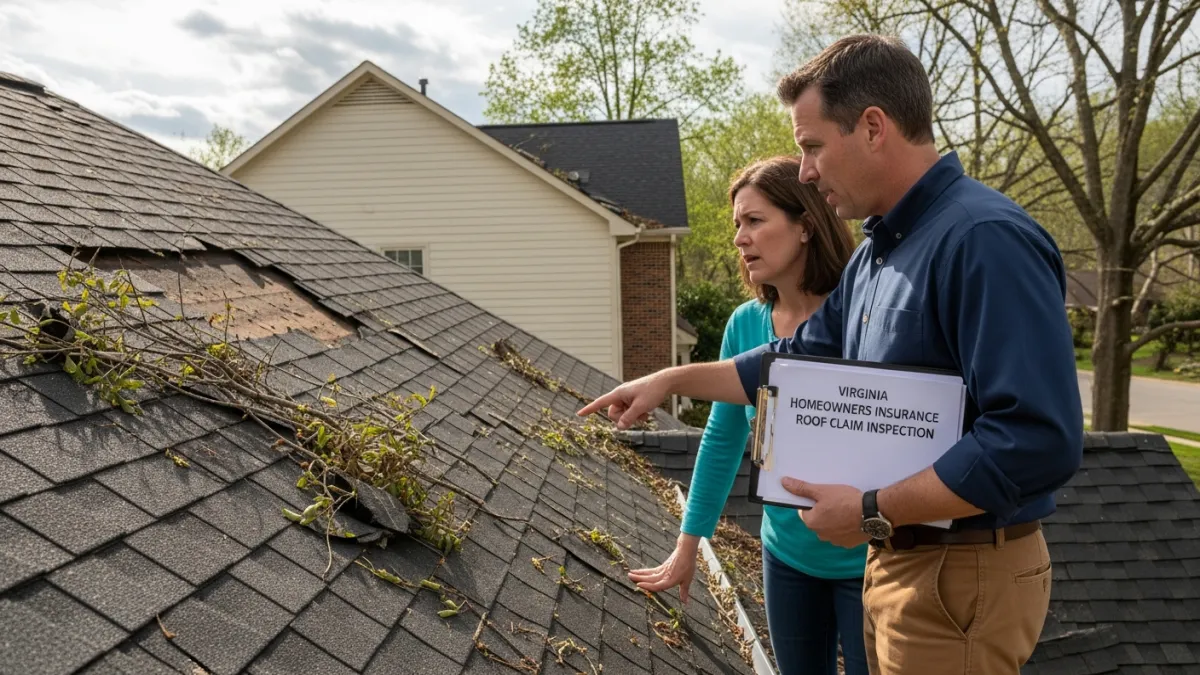
The insurance adjuster's inspection is the most critical moment in the claim process. This is when the scope and value of your claim are determined. Having your roofing contractor present during this inspection is strongly recommended — it's not adversarial, and most adjusters welcome a knowledgeable contractor who can help identify and document all damage efficiently.
During the inspection, the adjuster will examine the roof from the ground and from the roof surface, using chalk or markers to identify and count hail hits in test squares across multiple slopes. They're evaluating whether the damage meets the threshold for repair or replacement and estimating the cost using pricing software (typically Xactimate, the industry standard). Your contractor can walk the roof with the adjuster, point out damage that might be overlooked, and ensure that all affected components — not just the field shingles — are included in the scope.
Common items that adjusters miss or undercount during hail damage inspections include:
- Bruised shingles that have lost structural integrity but still have granule cover
- Damaged starter strip shingles along eave edges
- Cracked or split hip and ridge cap shingles
- Compromised pipe boot seals
- Dented or displaced flashing at wall transitions
- Damaged drip edge along eaves and rakes
- Ice-and-water shield damage in valleys where hail accumulates
Step 5: Claim Approval, Payment, and Supplements
After the inspection, your insurance company reviews the adjuster's report and issues a claim determination. If approved, you'll receive a payment for the estimated repair or replacement cost minus your deductible. On many Virginia policies, the initial payment covers the actual cash value (ACV) of the roof — the replacement cost minus depreciation. The remaining recoverable depreciation is paid after the work is completed and your contractor submits a final invoice showing the actual cost.
If the adjuster's scope doesn't cover the full extent of the damage, your contractor can submit a supplement — additional documentation and pricing for items that were missed or undervalued in the initial assessment. Supplements are a standard part of the insurance claims process and are not adversarial. They're simply a mechanism for ensuring that the claim accurately reflects the actual scope of work required. Experienced hail damage roofing contractors in NoVA submit supplements routinely and know how to document them in a format that insurance companies accept.
For a complete walkthrough of the insurance claims process, visit our roofing insurance claims page.
Working Effectively with Insurance Adjusters
The relationship between homeowners, contractors, and insurance adjusters doesn't have to be adversarial. Understanding what adjusters are looking for and how to present your claim professionally leads to faster approvals and fairer payouts. Here's how to approach the process.
Understand What the Adjuster Is Evaluating
Insurance adjusters assess hail damage against specific criteria. They're determining whether the damage is sufficient to warrant repair or replacement, whether it's consistent with the reported storm event, and what the appropriate scope and cost of the repair should be. They use standardized test square methodology — counting hail hits within a 10x10 foot area on multiple slopes of the roof. Most insurance companies consider eight or more functional hits per test square on two or more slopes as the threshold for a full replacement approval.
Adjusters also distinguish between functional damage and cosmetic damage. Functional damage compromises the waterproofing performance of the roofing material — fractured fiberglass mat, exposed asphalt substrate, cracked shingles, and displaced granules that leave the surface vulnerable to UV degradation and moisture penetration. Cosmetic damage, such as minor surface marks that don't affect performance, is often excluded from coverage under newer Virginia policies. Your contractor's expertise in identifying functional damage and distinguishing it from cosmetic marks is critical to a successful claim.
Be Present and Prepared
As the homeowner, you should be present during the adjuster inspection along with your contractor. Before the adjuster arrives, gather your documentation: photos of the storm damage taken immediately after the event, records of the weather alert or NWS hail report for your area, your contractor's inspection report and estimate, and any photos of previous roof condition if available. Being organized and responsive demonstrates that you're making a legitimate claim based on real damage, which sets a professional tone for the entire interaction.
Know Your Rights as a Virginia Policyholder
Virginia insurance regulations give homeowners specific protections during the claims process. Your insurer must acknowledge your claim within a reasonable time, conduct a prompt investigation, and provide a written explanation if they deny or reduce the claim. If you disagree with the adjuster's assessment, you have the right to request a re-inspection by a different adjuster or to invoke the appraisal process outlined in your policy. The appraisal clause allows each party to hire an independent appraiser, and if the two appraisers can't agree, an umpire makes the final determination. This process is less expensive and faster than litigation and often results in a fair resolution for the homeowner.
You also have the right to choose your own contractor. Your insurance company cannot require you to use a specific contractor from their "preferred vendor" list. While those contractors may offer convenience, choosing an independent hail damage roofing contractor who works for you — not the insurance company — ensures that someone is advocating for the full scope of your damage during the claims process.
Class 4 Impact Resistant Shingles: Protection Against Future Hail
If you're replacing your roof after hail damage — or planning a replacement before the next storm hits — Class 4 impact resistant shingles deserve serious consideration. They cost more upfront, but the combination of superior hail resistance and insurance premium savings makes them a compelling investment for Northern Virginia homeowners.
What Makes a Shingle Class 4
The UL 2218 impact resistance test classifies shingles into four classes based on the size of steel ball they can withstand without cracking or splitting. Class 1 uses a 1.25-inch ball, Class 2 uses a 1.50-inch ball, Class 3 uses a 1.75-inch ball, and Class 4 — the highest rating — uses a 2-inch steel ball dropped from 20 feet. The shingle must survive two direct hits in the same spot without fracturing to earn the Class 4 designation.
Class 4 shingles achieve this impact resistance through a modified asphalt formula that incorporates SBS (styrene-butadiene-styrene) rubber polymers. This rubberized asphalt bends and absorbs impact energy instead of cracking under stress. The result is a shingle that can withstand hailstone impacts up to approximately two inches in diameter — roughly the size of a golf ball — without sustaining functional damage.
Cost Comparison: Standard vs. Class 4 Shingles
Class 4 impact resistant shingles carry a price premium over standard architectural shingles, but the difference is smaller than many homeowners expect. Here's how the numbers compare for a typical Northern Virginia home:
| Shingle Type | Installed Cost (2,000 sq ft) | Impact Rating | Insurance Discount |
|---|---|---|---|
| Standard Architectural | $8,500 – $15,000 | None / Class 1 | None |
| Class 4 Impact Resistant | $10,000 – $18,500 | UL 2218 Class 4 | 5% – 28% premium discount |
| Premium Designer (Class 4) | $14,000 – $22,000 | UL 2218 Class 4 | 5% – 28% premium discount |
The price premium for upgrading from standard architectural to Class 4 impact resistant shingles is typically $1,500 to $3,500 on a standard Northern Virginia home. That's the incremental cost — you're paying for the material upgrade only, since the labor, tear-off, underlayment, flashing, and other components remain the same regardless of the shingle type you choose.
Insurance Premium Discounts for Class 4 Shingles
Many Virginia insurance companies offer premium discounts for homes with Class 4 impact resistant shingles. The discount varies by carrier but typically ranges from 5 to 28 percent of the wind and hail portion of your premium. On a typical Northern Virginia homeowners policy with an annual premium of $1,500 to $2,500, that discount can translate to $75 to $500 per year in savings. Over the 25 to 30 year lifespan of the roof, the cumulative savings often exceed the upfront cost premium several times over.
To qualify for the discount, you'll need to provide your insurance company with documentation showing the specific shingle product installed, its UL 2218 Class 4 certification, and typically a copy of the contractor's invoice or completion certificate. Your roofing materials supplier and contractor can provide this documentation as part of the project closeout.
The Payback Calculation
Here's a realistic payback scenario for a Woodbridge homeowner. Assume the Class 4 upgrade adds $2,500 to your roof replacement cost, and your insurance company offers a 15 percent discount on the wind and hail portion of your $2,000 annual premium. If the wind/hail component represents roughly half of your total premium, the annual savings is approximately $150. At that rate, the upgrade pays for itself in roughly 17 years — well within the shingle's lifespan. If you factor in the avoided cost of a future hail damage claim (deductible payments, temporary repairs, hassle, and potential premium increases after a claim), the payback period is significantly shorter. And if your insurance company offers a higher discount — some Virginia carriers offer up to 28 percent — the payback can occur in as few as three to six years.
Cost of Hail Damage Roof Repair and Replacement in Northern Virginia
The cost of addressing hail damage depends on the severity of the damage and whether repair or full replacement is warranted. Northern Virginia prices run 15 to 25 percent above national averages due to higher labor rates, material logistics costs, and permitting requirements in Prince William County, Fairfax County, and surrounding jurisdictions.
| Service / Item | Low End | High End | Notes |
|---|---|---|---|
| Localized shingle repair (per area) | $350 | $1,200 | 1–2 slopes, isolated damage |
| Multi-area shingle repair | $1,200 | $3,500 | Multiple slopes, flashing included |
| Full replacement — standard architectural (2,000 sq ft) | $8,500 | $15,000 | Material + labor, NoVA market |
| Full replacement — Class 4 impact resistant (2,000 sq ft) | $10,000 | $18,500 | Upgrade adds $1,500–$3,500 |
| Full replacement — standing seam metal (2,000 sq ft) | $16,000 | $22,000 | Inherently hail resistant |
| Gutter replacement (hail damaged) | $1,200 | $3,000 | Often included in insurance claim |
| Pipe boot and vent replacement | $75 | $250 | Per unit, included in full replacement |
| Emergency tarp (active leak after hail) | $250 | $750 | Temporary, usually reimbursable |
| Typical homeowner deductible | $1,000 | $2,500 | Your out-of-pocket on approved claim |
Factors That Affect Your Hail Damage Repair Cost
Several variables determine where your project falls within these ranges:
- Severity and distribution: Isolated damage to one or two slopes can be repaired. Widespread damage across the entire roof surface warrants full replacement
- Roof size and complexity: Larger homes with dormers, valleys, and multiple penetrations cost more to repair or replace. A 3,000 square foot home costs proportionally more than a 1,500 square foot ranch
- Material selection: Upgrading to Class 4 impact resistant shingles during an insurance-funded replacement adds $1,500 to $3,500 to the project cost but may be partially or fully covered if your contractor justifies it in the claim scope
- Existing roof condition: If your roof had pre-existing damage or was near the end of its lifespan, the insurer may apply depreciation more aggressively, reducing the initial payout
- Decking damage: Severe hail events that drive moisture through compromised shingles over time can cause decking deterioration. Replacing damaged decking panels adds $75 to $150 per sheet
- Supplemental items: Damaged siding, window screens, HVAC unit covers, and other collateral damage can often be included in the same hail claim
Prices shown are typical ranges for Northern Virginia as of 2025 and vary based on home size, material grade, site access, and current material costs. Contact us for a free on-site estimate.
What to Look for in Hail Damage Roofing Contractors in NoVA
Not every roofing contractor has the specific experience needed to handle hail damage claims effectively. The contractor who does your aunt's routine re-roof may be excellent at installation but inexperienced with the insurance claim process that makes hail damage projects fundamentally different from standard replacements. Here's what separates qualified hail damage roofing contractors in NoVA from the rest.
Insurance Claim Experience
Your contractor should have a documented track record of handling hail damage insurance claims in Northern Virginia. Ask how many hail damage claims they've worked in the past two years, whether they attend adjuster inspections, and whether they handle supplement submissions when the initial claim comes in short. A contractor who says "just file the claim and call me when it's approved" is not the right choice — you need someone who is actively involved in every step of the claims process.
Virginia DPOR Licensing and Insurance
This applies to every roofing project, but it's especially critical after a hailstorm when storm chasers flood the area. After a major hail event in Northern Virginia, out-of-state contractors show up within days, knocking on doors and offering to handle insurance claims. Many of these contractors are not licensed in Virginia, don't carry adequate insurance, and will be gone long before any warranty issues surface. Verify your contractor holds a current Virginia DPOR contractor license and carries both general liability and workers compensation coverage. Check both directly — don't just accept a copy of a document.
Local Presence and Reputation
Choose a contractor who operates in Northern Virginia year-round, not one who appeared after the storm. A local contractor has an established reputation in the community, relies on referrals from satisfied homeowners in Woodbridge, Dale City, Lake Ridge, Manassas, and surrounding areas, and will be accessible years from now if a warranty issue arises. Ask for references from recent hail damage projects in your area, and check online reviews for patterns of responsiveness and quality.
Red Flags to Avoid
Protect yourself from predatory practices that are common in the storm damage industry:
- Signing an AOB (Assignment of Benefits): Some contractors ask you to sign over your insurance claim rights. This transfers control of your claim to the contractor and can leave you with no leverage if disputes arise. In Virginia, you should maintain control of your own claim
- "Free roof" promises: No legitimate contractor guarantees a free roof. Insurance covers the damage minus your deductible. A contractor who promises to waive or cover your deductible is offering something that most insurance policies prohibit
- Pressure to sign immediately: A contractor who insists you sign a contract before the adjuster has even inspected the roof is prioritizing their pipeline over your interests. You have time to evaluate your options
- No written estimate: Any contractor who won't provide a detailed written scope and estimate before work begins is not someone you should trust with your roof or your insurance claim
- Out-of-state plates on the truck: Not a guarantee of a bad contractor, but a strong indicator that they're chasing storms rather than serving the community. Ask where their permanent office is located
Hail Damage Prevention and Maintenance
While you can't control the weather, you can take steps to minimize hail damage risk and ensure your roof is in the best possible condition when a storm hits.
- Schedule annual roof inspections. An experienced contractor can identify and address vulnerabilities — loose flashing, aging pipe boots, deteriorating ridge caps — before a hailstorm turns a minor weakness into a major leak
- Maintain your gutters. Clogged gutters that overflow during heavy rain send water under shingle edges and behind fascia boards. After a hailstorm, clean gutters drain the additional water load away from your foundation and prevent secondary damage
- Trim overhanging branches. Tree limbs within five feet of your roof increase the risk of impact damage during storms when wind-driven hail and falling branches combine. Keeping trees trimmed also improves air circulation, which helps shingles dry faster after storms
- Upgrade to Class 4 shingles during your next replacement. If your current roof is approaching the end of its lifespan, planning the replacement with impact resistant materials gives you the dual benefit of a new roof and significantly reduced hail damage risk going forward
- Document your roof's condition annually. Photos of your roof in good condition taken before a storm event provide powerful evidence during insurance claims. They establish a clear "before" baseline that makes it easy to demonstrate what the storm changed
For a deeper look at what to do after storm damage, read our guide on storm damage roof repair in Woodbridge VA.
Hail Damage? Get a Free Roof Inspection
Don't wait for a small problem to become a big one. Woodbridge Roofers inspects your roof for hail damage, documents everything for your insurance claim, and walks you through every step of the process. Call us at (571) 570-7930 or schedule online.
Schedule Free ConsultationFrequently Asked Questions
Related Articles
- Storm Damage Roof Repair in Woodbridge VA
- Homeowners Insurance and Roof Replacement in Virginia
- The Roof Replacement Process in Woodbridge VA
Conclusion
Hail damage to your roof is stressful, but it doesn't have to be financially devastating. Virginia homeowners insurance covers hail damage in most cases, and with the right approach — prompt documentation, a timely claim filing, a qualified contractor at the adjuster inspection, and professional supplement submissions when needed — you can get your roof replaced at full value with your only out-of-pocket cost being your deductible. The key is working with experienced hail damage roofing contractors in NoVA who understand both the roofing work and the insurance process that funds it.
If you're considering a roof replacement after hail damage or planning ahead before the next storm season, Class 4 impact resistant shingles offer meaningful protection. The upfront cost premium is modest, the insurance savings are real, and the reduced risk of future damage claims is valuable both financially and in terms of peace of mind. For homes along the I-95 corridor through Woodbridge, Dale City, Lake Ridge, and surrounding Prince William County communities, investing in impact resistant materials is one of the smartest decisions you can make for your home.
Whether you need an immediate inspection after a hailstorm, help navigating an insurance claim, or a planned replacement with upgraded materials, Woodbridge Roofers is here to help. Call us at (571) 570-7930 or book a free phone consultation. We'll inspect your roof, document any damage, and give you a clear path forward — no pressure, no sales tactics, just honest answers from a local team that's been doing this in Northern Virginia for over 15 years.