Fall Roof Maintenance: Preparing Your Northern Virginia Home for Winter
Fall Roof Maintenance: Preparing Your Northern Virginia Home for Winter
Key Takeaways
- Fall maintenance is your last opportunity to address roof issues before Northern Virginia's damaging winter freeze-thaw season begins
- Gutter cleaning is the single most impactful fall maintenance task — clogged gutters cause ice dams, fascia rot, and foundation damage
- Fall is the best time for non-emergency roof repairs because moderate temperatures allow proper shingle adhesive activation while daylight and weather conditions are favorable
- A fall inspection identifies conditions that winter will exploit — compromised flashing, cracked pipe boots, and loose shingles become active leaks during freeze-thaw
- The fall maintenance window in Northern Virginia is approximately September through November, with most tasks best completed before sustained freezing temperatures begin
Northern Virginia winters are demanding on roofs. The repeated freeze-thaw cycling, ice accumulation, snow loads, and persistent winter winds test every component of your roofing system. The quality of your fall maintenance directly determines how well your roof survives that test. Every loose shingle, every gap in flashing sealant, every clogged gutter section, and every cracked pipe boot that goes into winter unaddressed becomes a potential failure point that winter's freeze-thaw cycles will exploit.
This guide provides a comprehensive fall maintenance checklist for Northern Virginia homeowners. Complete these tasks between September and November — before temperatures drop consistently below 40 degrees — and your roof will be in the strongest possible position to handle whatever winter brings.
The Fall Roof Maintenance Checklist
1. Gutter Cleaning and Inspection
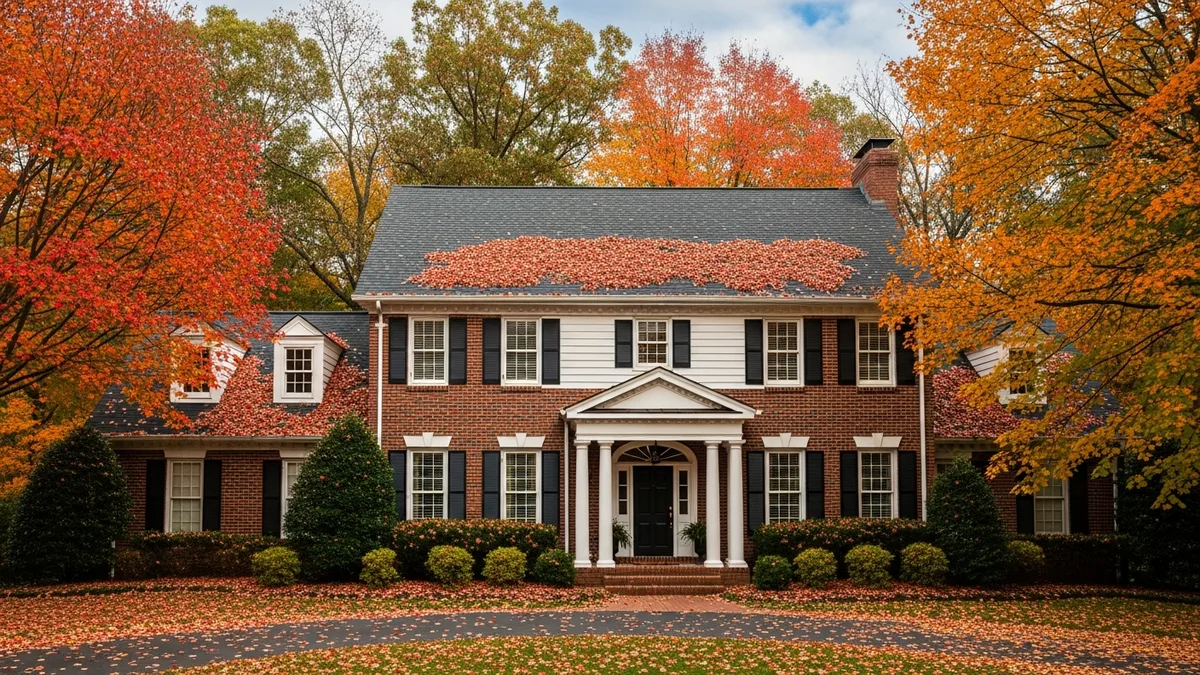
This is the single most important fall maintenance task. Northern Virginia's deciduous trees drop massive volumes of leaves from October through early December, and gutters that aren't cleaned before winter cause a cascade of problems: ice dams form when water backs up behind leaf-clogged gutters and freezes at the roof edge, backed-up water overflows into the fascia causing rot, and gutter weight from ice-filled debris can pull gutters away from the house. Schedule gutter cleaning for late November after most leaves have fallen but before sustained freezing begins. Check that gutter hangers are secure and properly spaced, seams and end caps are sealed, the pitch still directs water to downspouts, and downspouts discharge at least four feet from the foundation.
2. Roof Surface Debris Removal
Leaves, pine needles, small branches, and seed debris accumulate on the roof surface during fall and create problems when winter arrives. Debris traps moisture against the shingle surface, promotes moss and algae growth, and creates dams that impede proper water drainage. Focus on clearing valleys (the V-channels where two slopes meet), areas behind dormers and chimneys, low-slope sections, and transition areas where the roof meets walls. A leaf blower from a ladder or the roof edge is effective for most debris removal. Avoid pressure washing, which can damage shingle granules.
3. Flashing Inspection and Re-sealing
Fall is the ideal time to inspect and re-seal flashing because caulk and sealant products perform best when applied in temperatures above 40 degrees. Check every flashing point on the roof — chimneys, wall transitions, valleys, skylights, and vent penetrations — for gaps, cracked sealant, corrosion, and loose connections. Re-seal any compromised areas with roofing-grade sealant rated for the temperature range. Do not use silicone caulk, which doesn't adhere well to roofing materials. Use polyurethane or rubberized flashing sealant designed for exterior roofing applications.
4. Shingle Assessment and Repair
Address any damaged shingles before winter. Replace missing or broken shingles, re-adhere lifted tabs using roofing cement, and note any areas of widespread granule loss that indicate the roof may be approaching replacement age. Fall's moderate temperatures (50 to 70 degrees) are ideal for shingle work because the adhesive strips activate properly in this range, which they won't below 40 degrees. If you're scheduling repairs, complete them before Thanksgiving to ensure conditions remain favorable.
5. Attic Ventilation and Insulation Check
Proper attic ventilation and insulation are your primary defenses against ice dams. Before winter, verify that soffit vents are clear and unblocked by insulation, ridge vent is functioning and free of debris, insulation is at proper levels (R-38 to R-49 recommended for Northern Virginia), and there are no gaps in the insulation layer, particularly around recessed lights, bathroom fans, and attic access hatches. Heat escaping through the ceiling into the attic warms the roof deck, melting snow on the upper portion of the roof. The meltwater runs to the cold eave overhang and refreezes, forming the ice dam that causes leaks and damage.
6. Tree Trimming
Before winter storms arrive with ice and high winds, trim any branches that overhang the roof by less than six feet. Dead branches in the canopy above the roof should be removed entirely. Ice-laden branches are significantly heavier than dry branches and are the primary cause of tree-related roof damage during winter storms. Fall is also the ideal time for tree work because the trees have dropped their leaves, making dead wood and structural problems easier for an arborist to identify.
7. Pipe Boot Check
Inspect every pipe boot for cracking, separation, and deterioration. A cracked boot that's not leaking now will almost certainly begin leaking during winter when freeze-thaw cycling opens the cracks wider. Pipe boot replacement is a simple, inexpensive repair ($150 to $350 per boot) that prevents a much more expensive leak repair if the boot fails during winter. Replacing deteriorated boots in fall is one of the highest-return maintenance investments you can make.
Fall Maintenance Timeline for Northern Virginia
| Month | Tasks | Why This Timing |
|---|---|---|
| September | Professional inspection, schedule repairs | Warm enough for repair work, before leaf drop |
| October | Repairs, flashing re-seal, tree trimming | Moderate temps for adhesive activation |
| November | Gutter cleaning, debris removal, final check | After leaf drop, before sustained freezing |
Cost of Fall Maintenance vs Winter Repair
The economics of fall maintenance are compelling when compared to the cost of winter damage repair. Here is what proactive fall maintenance costs versus what reactive winter repairs cost when the same issue goes unaddressed:
| Issue | Fall Prevention Cost | Winter Repair Cost |
|---|---|---|
| Gutter cleaning | $150 - $300 | $400 - $1,200 (ice dam removal) + $500 - $3,000 (water damage) |
| Pipe boot replacement | $150 - $350 | $500 - $2,000 (leak + interior damage) |
| Flashing re-seal | $200 - $500 | $800 - $2,500 (leak + structural damage) |
| Tree trimming | $300 - $800 | $2,000 - $10,000+ (branch impact + structural) |
In every case, fall prevention costs a fraction of what winter repair costs. The gutter cleaning comparison is particularly stark — a $200 gutter cleaning in November can prevent $1,500 to $4,000 in ice dam and water damage repairs in February. This is the strongest argument for completing your fall maintenance on schedule rather than putting it off until spring.
Professional vs DIY Fall Maintenance
Some fall maintenance tasks are appropriate for homeowners while others should be left to professionals:
- DIY-appropriate: Ground-level visual inspection, clearing debris from accessible low-slope areas, checking attic insulation levels and ventilation from inside the attic (using a flashlight and staying on the joists or walkway), and monitoring downspout discharge direction
- Professional recommended: Gutter cleaning on two-story or higher homes, walking the roof surface to inspect shingles and flashing, re-sealing flashing with proper materials, replacing damaged pipe boots or shingles, and any work that requires a ladder above the first story
The risk-reward calculation favors professional help for most roof-level tasks. A fall from a roof or ladder can cause life-altering injury. Professional roofers have harnesses, proper ladder equipment, non-slip footwear, and the experience to work safely on pitched surfaces. Many roofing companies offer free fall inspections, making the cost-of-entry zero for at least the assessment portion of fall maintenance.
What Not to Do in Fall
- Don't pressure wash the roof: High-pressure water strips granules from asphalt shingles, shortening their life. Use a leaf blower for debris removal
- Don't walk on a wet or frost-covered roof: Wet shingle surfaces are extremely slippery. Wait for dry conditions
- Don't postpone gutter cleaning to December: By December, the first freeze may have already arrived, and ice-filled gutters are dangerous to clean and cause damage to the gutter system
- Don't apply temporary fixes to known problems: Fall is repair season. A proper repair now costs less and lasts longer than a temporary patch that fails during winter
Fall Is Also the Best Time to Plan a Replacement
If your roof is approaching the end of its useful life — typically 20 to 25 years for architectural asphalt shingles in Northern Virginia — fall is the ideal season to schedule a full replacement rather than investing in maintenance on a roof that will need replacing within the next year or two. September and October provide the best installation conditions in our region: moderate temperatures between 50 and 75 degrees allow shingle adhesive seal strips to activate properly, humidity is lower than summer, and daylight hours are still long enough for full work days. Contractors also tend to have more flexible scheduling in early fall before the end-of-year rush begins.
During your fall inspection, ask your roofer to give you an honest assessment of remaining roof life. If the roof has widespread granule loss, multiple areas of curling or cracking, or if the underlayment is visible in any spots, you're better off replacing now than spending money on repairs that won't extend the roof's life meaningfully. A roof replaced in October will have its adhesive strips fully sealed before winter arrives, giving you a watertight system heading into the most demanding season. Waiting until spring means your aging roof has to survive one more winter — and that's when most catastrophic failures happen. For guidance on what a full replacement involves, see our roof replacement process guide.
If a full replacement is in the near future but not immediate, use your fall maintenance to identify and address only the most critical vulnerabilities — the leak-prone areas that will cause interior damage if they fail during winter. Pipe boots, chimney flashing, and valley damage are the highest priorities. This targeted approach protects your home through one more winter without investing heavily in a roof you'll soon replace.
Conclusion
Fall maintenance is your insurance policy against winter roof damage. The tasks on this checklist — gutter cleaning, debris removal, flashing sealing, shingle repair, ventilation verification, tree trimming, and pipe boot checks — take a few hours to complete and can prevent thousands of dollars in winter damage. Complete them before sustained freezing temperatures begin, typically by late November in Northern Virginia, and your roof will enter winter in the strongest possible condition.
Call us at (571) 570-7930 or schedule a free fall inspection for your Northern Virginia home.