Snow and Ice Damage to Roofs in Woodbridge VA: What Homeowners Need to Know
Snow and Ice Damage to Roofs in Woodbridge VA: What Homeowners Need to Know
Key Takeaways
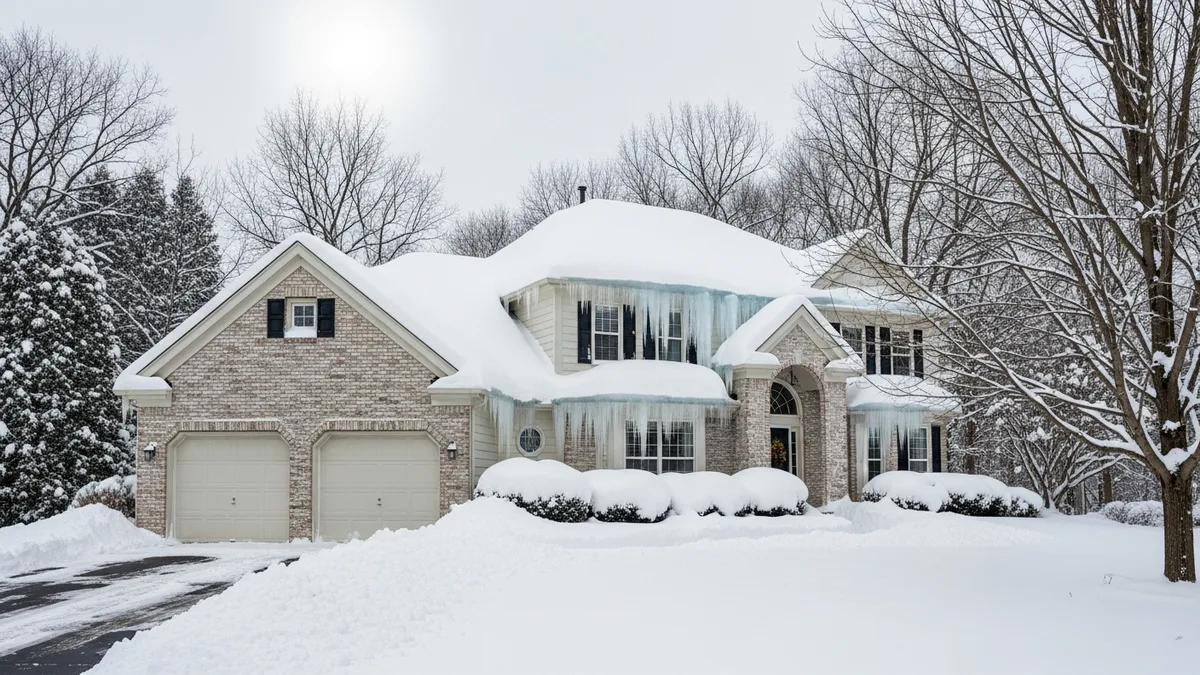
- Ice dams are the most common and damaging form of winter roof damage in the Woodbridge VA area — they form when heat escaping from the living space melts snow on the upper roof, and the meltwater refreezes at the cold eave overhang
- Northern Virginia's freeze-thaw cycling (not sustained cold) is what makes winter especially damaging — water gets into gaps and expands 9 percent when it freezes, forcing apart seals and joints
- Snow load on Woodbridge area roofs rarely reaches structural concern levels, but accumulated wet snow can exceed 20 pounds per square foot, which stresses aging roof structures
- Prevention through proper attic insulation (R-38 to R-49) and balanced ventilation (soffit intake plus ridge exhaust) is far more effective and cost-efficient than reactive repair after damage occurs
- After winter storm damage, document everything with photos before making any repairs, then contact both your insurance company and a local roofing contractor within 24 to 48 hours
Northern Virginia doesn't get the sustained arctic cold or heavy snowfall of the northern states, but the winter conditions here are arguably more damaging to roofs because of the constant cycling between freezing and thawing. A typical Woodbridge winter includes 15 to 25 freeze-thaw cycles between December and March — each one working water into small gaps in flashing, caulk, pipe boots, and shingle adhesive strips, then freezing it and forcing those gaps wider. By spring, components that were intact in November have been compromised by three months of this relentless mechanical stress.
This guide covers the specific ways that snow, ice, and freeze-thaw cycling damage Woodbridge area roofs, how to prevent the most common problems, what to do when damage occurs, and the costs associated with winter roof repair and restoration.
How Ice Dams Form and Why They're Destructive
Ice dams are the number one winter roof problem in the Woodbridge area. Understanding how they form explains why prevention is focused on insulation and ventilation rather than on the roof surface itself:
- Heat escapes from the living space through the ceiling into the attic. This happens through inadequate insulation, gaps around recessed lights, bathroom exhaust vents, attic access hatches, and any penetration through the ceiling plane
- The escaped heat warms the roof deck from the inside. The upper portion of the roof (above the heated living space) gets warm enough to melt snow even when the outside air temperature is below freezing
- Meltwater flows downslope toward the eaves. The eave overhang extends beyond the heated building envelope, so it stays at ambient temperature — below freezing
- The water refreezes at the eave, forming a ridge of ice. As more meltwater flows down and refreezes, the ice dam grows thicker and extends further up the roof
- Water pools behind the dam. The dam blocks normal drainage, creating a pool of standing water on the roof surface above the dam. This standing water finds its way under shingles and into the roof structure, causing leaks, saturated insulation, stained ceilings, and eventually wood rot and mold
Freeze-Thaw Cycling Damage
Beyond ice dams, the repeated freeze-thaw cycling affects virtually every component of the roofing system. Water — even microscopic amounts — penetrates into flashing joints where caulk has aged and cracked, pipe boot seals where rubber has become brittle, shingle adhesive strips that have lost their bond, mortar joints on chimneys, and nail penetrations with compromised sealant. When this water freezes, it expands by approximately 9 percent. This expansion physically pushes the materials apart, creating a slightly larger gap. The next thaw allows more water into the now-larger gap, and the next freeze pushes the gap open further. After 20 to 25 cycles over a typical Northern Virginia winter, a hairline crack in a pipe boot becomes a visible split, and a minor gap in chimney flashing becomes an active leak path.
Snow Load Considerations
While Northern Virginia rarely receives the sustained heavy snowfall that creates structural snow load concerns in northern states, significant snowfall events do occur. The February 2010 "Snowmageddon" event dropped 20+ inches on the Woodbridge area, and similar events, while infrequent, are within the range of possibility. Key factors for snow load on Woodbridge roofs include: fresh snow weighs approximately 1 to 5 pounds per square foot per foot of depth; wet, compacted snow can reach 15 to 20 pounds per square foot; ice weighs approximately 5 pounds per square foot per inch of thickness; and most Woodbridge area roofs are designed for a minimum ground snow load of 25 pounds per square foot per Virginia building code. Aging roof structures with deteriorated framing from previous water damage or insect activity have reduced load-bearing capacity. If your home has a history of leaks, moisture damage, or insect issues, the structural integrity of the roof framing should be evaluated before a major snow event.
Prevention: The Most Cost-Effective Approach
Insulation
Proper attic insulation is the most effective ice dam prevention measure. The Department of Energy recommends R-38 to R-49 insulation for Northern Virginia (Climate Zone 4). Pay particular attention to areas where the insulation is commonly inadequate: around recessed lights, bathroom exhaust fans, attic hatches, HVAC ductwork, and at the eave edges where the rafter space narrows. Adding insulation to reach proper R-values costs $1,500 to $3,500 for most homes and prevents the heat loss that causes ice dams.
Ventilation
Balanced attic ventilation — intake at the soffits and exhaust at the ridge — keeps the roof deck close to ambient temperature by flushing warm air out of the attic before it can warm the deck surface. This works together with insulation: insulation reduces heat flow from the living space into the attic, and ventilation removes whatever heat does get through. Both are necessary for effective ice dam prevention.
Ice and Water Shield
Ice-and-water shield is a self-adhering waterproof membrane installed under the shingles at the eaves, valleys, and around penetrations. Current Virginia building code requires it at the eave edge extending at least 24 inches past the interior wall line. This membrane is the last line of defense — if water from an ice dam or wind-driven rain gets past the shingles, the ice-and-water shield prevents it from reaching the roof deck and entering the home. When your roof is replaced, ensure your contractor installs ice-and-water shield per current code requirements, especially if your home has experienced ice dam issues.
What to Do After Winter Storm Damage
- Document before touching anything: Take photos and video of all visible damage — exterior and interior. This documentation is essential for insurance claims
- Contain water intrusion: Place buckets under active leaks, move belongings, and protect flooring. This is a policy requirement — your insurance expects you to mitigate ongoing damage
- Do not go on the roof: Snow-covered and ice-covered roofs are extremely dangerous. Leave roof access to professionals with proper safety equipment
- Call your insurance company: Report the damage and initiate a claim within 24 to 48 hours
- Call a local roofing contractor: A contractor experienced with insurance claims should assess the damage, be present during the adjuster's inspection, and ensure all damage is properly documented and included in the claim
Cost of Winter Damage Repair
| Repair Type | Low End | High End |
|---|---|---|
| Ice dam removal | $400 | $1,200 |
| Interior water damage repair | $500 | $3,000 |
| Shingle repair (freeze damage) | $300 | $1,000 |
| Flashing re-seal/replacement | $200 | $1,500 |
| Insulation upgrade (prevention) | $1,500 | $3,500 |
Gutter and Downspout Protection in Winter
Gutters and downspouts are among the first components to fail during Northern Virginia's winter cycling. When water freezes inside gutters, the expanding ice pushes against the gutter walls and can separate the gutter from the fascia board. Repeated freeze-thaw cycles compound this damage, and by the time spring arrives, homeowners often discover gutters that have pulled away from the house, cracked seams, or downspouts that have split open. These failures create two problems: the immediate structural damage to the gutter system itself and the secondary water damage from uncontrolled runoff saturating the foundation and landscaping.
Cleaning gutters thoroughly before the first freeze is the most effective prevention measure. Debris-filled gutters trap water that freezes and expands, accelerating the damage cycle. For homes in heavily treed areas of Woodbridge — particularly in Lake Ridge and Montclair where mature hardwoods deposit significant leaf volume — a late November gutter cleaning after the last leaves have fallen is essential. Gutter guards can reduce debris accumulation but do not eliminate the need for periodic cleaning, especially for pine needle and small seed debris that passes through most guard systems.
Downspout Extensions and Drainage
Downspout extensions that direct water at least four to six feet away from the foundation are critical during winter. When the ground around the foundation is frozen, water from snowmelt and rain cannot absorb into the soil and instead pools against the foundation wall. Splash blocks alone are often insufficient — flexible downspout extensions or buried drain lines that carry water away from the structure provide reliable protection. Check these connections before winter begins, as lawn mowers and yard work frequently displace extensions during the warmer months.
Preparing Your Woodbridge Roof for Winter
The best time to address winter vulnerability is before winter arrives. A fall maintenance routine that includes a professional roof inspection, gutter cleaning, and targeted repairs to any compromised components gives your roof the best chance of handling the freeze-thaw season without significant damage. During the fall inspection, your contractor should check pipe boot condition, flashing sealant integrity, shingle adhesive bond on exposed edges, ridge cap fastening, and chimney mortar joint condition. Each of these is a potential entry point for water that will freeze and expand during winter cycling. Addressing minor issues in October costs a fraction of what emergency repairs cost in January, and the work can be done under dry, moderate conditions rather than on a frozen, snow-covered roof.
Homeowners who experienced ice dam issues in previous winters should consider an attic insulation evaluation before the next cold season. Adding insulation to reach the recommended R-38 to R-49 range and sealing air leaks around ceiling penetrations eliminates the root cause of ice dams rather than treating the symptoms each year. This investment typically pays for itself within three to five heating seasons through reduced energy costs alone, in addition to eliminating the recurring ice dam damage.
Conclusion
Snow and ice damage to Woodbridge VA roofs is primarily caused by ice dams and freeze-thaw cycling, not by the snow itself. Prevention through proper insulation, ventilation, and ice-and-water shield is far more cost-effective than reactive repair. Complete your fall maintenance before winter begins, address any issues identified during spring inspection, and your roof will handle Northern Virginia's winter conditions with minimal damage.
Call us at (571) 570-7930 or book a consultation for winter damage assessment or prevention recommendations.