Roof Leak Repair in Woodbridge VA: Find It, Fix It, Prevent It
Roof Leak Repair in Woodbridge VA: Find It, Fix It, Prevent It

Key Takeaways
- A roof leak in Woodbridge VA needs immediate action — even a small leak causes cumulative damage to insulation, framing, drywall, and can promote mold growth within 24 to 48 hours in Virginia's humid climate
- Most roof leaks originate at flashing transitions (chimneys, walls, valleys), not in the shingle field — making the leak location and the water entry point two different places on many roofs
- Emergency leak containment (tarping, buckets, protecting belongings) is your responsibility as a homeowner and is required by most insurance policies to prevent further damage
- Roof leak repairs in Woodbridge typically cost $350 to $1,500 for common issues, while leaks requiring structural repair or extensive flashing work run $1,500 to $4,000
- A leak on a roof less than 10 years old usually indicates an installation defect. A leak on a roof over 15 years old often signals systemic deterioration where repair may not be the best investment
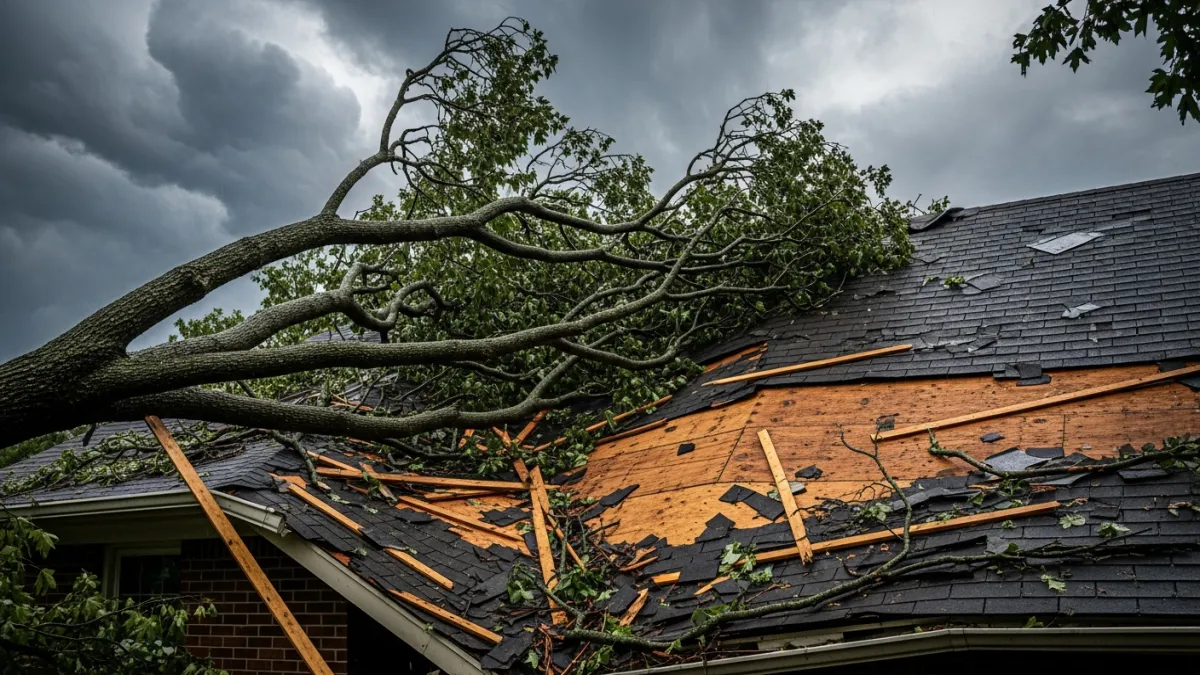
You notice a brown stain spreading across your ceiling, or you hear a drip coming from the attic during a rainstorm. A roof leak in Woodbridge VA is never convenient, but how you respond in the first hours determines whether the damage stays contained or escalates into a problem that costs thousands more to fix. Northern Virginia's climate — with its summer thunderstorms that dump heavy rain in short bursts, winter ice that works into flashings and underlayment, and persistent humidity that turns small moisture intrusions into mold colonies — makes prompt leak response more critical here than in drier climates.
This guide walks you through exactly what to do when you discover a roof leak, how to identify where the water is actually entering (which is often not directly above the stain), what repairs typically cost, and the critical question of whether your leak calls for a targeted repair or signals that your roof has reached the point where replacement is the smarter investment.
What to Do Right Now If Your Roof Is Leaking
If you have an active roof leak, take these steps immediately — before calling anyone:
- Contain the water: Place buckets, bins, or towels under active drips. If the ceiling is sagging and holding a pool of water, carefully puncture the center of the bulge with a screwdriver over a bucket to drain it — an uncontrolled ceiling collapse is worse than a controlled drain
- Move belongings: Get furniture, electronics, and valuables away from the affected area. Water follows unpredictable paths through the ceiling and wall cavities
- Document everything: Take photos and video of the leak, the stain, the water path, and any damaged belongings. This documentation is critical if you file an insurance claim
- Check the attic: If you can safely access the attic during active rain, trace the water path from the ceiling stain back toward the roof deck. The entry point at the deck is where the fix needs to happen, and it's often several feet upslope from where the water appears on your ceiling
- Call a roofer: Contact a local roofing company for emergency assessment. Reputable contractors offer emergency response for active leaks, including temporary tarping if needed
Most Common Causes of Roof Leaks in Woodbridge
Failed Chimney Flashing
Chimney flashing is the number one leak source on Woodbridge homes. The step flashing (L-shaped metal pieces that weave between shingle courses along the chimney sides) and counter flashing (metal embedded in the chimney mortar that covers the top of the step flashing) form a two-part system that directs water away from the chimney-to-roof junction. When the sealant deteriorates, when mortar joints crack, or when thermal expansion shifts the metal, water finds its way in. Chimney leaks often appear during wind-driven rain from a specific direction because the water needs both rain and wind pressure to push past the compromised flashing.
Deteriorated Pipe Boots
Every plumbing vent pipe that penetrates your roof has a rubber boot sealed around it. These boots are made of neoprene or EPDM rubber and have a typical lifespan of 10 to 15 years — significantly less than the shingles around them. When the rubber cracks, splits, or separates from the pipe, water runs down the pipe into the attic. Pipe boot failure is the most cost-effective leak to fix (typically $150 to $350) and the most common leak on Woodbridge roofs between 10 and 18 years old.
Valley Leaks
Roof valleys — the V-shaped channels where two roof slopes meet — carry concentrated water flow during heavy rain. In a Northern Virginia thunderstorm that drops an inch of rain in 20 minutes, valleys handle enormous water volume. Leaks here result from deteriorated valley metal, debris accumulation that dams water and forces it under shingles, or insufficient underlayment (ice-and-water shield) in the valley area. Valley leaks typically cause significant damage quickly because of the water volume involved.
Ice Dam Damage
During Northern Virginia winters, the freeze-thaw cycle creates ice dams at roof eaves. Warm air from the living space melts snow on the upper portion of the roof, and the meltwater re-freezes when it reaches the cold eave overhang, forming a dam that traps water behind it. This standing water seeps under shingles and into the roof structure. Homes with poor attic insulation and ventilation in neighborhoods along Lake Ridge, Dale City, and Montclair are particularly susceptible. For more details, see our guide to snow damage and ice dams.
Wind-Lifted Shingles
Thunderstorm winds routinely exceed 60 mph in the Woodbridge area during severe weather events. When wind lifts a shingle tab, the adhesive seal strip that holds it down may not fully re-seal after the storm passes. The next rain event can then push water under the lifted shingle and into the underlayment or deck below. This is one reason post-storm inspections are important — the damage may not manifest as a visible leak until a subsequent storm arrives from a different direction.
Cost of Roof Leak Repair in Woodbridge VA
| Repair Type | Low End | High End | Common Cause |
|---|---|---|---|
| Pipe boot replacement | $150 | $350 | Cracked rubber boot |
| Shingle repair (small area) | $200 | $600 | Wind damage, cracking |
| Chimney re-flash | $500 | $1,500 | Failed step/counter flashing |
| Valley repair | $400 | $1,200 | Deteriorated valley metal |
| Emergency tarping | $200 | $500 | Temporary storm protection |
| Structural repair (rotted deck/rafter) | $1,500 | $4,000 | Long-term undetected leak |
Prices shown are typical ranges for Northern Virginia as of 2025. Contact us for a free inspection and specific repair estimate.
When a Leak Means You Need a New Roof
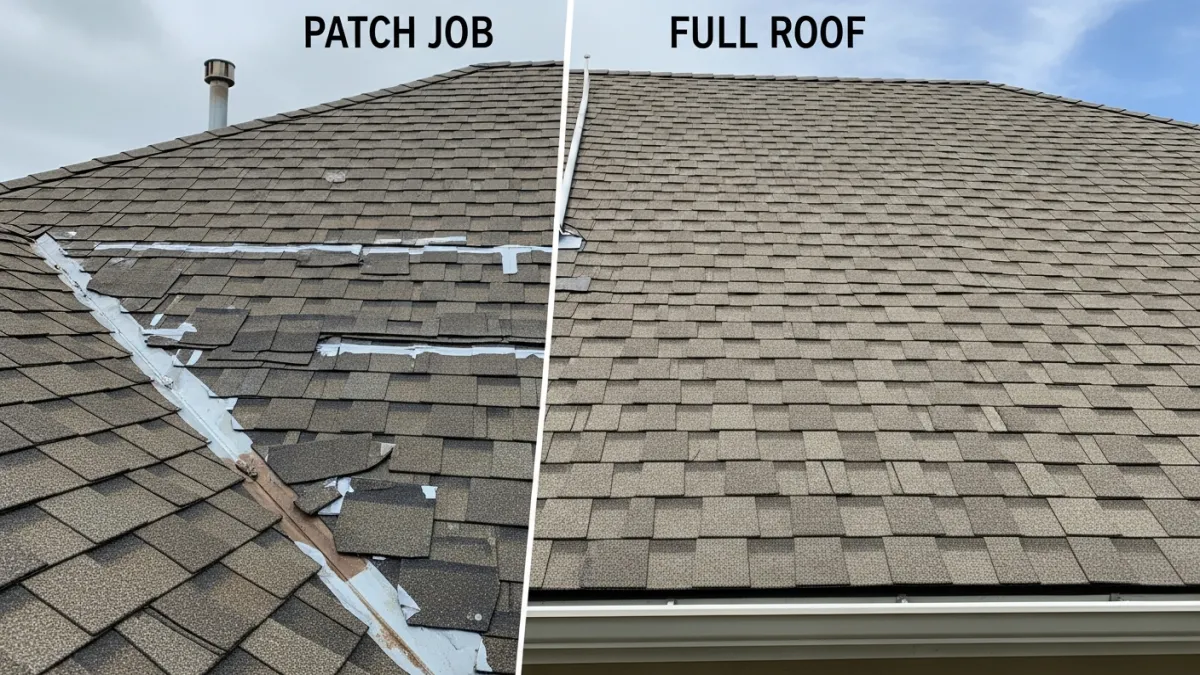
Not every leak is fixable in a way that makes financial sense. Here are the signs that your leak is telling you it's time for a full replacement rather than another repair:
- Multiple leak locations: If you're experiencing leaks in two or more unrelated areas of the roof, the entire system is deteriorating — fixing one spot just means the next will fail soon
- Roof age over 18 to 20 years: A leak on a roof approaching the end of its lifespan is a symptom of system-wide wear. Repairing it is like patching a tire with dry rot — the fix is temporary
- Widespread granule loss: If your gutters are full of granule sediment and the shingles show extensive bare spots, the shingles have lost their weather protection and leaks will become more frequent
- Repair costs approaching 30 percent of replacement: When accumulated repair costs approach this threshold, replacement provides a better return on investment because you get a complete new system with full warranties
- Structural damage from long-term leaking: If the leak has caused rotted decking, damaged rafters, or saturated insulation over a large area, the scope of work overlaps significantly with replacement
For a more detailed comparison, see our guide on roof repair vs replacement in Woodbridge.
Preventing Future Roof Leaks
- Annual professional inspections: A yearly inspection catches flashing deterioration, cracked boots, and developing problems before they become active leaks. Spring is the ideal time, after winter weather has tested the roof
- Gutter maintenance: Clogged gutters cause water to back up under the roof edge. Clean twice per year — late spring and late fall
- Proper attic ventilation: Balanced ventilation (soffit intake + ridge exhaust) prevents moisture buildup that deteriorates the roof deck from the inside and prevents ice dams in winter
- Adequate attic insulation: Proper insulation prevents heat from reaching the roof deck, reducing the freeze-thaw cycling that causes ice dams and shingle deterioration
- Post-storm checks: After any significant storm, do a visual check from the ground. If you see anything concerning — missing shingles, debris on the roof, new gutter damage — schedule a professional inspection
- Tree maintenance: Keep branches trimmed back at least six feet from the roof. Overhanging limbs abrade shingles and deposit debris that traps moisture
Conclusion
A roof leak in Woodbridge VA demands prompt action. Contain the water, document the damage, and call a local roofing contractor who can diagnose the source and provide a permanent fix — not just a patch over the symptom. Most leaks originate at flashing transitions, pipe boots, or valleys rather than in the shingle field itself, and the entry point is often several feet from where the water appears on your ceiling. An experienced local roofer traces the path back to the source and addresses the actual failure point.
If you have an active leak or suspect water intrusion, call us at (571) 570-7930 for emergency response, or book a free consultation for non-emergency situations. We respond quickly to Woodbridge, Dale City, Lake Ridge, and all of Prince William County.