Metal Roofing in Northern Virginia: Benefits & Costs
Metal Roofing in Northern Virginia: Benefits & Costs
Key Takeaways
- Metal roofing in Northern Virginia costs between $16,000 and $30,000 installed for a standard 2,000 square foot home, depending on the panel profile, metal type, and roof complexity
- Standing seam metal roofing lasts 40 to 60 years and withstands wind speeds up to 140 mph or higher, making it one of the most durable options for the Northern Virginia climate
- Metal roofs with reflective coatings reduce cooling costs by 10 to 25 percent compared to asphalt shingles, keeping attic temperatures significantly lower during Virginia summers
- Standing seam panels use concealed fasteners and cost more upfront, while corrugated panels use exposed fasteners and cost 20 to 35 percent less
- Verify your contractor holds a Virginia DPOR license and has documented experience with metal roof installation, not just asphalt shingle work
Metal roofing in Northern Virginia has moved from a niche choice to a serious contender for homeowners who want a roof that outlasts asphalt by decades, handles severe weather without flinching, and reduces energy costs year after year. If you're weighing the decision between replacing your aging shingle roof with another round of asphalt or making the jump to metal, you're asking the right question at the right time. Metal roofing technology has advanced considerably in the past ten years, and the products available today bear little resemblance to the corrugated barn panels most people picture when they hear "metal roof."
Northern Virginia's climate puts extraordinary demands on every roofing system. Summer temperatures push attic spaces to 140 to 160 degrees, accelerating the breakdown of conventional roofing materials from the underside. Winter brings freeze-thaw cycles that expand water in hairline cracks and work flashing joints apart over months. Thunderstorms sweep through the Potomac corridor with wind gusts that rip shingle tabs loose and drive rain under vulnerable seams. And the occasional remnants of a tropical system dump enough water in a few hours to expose every weakness in a roofing system simultaneously. Metal handles all of these conditions better than asphalt, and it does so for two to three times as long.
This guide covers everything Northern Virginia homeowners need to know about metal roofing — the differences between standing seam and corrugated panels, realistic costs for the NoVA market, energy efficiency advantages, lifespan expectations, wind resistance ratings, and the practical considerations that determine whether metal is the right investment for your specific home. Whether you live in Woodbridge, Fairfax, Arlington, Reston, or anywhere else in the Northern Virginia region, the information here applies to your decision.
What Is Metal Roofing and Why It Works in Northern Virginia
Metal roofing refers to roof systems made from steel, aluminum, zinc, or copper panels designed to interlock or overlap in a way that creates a continuous, weather-tight surface. Unlike asphalt shingles — which rely on overlapping layers of granule-coated material sealed by adhesive strips — metal panels form a rigid shell that sheds water, snow, and debris by design rather than by accumulated layers. This fundamental structural difference is what gives metal its performance advantages in a climate as demanding as Northern Virginia's.
The two primary categories of residential metal roofing are standing seam and exposed-fastener (corrugated or ribbed) panels. Both use the same base metals, but they differ significantly in how they're attached to the roof, how they handle thermal expansion, how long they last, and what they cost. Understanding these differences is essential to making an informed decision about which system fits your home, your budget, and your long-term plans.
Northern Virginia sits in a unique climate zone where homes face both heating and cooling challenges. The region averages about 20 inches of snow per winter, with occasional ice storms that load roofs with significant weight. Summers are hot and humid, with sustained temperatures above 90 degrees for weeks at a time. This dual-season stress makes material choice critically important. Metal roofing handles both extremes because it doesn't absorb moisture like organic materials, doesn't crack under thermal cycling the way asphalt does, and doesn't lose structural integrity from UV exposure over time.
Standing Seam vs Corrugated Metal Roofing
This is the most important decision you'll make when choosing a metal roof for your Northern Virginia home. The panel profile determines the roof's appearance, performance characteristics, installation complexity, and cost. Here's an honest comparison of both systems.
Standing Seam Metal Roofing
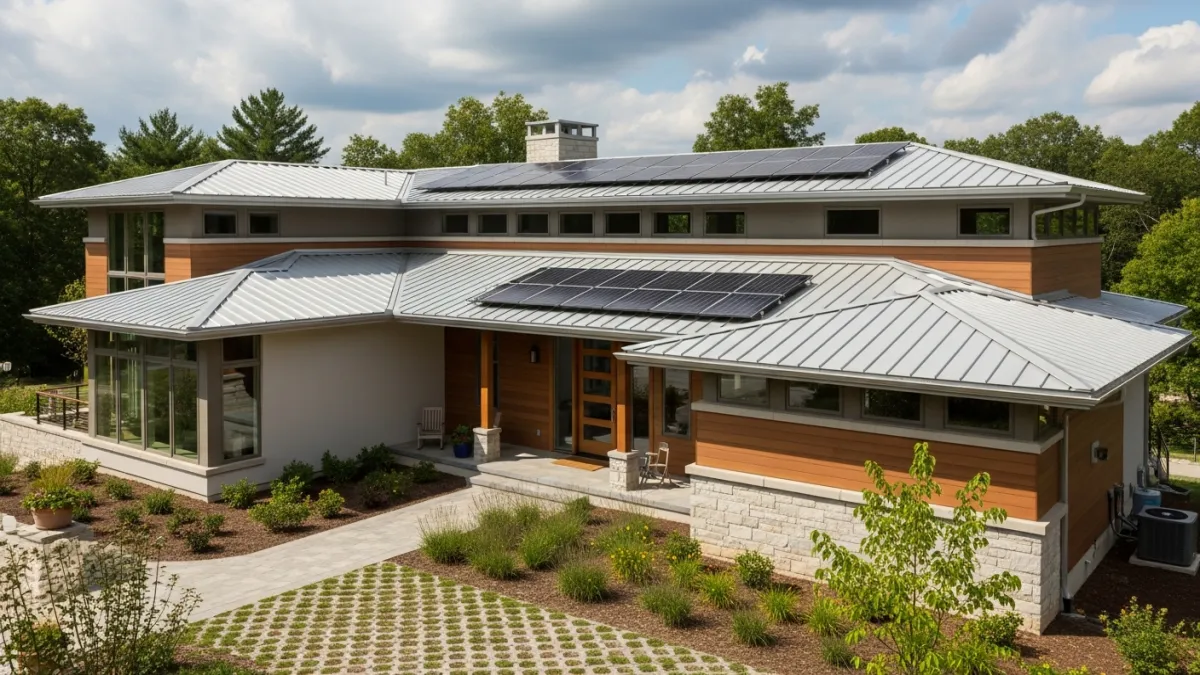
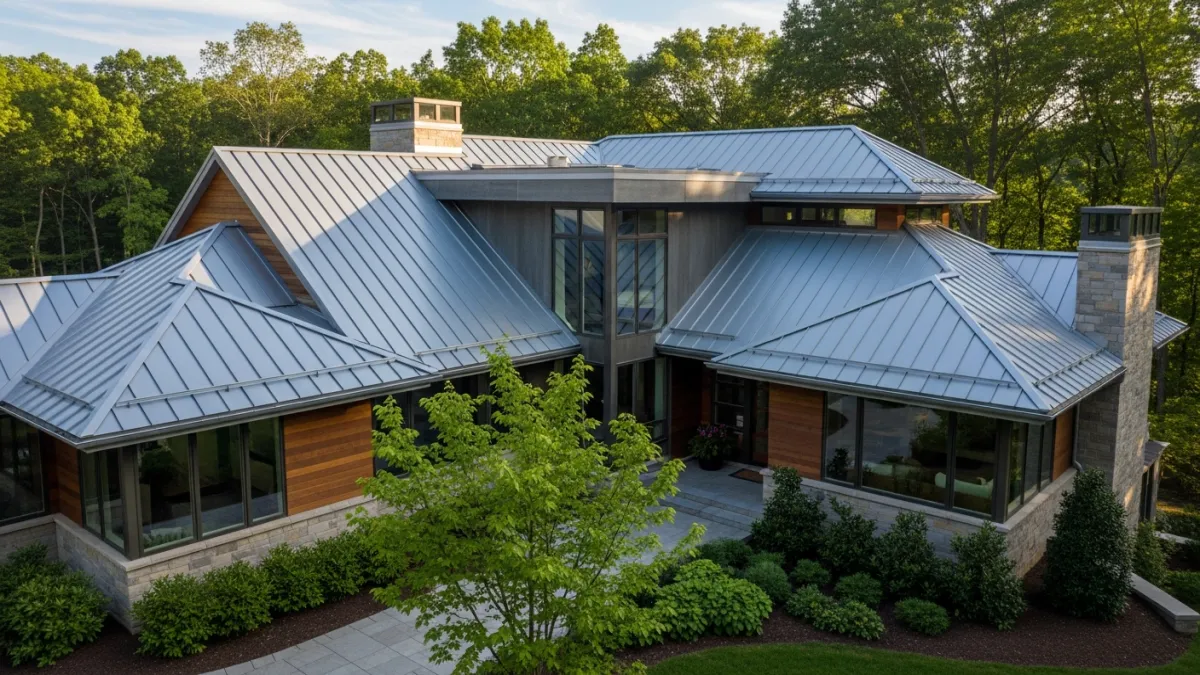
Standing seam panels connect at raised vertical seams — typically 1 to 2 inches tall — that run continuously from the eave to the ridge. The panels are attached to the roof deck using concealed clips that allow the metal to expand and contract with temperature changes without stressing the fastener points. No screws or nails penetrate the flat surface of the panel, which eliminates the most common failure point in metal roofing systems.
This concealed-fastener design is what makes standing seam the premium choice for residential metal roofing in Northern Virginia. Because there are no exposed fasteners, there are no rubber washers to dry out, crack, and allow water infiltration over time. The interlocking seams create a continuous barrier that can withstand wind speeds of 140 mph or higher depending on the specific panel profile and attachment method. Standing seam panels are typically made from 24-gauge or 26-gauge galvalume steel (steel coated with a zinc-aluminum alloy) or from aluminum in coastal or high-corrosion environments.
The finish coating on standing seam panels is a critical quality indicator. Premium panels use Kynar 500 or Hylar 5000 (both PVDF fluoropolymer coatings) that resist fading, chalking, and corrosion for 30 to 40 years. These coatings are available in a wide range of colors and profiles that complement virtually any architectural style found in Northern Virginia neighborhoods, from colonial and Cape Cod to contemporary and craftsman. Many homeowners in communities along Route 1 in Woodbridge, the established neighborhoods of Fairfax, and newer developments in Ashburn and South Riding have chosen standing seam specifically because it pairs well with both traditional and modern home designs.
Corrugated and Exposed-Fastener Metal Roofing
Corrugated metal roofing uses ribbed or waved panels that are attached directly to the roof deck with screws that penetrate through the panel face. These screws include rubber or neoprene washers that compress against the panel surface to create a water seal at each fastener point. The panels overlap at the sides and ends rather than interlocking, and they're available in a range of rib heights and profiles.
Corrugated panels cost significantly less than standing seam — typically 20 to 35 percent less for materials and installation combined. They're faster to install because each panel covers a wider area and the attachment method is straightforward. For detached garages, workshops, pool houses, covered porches, and agricultural buildings, corrugated metal is an excellent, cost-effective choice that delivers 30 to 45 years of reliable service.
The limitation of corrugated panels is the exposed fastener system. Every screw point is a potential leak path. The rubber washers that seal each penetration degrade over time — UV exposure, thermal cycling, and compression fatigue cause them to crack, shrink, and lose their seal. In Northern Virginia's climate, where temperatures swing from below freezing to above 90 degrees regularly, fastener washers typically need inspection and selective replacement around the 15 to 20 year mark. This doesn't make corrugated panels a bad product — it makes them a product that requires planned maintenance at specific intervals.
HOA restrictions are another practical consideration. Many Northern Virginia communities — particularly in Prince William County, Fairfax County, and Loudoun County — have architectural guidelines that specify acceptable roofing materials and appearances. Standing seam metal is generally accepted in communities that allow metal roofing, while corrugated panels may face restrictions in neighborhoods with strict aesthetic standards. Check your HOA's covenants before committing to either option.
| Feature | Standing Seam | Corrugated / Exposed Fastener |
|---|---|---|
| Fastener Type | Concealed clips | Exposed screws with washers |
| Expected Lifespan | 40–60 years | 30–45 years |
| Wind Resistance | Up to 140+ mph | Up to 110–120 mph |
| Leak Risk at Fasteners | Minimal (no exposed penetrations) | Moderate (washer degradation over time) |
| Thermal Expansion | Clips allow free movement | Fixed fasteners restrict movement |
| Cost (installed, 2,000 sq ft) | $18,000–$30,000 | $16,000–$22,000 |
| HOA Acceptance | Generally accepted | May face restrictions |
| Best Application | Primary residences, long-term homes | Garages, outbuildings, rural properties |
Metal Roofing Costs in Northern Virginia
Understanding metal roof cost in Northern Virginia starts with recognizing that this market runs 15 to 25 percent above national averages. The premium reflects higher labor rates in the DMV metro area, stricter permitting requirements across Northern Virginia counties, the specialized skills and equipment metal installation demands, and the general cost of doing business in one of the country's most expensive metro regions. The figures below are based on a standard 2,000 square foot home with a 6:12 pitch and represent total installed costs including labor, materials, tear-off, and disposal.
| Service / Item | Low End | High End | Notes |
|---|---|---|---|
| Corrugated / exposed-fastener metal (2,000 sq ft) | $16,000 | $22,000 | Material + labor, NoVA market |
| Standing seam steel (2,000 sq ft) | $18,000 | $28,000 | Kynar/PVDF finish, concealed clips |
| Standing seam aluminum (2,000 sq ft) | $22,000 | $30,000 | Lighter weight, corrosion-resistant |
| Copper or zinc metal roof (2,000 sq ft) | $35,000 | $55,000+ | Premium, 80+ year lifespan |
| Tear-off existing shingles (single layer) | $1,000 | $2,500 | Often included in total price |
| Decking replacement (per 4x8 sheet) | $75 | $150 | Found during tear-off, varies by condition |
| Synthetic underlayment upgrade | $400 | $1,200 | High-temp underlayment for metal |
| Permit — Prince William / Fairfax County | $75 | $350 | Required for full roof replacement |
| Custom flashing and trim fabrication | $500 | $2,000 | Chimney, wall, valley, and ridge trim |
Factors That Move Your Metal Roof Price Up or Down
Several variables determine where your project lands within these ranges:
- Roof pitch: Steeper roofs require more safety equipment and longer installation time. A 12:12 pitch adds meaningful labor cost compared to a standard 6:12
- Roof complexity: Dormers, valleys, skylights, chimneys, and hip-to-gable transitions all require custom flashing and trim work. A simple gable roof costs the least; a multi-hip roof with several dormers and penetrations costs the most
- Metal type and gauge: 24-gauge steel is thicker and more expensive than 26-gauge. Aluminum costs more than steel but weighs less and resists corrosion without coatings. Copper and zinc are premium materials with premium price tags
- Finish coating: Kynar 500 PVDF coatings cost more than standard acrylic or polyester finishes but last 30 to 40 years without fading, chalking, or peeling
- Existing roof removal: A full tear-off is recommended before metal installation. Homes with two layers of existing shingles incur additional removal costs
- Structural considerations: While metal roofing is lighter than most people expect (1.0 to 1.5 pounds per square foot compared to 2.5 to 4.5 for asphalt), some older homes may need minor decking repairs or reinforcement at eaves to support the new system's attachment clips
- Season: Metal can be installed year-round since it doesn't rely on adhesive activation like asphalt shingles. However, peak-season demand from April through October may affect scheduling and pricing
What Is NOT Typically Included
Confirm whether these items are included or billed separately in your estimate:
- Structural repairs to rafters or trusses discovered during tear-off
- Gutter replacement or re-hanging — metal roofs shed water faster than shingles, and existing gutters may need upsizing
- Fascia or soffit board replacement beyond minor patching
- Snow guard installation for sections above walkways, entryways, or lower roof planes
- Interior drywall repair for water damage caused by the old roof
- Skylight replacement or custom metal skylight curb fabrication
Prices shown are typical ranges for Northern Virginia as of 2026 and vary based on home size, material grade, site access, and current material costs. Contact us for a free on-site estimate.
If you're exploring ways to manage the upfront investment, we offer metal roofing financing options that spread the cost over time without delaying the project.
The Cost-Per-Year Calculation: Metal vs Asphalt
The sticker price of a metal roof is higher than asphalt, and that's where most homeowners stop comparing. But roofing cost analysis should be measured in cost per year of service, not just the upfront number. Here's how the math works for a typical 2,000 square foot Northern Virginia home:
Architectural asphalt shingles: $12,000 installed (mid-range) with a realistic lifespan of 22 years in the Northern Virginia climate. That's $545 per year of service. You'll need to replace the roof again in 22 years at whatever materials and labor cost at that point.
Standing seam metal: $24,000 installed (mid-range) with a realistic lifespan of 50 years. That's $480 per year of service. You won't need another roof in your lifetime, and the metal roof adds resale value that asphalt doesn't because buyers recognize they're inheriting decades of remaining service life rather than a roof that's approaching its expiration date.
When you factor in the energy savings of 10 to 25 percent on cooling costs — which in Northern Virginia can mean $200 to $600 per year depending on your home's size, insulation, and HVAC efficiency — and the reduced maintenance costs over the life of the roof, standing seam metal becomes the less expensive option on a lifetime basis for any homeowner who plans to stay in their home for 15 years or more.
Energy Efficiency: How Metal Roofing Performs in Virginia's Climate
Energy efficiency is one of the most tangible, year-over-year benefits of metal roofing in Northern Virginia. The physics are straightforward: metal reflects solar radiation while asphalt absorbs it. This difference has measurable consequences for your HVAC system, your energy bills, and your comfort.
Solar Reflectance and Cool-Roof Ratings
Standard asphalt shingles absorb 80 to 90 percent of the solar energy that strikes them. That absorbed energy heats the shingle surface to 150 to 170 degrees on a summer afternoon, which radiates heat into the attic space below. Attic temperatures in shingle-covered Northern Virginia homes routinely reach 140 to 160 degrees in July and August, and your air conditioning system works harder to compensate for that heat load from above.
Metal roofing panels with Energy Star-rated cool-roof pigments reflect up to 70 percent of solar energy. Even standard metal panels without specialized coatings reflect 25 to 40 percent more solar energy than asphalt. This keeps the roof surface temperature 50 to 60 degrees cooler than an equivalent asphalt surface, which translates directly to lower attic temperatures and reduced cooling demand.
For a typical 2,000 square foot home in Woodbridge, Fairfax, or Arlington running central air conditioning from May through September, this reflectivity advantage reduces cooling costs by 10 to 25 percent. On an annual cooling bill of $800 to $2,400 (depending on home size, insulation quality, and HVAC efficiency), that's a savings of $80 to $600 per year. Over a 50-year metal roof lifespan, those savings compound significantly.
Thermal Emittance and Winter Performance
Metal roofing also performs well in Northern Virginia winters. Metal panels have high thermal emittance, meaning they release absorbed heat quickly rather than storing it. While this might seem like a disadvantage in winter, the reality is that your roof's insulation system — not the roofing material — is responsible for keeping heat inside your home. A properly insulated attic with a metal roof performs identically to one with an asphalt roof in terms of heat retention. The difference is that metal sheds snow and ice more effectively, reducing the risk of ice dams that form when trapped heat melts snow on the roof surface and refreezes at the eaves.
Ice dams are a real concern for Northern Virginia homes, particularly in neighborhoods with older insulation standards. Homes along the tree-lined streets of Burke, Reston, and Herndon that experience heavy snowfall events are especially vulnerable. Metal's smooth, low-friction surface allows snow to slide off before it has a chance to melt, refreeze, and create damming conditions. Snow guards installed at strategic points control the rate of snow release to protect walkways and landscaping below.
Above-Sheathing Ventilation
Many metal roofing systems are installed with a ventilated air gap between the metal panels and the roof deck. This above-sheathing ventilation (ASV) channel creates an additional thermal break that further reduces heat transfer into the attic. Studies show that metal roofs with ASV reduce cooling loads by an additional 15 to 20 percent beyond the reflectivity benefit alone. When combined with proper attic insulation and ridge-to-soffit ventilation, this creates a comprehensive thermal management system that significantly outperforms a standard shingle installation.
Lifespan: 40 to 60 Years and Beyond
The lifespan advantage of metal roofing is its single most compelling selling point, and the numbers are backed by decades of real-world performance data across every climate zone in the United States, including the mid-Atlantic region where Northern Virginia sits.
What Determines Metal Roof Longevity
Several factors influence how long a metal roof lasts on a Northern Virginia home:
- Metal type: Galvalume steel (zinc-aluminum coated) delivers 40 to 60 years. Aluminum delivers 40 to 60 years with superior corrosion resistance. Copper and zinc exceed 80 years and develop a natural patina that protects the underlying metal
- Finish coating: Kynar 500 PVDF coatings maintain their color and protective function for 30 to 40 years. Lower-grade polyester coatings fade faster and may need recoating at the 20 to 25 year mark
- Fastener system: Standing seam concealed-clip systems avoid fastener-point failures entirely. Exposed-fastener systems require washer inspection and selective replacement around year 15 to 20
- Installation quality: Proper flashing, underlayment, clip spacing, and panel alignment are critical. A metal roof is only as good as the crew that installs it
- Maintenance: Annual visual inspections and minor sealant touch-ups every few years keep a metal roof performing at its peak throughout its service life
Comparison to Other Roofing Materials
To put the metal roof lifespan in context, here's how it compares to other roofing materials commonly used on Northern Virginia homes:
| Material | Typical Lifespan (NoVA) | Replacements Over 60 Years | Estimated 60-Year Cost |
|---|---|---|---|
| 3-Tab Asphalt Shingles | 15–20 years | 3–4 replacements | $28,000–$40,000+ |
| Architectural Asphalt | 20–25 years | 2–3 replacements | $24,000–$45,000+ |
| Standing Seam Metal | 40–60 years | 1 installation | $18,000–$30,000 |
| Copper / Zinc | 80+ years | 1 installation | $35,000–$55,000 |
The table makes the long-term economics clear. A homeowner who installs architectural asphalt shingles and stays in the home for 60 years will pay for two to three complete roof replacements. A homeowner who installs standing seam metal pays once. Even accounting for the higher upfront cost, metal is the less expensive option over any ownership period longer than about 20 years. For a deeper look at how shingle options compare, see our guide to the best roofing shingles for Virginia homes.
Wind Resistance: Built for Northern Virginia Storms
Northern Virginia doesn't face hurricanes like the coast does, but the region experiences severe thunderstorms, microbursts, derechos, and the remnants of tropical systems that generate sustained winds of 60 to 80 mph and gusts exceeding 100 mph. The June 2012 derecho that swept through the Washington DC metro area produced wind gusts over 80 mph across Fairfax County, Prince William County, and Loudoun County, tearing shingle roofs apart and toppling trees onto homes throughout the region. Events like these test every roofing system's limits.
How Metal Panels Handle High Winds
Standing seam metal roofing panels are rated for wind speeds of 140 mph or higher depending on the specific panel profile, clip spacing, and attachment method. This rating exceeds the performance of even the highest-rated asphalt shingles, which top out at 110 to 130 mph. The difference lies in the attachment mechanism: asphalt shingles rely on adhesive strip bonds between overlapping tabs, which degrade with age and can fail under sustained wind pressure. Metal panels are mechanically locked into clips that are fastened to the roof deck with structural screws. The interlocking seam design means wind cannot get under the edge of a panel and lift it the way wind lifts shingle tabs.
Corrugated metal panels also offer strong wind resistance — typically rated for 110 to 120 mph when properly installed with appropriate screw spacing and sealing. While not as resistant as standing seam, this still exceeds the performance of standard asphalt shingles and provides reliable protection against the wind events Northern Virginia experiences in a typical year.
Impact Resistance
Metal roofing also resists hail damage more effectively than asphalt. While asphalt shingles bruise, crack, and lose granules when struck by hailstones — creating damage that may not be visible from the ground but compromises the shingle's waterproofing function — metal panels dent but maintain their waterproof integrity. A cosmetically dented metal panel still sheds water and protects the structure beneath it. A bruised asphalt shingle continues to deteriorate at the damage point, eventually allowing moisture through.
Some metal roofing products carry a Class 4 impact resistance rating (the highest rating available under the UL 2218 test standard), which may qualify you for insurance premium discounts. Check with your homeowner's insurance provider — several carriers operating in Virginia offer 5 to 15 percent premium reductions for Class 4-rated roofing materials.
Metal Roofing Installation: What Northern Virginia Homeowners Should Know
Metal roof installation is fundamentally different from shingle installation, and the contractor you choose must have specific experience with metal systems. A crew that installs asphalt shingles every day may not have the training, tools, or panel-handling experience to install standing seam metal correctly. Here's what the process looks like and what to verify before hiring.
The Installation Process
A properly executed metal roof installation follows this sequence:
- Tear-off: Existing shingles are removed down to the bare deck. The deck is inspected for rot, delamination, and moisture damage. Damaged panels are replaced with matching-thickness plywood or OSB
- Underlayment: A high-temperature synthetic underlayment designed for metal roofing is installed across the entire deck. Standard asphalt felt paper is not appropriate — metal panels generate more heat than shingles and require underlayment rated for temperatures above 240 degrees
- Drip edge and eave flashing: Metal drip edge matching the panel color is installed along all eaves and rakes
- Panel installation: Panels are measured, cut to length (often on site using a panel-forming machine), and installed from eave to ridge. Standing seam panels are secured with clips; corrugated panels are secured with screws. Each panel interlocks or overlaps with the adjacent panel to create a continuous water barrier
- Flashing and trim: Custom-fabricated flashing is installed at every wall transition, chimney, skylight, valley, and penetration. This is the most skill-intensive part of the installation and where quality contractors distinguish themselves from mediocre ones
- Ridge cap: A vented ridge cap matching the panel profile completes the roof and provides continuous attic ventilation
- Snow guards (if applicable): Installed above entryways, walkways, lower roof planes, and areas where sliding snow could cause injury or damage
Choosing a Metal Roofing Contractor in Northern Virginia
The quality of a metal roof installation depends almost entirely on the skill of the installer. Choosing the right contractor is the single most important decision in the process. Here's what to verify:
- Virginia DPOR license: Non-negotiable. Verify the license type and status through the Department of Professional and Occupational Regulation website
- Metal-specific experience: Ask how many metal roofs the contractor has installed in the past 12 months. Ask for photos and references from recent metal projects, not just shingle work
- Manufacturer certifications: Many metal panel manufacturers offer installer certification programs. A certified installer has been trained in that specific panel system and typically provides an enhanced warranty
- Insurance: Confirm both general liability and workers compensation coverage. Verify directly with the insurance carrier
- Custom fabrication capability: Quality metal roofing contractors either fabricate their own flashing and trim on site or work with a local sheet metal shop. Pre-made generic trim pieces rarely fit properly on residential roofs with complex geometry
- Written warranty: Understand what the manufacturer's panel warranty covers, what the manufacturer's finish warranty covers, and what the contractor's workmanship warranty covers. These are three separate things
Our roofing services team has extensive experience with standing seam and corrugated metal installations across Woodbridge, Prince William County, and the broader Northern Virginia region. We provide detailed, itemized estimates that break out every component so you can compare proposals on equal terms.
Metal Roofing and HOA Considerations in Northern Virginia
HOA architectural guidelines are a practical reality for many Northern Virginia homeowners considering metal roofing. Communities in Prince William County, Fairfax County, and Loudoun County each have their own rules about acceptable roofing materials, colors, and profiles. Here's what you need to know before committing to a metal roof.
Standing seam metal roofing is increasingly accepted by Northern Virginia HOAs because modern panels are available in a wide range of colors and profiles that complement traditional residential architecture. The smooth, clean lines of standing seam panels work well with colonial, Cape Cod, craftsman, and contemporary home styles. Many HOAs that previously restricted metal roofing have updated their guidelines as the material has become more mainstream and the product options have expanded.
Corrugated panels face more resistance from HOAs with strict aesthetic standards. The agricultural appearance of traditional corrugated panels doesn't align with the architectural vision of many planned communities. If your HOA doesn't explicitly address metal roofing in their guidelines, submit an architectural change request with panel samples, color chips, and photos of similar homes with metal roofs. Many boards approve requests that demonstrate the finished product will complement the community's appearance.
Virginia law (the Property Owners' Association Act) includes provisions that prevent HOAs from unreasonably restricting the use of certain building materials, including energy-efficient roofing products. If your HOA denies a metal roofing application, consult the specific language of your community's covenants and Virginia code before accepting the decision as final.
Common Concerns About Metal Roofing — Addressed Honestly
Homeowners researching metal roofing in Northern Virginia consistently raise the same set of concerns. Here are direct, honest answers.
Noise During Rain
This is the most common concern, and it's largely unfounded for residential installations. Metal roofing installed over a solid wood deck with synthetic underlayment produces sound levels during rain that are comparable to asphalt shingles. The "tin roof in a rainstorm" sound that people imagine comes from commercial or agricultural buildings where metal panels are installed over open purlins with no solid substrate beneath them. A residential metal roof installed per manufacturer specifications over plywood or OSB decking, with underlayment, and with proper attic insulation beneath is not noticeably louder than a shingle roof during rain.
Lightning Attraction
Metal roofing does not attract lightning. Lightning strikes the highest point in an area regardless of material. A metal roof is actually safer during a lightning strike because metal is non-combustible — it dissipates the electrical charge without catching fire. Asphalt and wood roofing materials can ignite from a lightning strike. No roofing material "attracts" lightning, and metal's fire resistance is an advantage, not a risk.
Denting from Hail
Large hailstones can dent metal panels cosmetically, particularly thinner 29-gauge panels used in budget installations. However, 24-gauge and 26-gauge panels — the standard for quality residential standing seam installations — resist denting from all but the most severe hailstorms. More importantly, a dented metal panel still functions perfectly as a water barrier. A bruised asphalt shingle does not — the granule coating cracks, the asphalt layer is exposed to UV, and the damage point becomes a moisture entry path within a few years. If cosmetic denting is a concern, choose a panel with a Class 4 impact rating.
Resale Value
Metal roofing increases home resale value in Northern Virginia. Buyers recognize that a metal roof with 30 to 40 years of remaining life is worth more than an asphalt roof with 5 to 10 years remaining. Industry data from the Remodeling Magazine Cost vs. Value Report consistently shows that metal roofing recovers 60 to 85 percent of its installation cost at resale, and the percentage is higher in markets where buyers understand the material's long-term advantages. In the competitive Northern Virginia real estate market, a metal roof can be a genuine differentiator when multiple similar homes are for sale in the same neighborhood. For a detailed comparison of roof replacement costs in Northern Virginia, see our dedicated cost guide.
Ready to Explore Metal Roofing for Your Home?
Get a free, no-pressure estimate from Woodbridge Roofers. We'll inspect your roof, walk you through standing seam and corrugated options, and give you an honest cost comparison. Call us at (571) 570-7930 or schedule online.
Schedule Free ConsultationFrequently Asked Questions
Related Articles
- Best Roofing Shingles for Virginia Homes
- Roof Replacement Cost in Northern Virginia
- The Roof Replacement Process in Woodbridge VA
Conclusion
Metal roofing in Northern Virginia is a long-term investment that pays for itself through decades of service, reduced energy costs, minimal maintenance, and superior storm protection. Standing seam metal is the premium choice for primary residences — its concealed fastener design, 40 to 60 year lifespan, and 140+ mph wind rating make it the most durable residential roofing system available. Corrugated panels offer a more affordable entry point for garages, outbuildings, and homes in areas without HOA restrictions. Either option outlasts asphalt shingles by a wide margin and costs less on a per-year-of-service basis over the life of the roof.
The key to a successful metal roof is choosing an experienced contractor who specializes in metal installation, not a shingle crew trying metal for the first time. The flashing, trim, clip spacing, and panel alignment details that separate a 50-year metal roof from a 20-year problem are skill-dependent, and there's no substitute for documented experience with the specific panel system being installed on your home.
If you're considering metal roofing for your Northern Virginia home — whether you're in Woodbridge, Fairfax, Arlington, Reston, or anywhere in the region — call Woodbridge Roofers at (571) 570-7930 or book a free phone consultation. We'll inspect your roof, explain your options with real pricing, and help you determine whether metal is the right fit for your home and budget.