EPDM Roofing in Springfield, VA
When does an EPDM rubber roof make sense on a Springfield townhouse?
EPDM makes sense for the small flat or low-slope sections on Springfield townhouses, additions and porches, where a few large rubber sheets mean few seams. A townhouse of three stories or fewer follows Fairfax County's residential permit, while a condominium building files as commercial. Confirm the category before comparing bids.
Key facts for Springfield
- Fairfax County defines a residential project as a detached one- or two-family dwelling or a townhouse of no more than three stories above ground.
- A Springfield townhouse re-roof appears under Re-Roof/Re-Line on the county's residential miscellaneous permit list.
- The county treats apartment buildings and condominiums as commercial, so a Springfield condo board files the commercial permit instead.
- Fairfax County Land Development Services answers permit questions at 703-222-0801.
- All four Springfield ZIP codes, 22150 to 22153, fall under the same county permit office.
- Fairfax County recommends that a properly licensed contractor pull the permit, and the LDS permit guide explains the online filing.
The rubber roof that fits Springfield's townhouse rows
EPDM is a black synthetic rubber sheet. It arrives in wide rolls, so a small roof can be covered by one piece with almost no seams. That is why it shows up on rear additions, porch roofs and the flat sections of townhouse rows across Springfield.
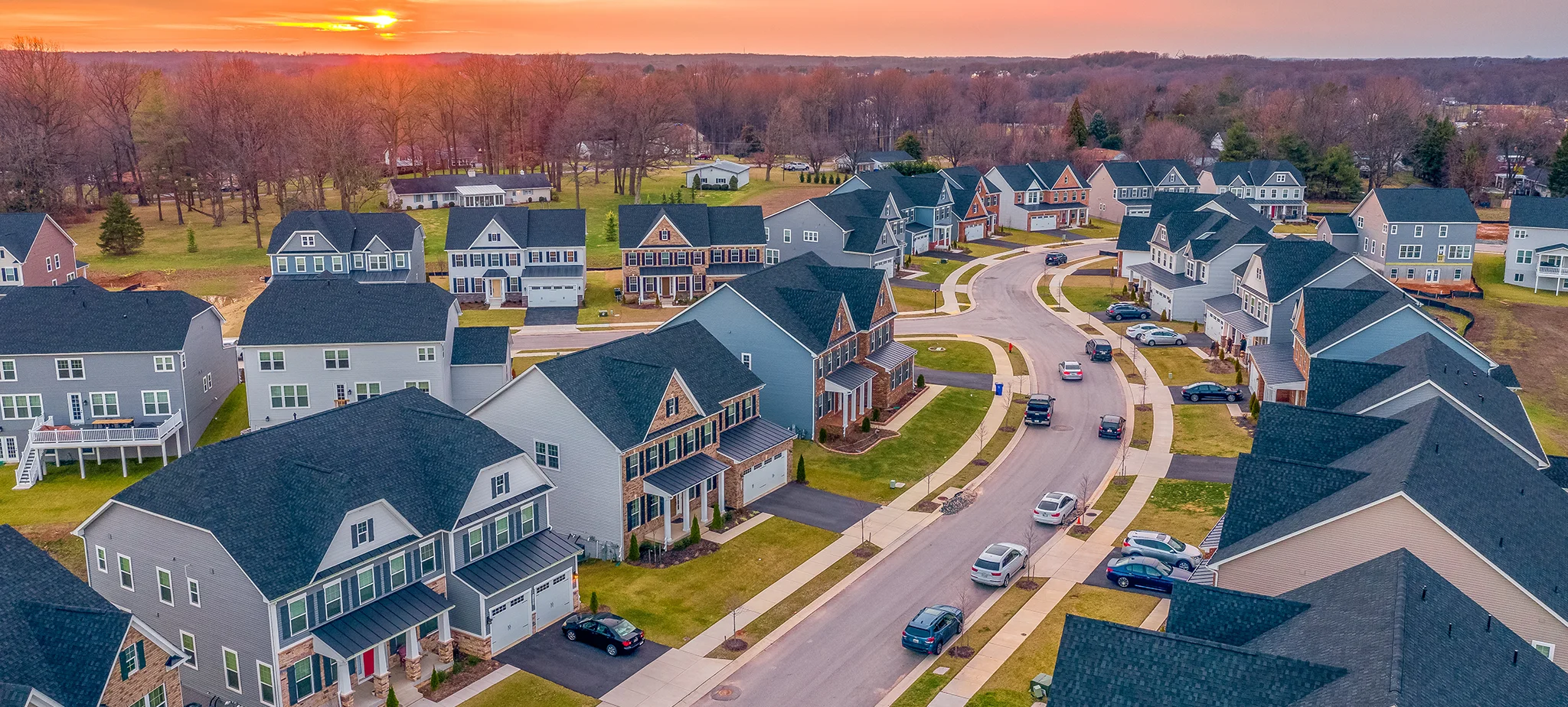
Most of Springfield's housing is pitched, but denser townhouse and condominium development added many buildings with flat or nearly flat sections over stair halls, bump-outs and attached garages. These roofs are small and close to walls and neighbors, so edges and wall joints deserve the most attention when you compare bids.
EPDM is forgiving to repair. A damaged spot can be cleaned and patched with tape or adhesive, and the sheet stays flexible in winter cold. The trade-off is color: black absorbs heat, so an owner focused on cooling costs may prefer a white membrane. The sections below cover how the roof is built and when to choose something else.
Where Springfield's EPDM roofs actually are
Look at a Springfield townhouse row from the alley and you will often see a low-slope patch over a stair hall, a rear bump-out or an attached garage. Rear additions and screened porches add more. These roofs are small, so rubber sheeting suits them: a single sheet can cover the whole surface, leaving wall joints and edges as the places that need care.
Condominium buildings and garden apartments are less about patches and more about whole roofs. The county classes them as commercial, so ballasted or fully adhered EPDM there follows a different permit path.
Residential or commercial permit for an EPDM roof?
Springfield has no town layer, so Land Development Services reviews the work. Townhouses up to three stories use the residential miscellaneous list, which names Re-Roof/Re-Line and Roof Repair. A condo board replacing a roof over several units files as commercial. Owners may apply themselves, but the county recommends a licensed contractor as the responsible party. Association approval is a separate step. Ask the office at 703-222-0801 whether tear-off is required and how many layers your roof may carry.
How an EPDM roof is held down, joined and finished
There are three ways to hold the sheet. Ballasted systems rest under stone, which adds weight, so framing must be checked. Fully adhered sheets are glued to the insulation, a frequent fit for small roofs with light traffic. Mechanically attached sheets are fastened in lines through plates. Townhouse sections often cannot carry much weight, which points toward adhered or fastened systems.
Wide sheets are joined with seam tape or splice adhesive, and the quality of that joint and of the flashings at walls, pipes and edges decides how long the roof stays dry. Tapered insulation should send water to a drain or scupper instead of leaving a pond. Wall flashing needs to run well up the wall and close with a termination bar and sealant. Edge metal should match what the reviewer asks to see.
When EPDM is the wrong call or a patch is enough
EPDM is a poor match over grease exhaust, where rubber can swell and degrade, so a kitchen roof wants another membrane. Black also adds heat over a sun-exposed, cooled space, and a roof with steady foot traffic can be punctured by shoes and tools. A patch often suffices for a single puncture, a lifted seam or a failed flashing. Replacement is the better answer when the sheet has shrunk away from the walls, insulation is wet in several places or leaks keep returning.
EPDM FLAT ROOF DETAILS FOR SPRINGFIELD BUILDINGS
HOW THE MEMBRANE IS ATTACHED
Ballasted, adhered or mechanically attached: the choice on a Springfield townhouse section usually comes down to weight and traffic. Adhered sheets add no stone load, while ballast needs framing that can carry it. Ask which system the bid uses and why it suits your roof.
SEAMS AND FLASHINGS
EPDM comes in wide rolls, so a small roof may have one seam or none. Where sheets meet, tape or splice adhesive does the work. At party walls, chimneys and pipes the flashing is the weak point, so ask how each is detailed and closed.

INSULATION AND DRAINAGE
Small flat sections on Springfield townhouses need a slight fall toward a drain, scupper or gutter. Tapered insulation or cut-to-fall boards provide it. A roof that holds water ages faster, so ask where water will leave and what the energy code requires under the sheet.

REPAIR OR REPLACE
Because EPDM is easy to patch, a single puncture or lifted seam rarely means a new roof. Replace when the rubber has shrunk, seams are failing in several places or the insulation under it is soaked. Photos of each problem area make that decision easier.
Springfield EPDM roofing questions
EPDM Roofing Nearby
Also in Springfield: TPO roofing or PVC roofing. Compare roofing materials or read about commercial flat roofing in Woodbridge.