Class 4 Impact-Resistant Shingles: Worth It in Northern Virginia?
Class 4 Impact-Resistant Shingles: Worth It in Northern Virginia?
Key Takeaways
- Class 4 (UL 2218) is the highest impact resistance rating for roofing — survives a 2-inch steel ball dropped from 20 feet without substrate rupture
- The upgrade adds $1,800–$3,500 to a typical 2,200 sq ft Northern Virginia roof replacement, roughly 15–25% over standard architectural shingles
- Most Virginia carriers discount the wind/hail portion of the premium 5–25% for documented Class 4 installations — Erie, USAA, State Farm, and Liberty Mutual lead in NoVA
- Service life is typically 2–8 years longer than equivalent standard shingles thanks to SBS-modified (rubberized) asphalt that resists freeze-thaw and minor hail strikes
- Payback for the upgrade is typically 5–8 years when discounts and avoided deductibles are factored in; longer if you live in a low hail exposure pocket
Northern Virginia is not the hail capital of the United States — that title belongs to the Front Range and the Texas / Oklahoma / Kansas tornado alley — but the I-95, I-66, and I-81 corridors absorb enough hail in a typical decade that Class 4 impact-resistant shingles have become a mainstream upgrade in the region. The math is simpler than the marketing makes it sound: a one-time premium of $1,800–$3,500 buys you a longer-lasting roof, an ongoing 5–25% insurance premium discount, and a meaningful reduction in the risk of paying your wind/hail deductible the next time a storm tracks through Prince William or Fairfax County. For most Northern Virginia homeowners staying in their home seven or more years, the upgrade pays for itself.
This guide covers what UL 2218 Class 4 actually means, which products are available in the NoVA market, what real Northern Virginia installs cost, which insurance carriers offer the largest discounts, the payback timeline, and the cases where standard architectural shingles are the smarter call. We'll also touch on installation specifics that matter for the warranty, since a Class 4 shingle installed incorrectly performs roughly the same as a Class 3.
What "Class 4" Actually Means
UL 2218 is the Underwriters Laboratories standard test for impact resistance of prepared roofing materials. It's a destructive lab test that drops steel balls of increasing diameter from 20 feet onto a sample of the roofing material twice in the same spot, then inspects the substrate (not just the surface) for cracks or fractures. The shingle either passes or fails at each ball size:
- Class 1 — survives a 1.25-inch steel ball
- Class 2 — survives a 1.5-inch steel ball
- Class 3 — survives a 1.75-inch steel ball
- Class 4 — survives a 2-inch steel ball (the highest rating)
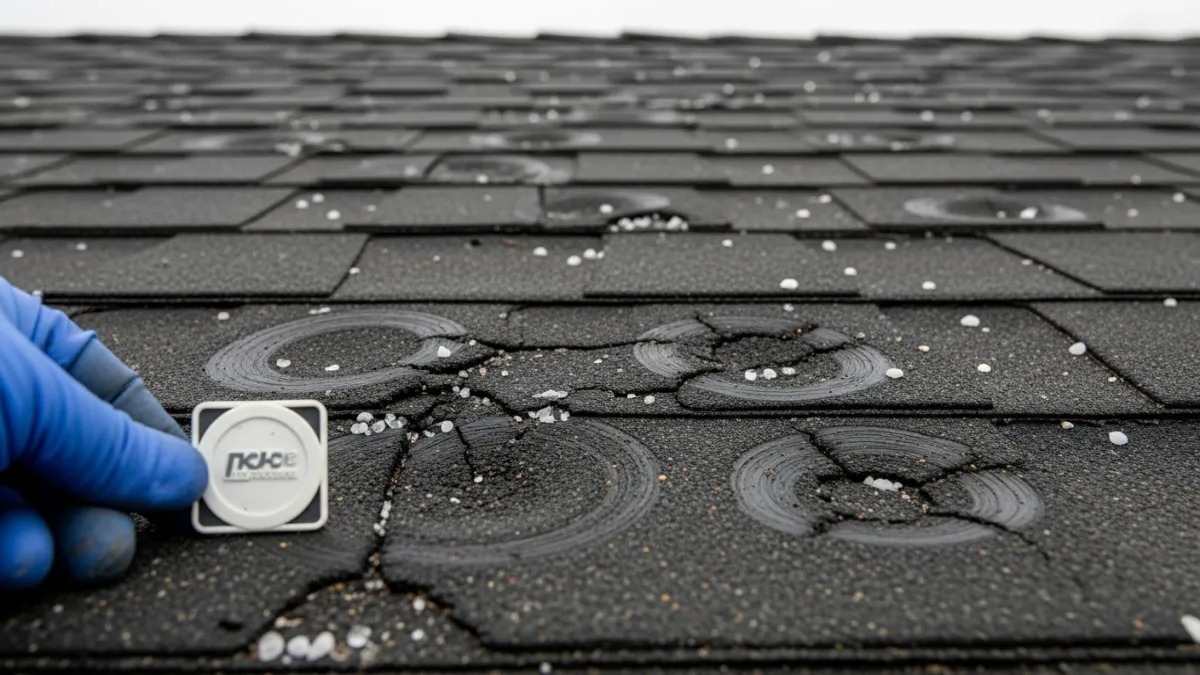
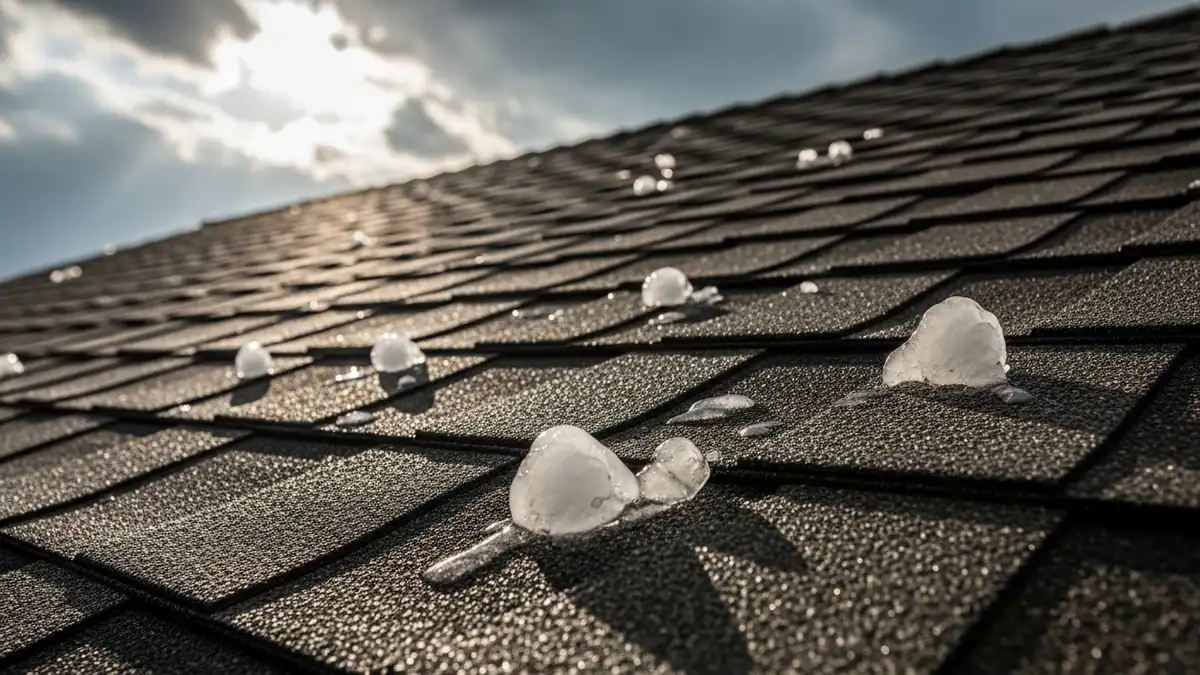
The 2-inch steel ball corresponds to roughly the impact energy of a 1.75–2 inch hailstone striking the shingle perpendicular at terminal velocity. In practice, hailstones are not perfectly spherical or rigid like steel balls (a real 2-inch hailstone is somewhat softer and irregular), so a Class 4 shingle in field conditions resists hail meaningfully larger than the 2-inch test stone implies. It does not mean the shingle is hail-proof — softball-sized hail will damage anything — but it dramatically reduces the failure rate at the storm sizes most common in Northern Virginia (1 to 1.75 inches).
How Class 4 Shingles Are Built Differently
A Class 4 shingle isn't just a thicker version of a standard shingle. The material composition is different in three meaningful ways:
1. SBS-Modified Asphalt
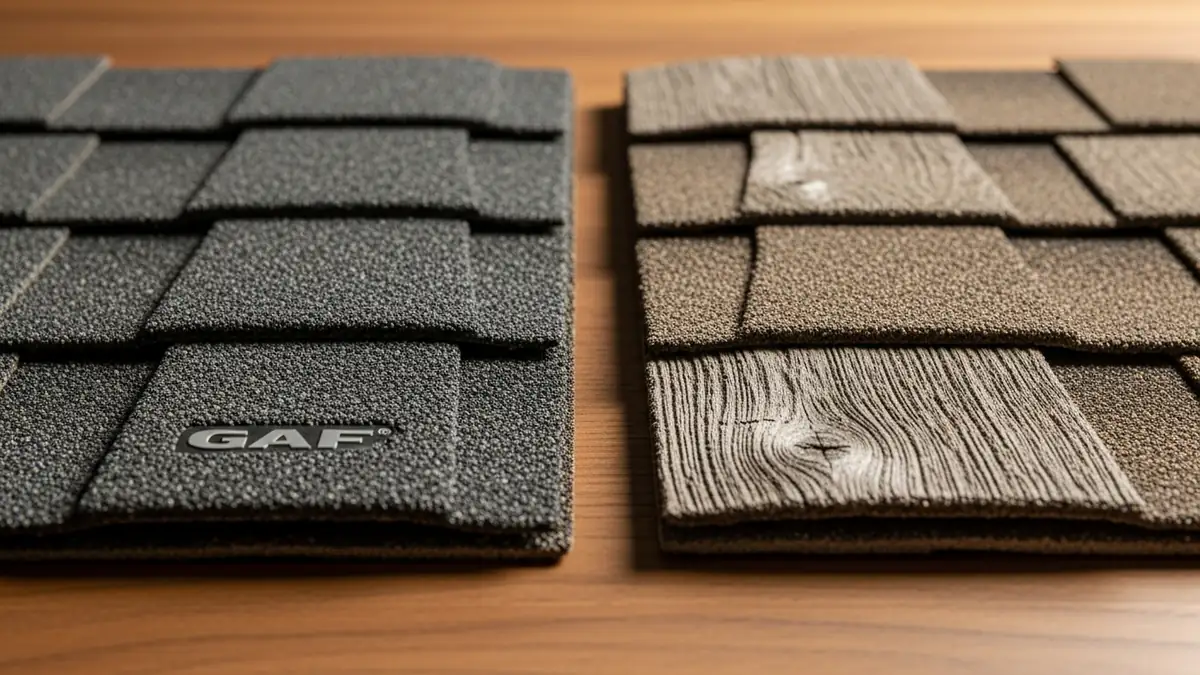
Standard architectural shingles use oxidized asphalt, which becomes brittle as it ages and especially in cold temperatures. Class 4 shingles use SBS (styrene-butadiene-styrene) modified asphalt, which is rubberized to maintain flexibility across a wider temperature range. The rubberized asphalt absorbs and dissipates impact energy without cracking the shingle substrate. Some manufacturers (Malarkey, for example) use NEX polymer modification with similar performance characteristics.
2. Polymer-Modified Fiberglass Mat
The internal fiberglass mat in a Class 4 shingle is reinforced with polymer additives that increase tear resistance and reduce nail pull-through. The combination of rubberized asphalt and a tougher mat creates a shingle that flexes under impact rather than fracturing.
3. Higher Granule Adhesion
Class 4 shingles typically use a denser granule embedment process that retains the protective ceramic-coated mineral granules longer than standard shingles. Granule loss is the dominant failure mode for asphalt shingles in any climate, and Class 4 products typically retain granules better through both hail strikes and standard UV/thermal exposure.
Hail in Northern Virginia: How Much Are We Actually Talking About?
Northern Virginia averages 2–4 reportable hail events per year per zip code, with most events producing pea to dime-sized hail (under 0.75 inches) that doesn't damage standard shingles. The damaging events — quarter-sized (1 inch) and larger — happen in NoVA roughly every 3–7 years per zip code, with the highest concentrations clustered across four specific counties.
Prince William County — particularly along the I-95 corridor from Dumfries through Woodbridge to Lake Ridge, and the I-66 corridor through Manassas, Bristow, and Gainesville — sees the most consistent damaging events. Loudoun County (Leesburg, Ashburn, and the western portion of the county heading toward Round Hill and Lovettsville) is close behind, followed by Fauquier County around Warrenton and the western foothills, and the western slice of Fairfax County including Centreville, Chantilly, and parts of Fairfax City.
The eastern slice of Fairfax County (Springfield, Burke, Annandale) and the immediate Potomac frontage in Lorton and Mason Neck see slightly less hail exposure due to maritime moderation from the river. Stafford County and the Quantico area sit in a moderate exposure zone.
When NoVA does take a hail event, the damage tends to be widespread within a 3–8 mile storm path. The May 2018 Manassas event, the June 2019 Gainesville event, and the August 2022 Loudoun event each generated thousands of insurance claims in the days that followed. A single event can run a regional insurance market into double-digit loss ratios for the year. Carriers know this, which is why they offer Class 4 discounts.
Cost in Northern Virginia: Class 4 vs Standard
The numbers below reflect typical 2026 pricing for a single-family Northern Virginia home with a 6:12 pitch and standard complexity, comparing the same model home in standard architectural vs Class 4 impact-resistant shingles.
| Home Size | Standard Architectural | Class 4 IR | Upgrade Premium |
|---|---|---|---|
| 1,500 sq ft (small ranch / townhome) | $8,500–$11,500 | $10,500–$14,000 | $1,500–$2,800 |
| 1,800 sq ft (typical NoVA single-family) | $9,500–$13,500 | $12,000–$16,500 | $1,700–$3,000 |
| 2,200 sq ft (standard suburban home) | $11,500–$16,800 | $14,500–$20,500 | $1,800–$3,500 |
| 2,800 sq ft (larger NoVA home) | $14,500–$20,800 | $18,500–$26,000 | $2,500–$4,800 |
| 3,500 sq ft (premium home) | $18,500–$26,000 | $23,500–$32,500 | $3,200–$6,200 |
Prices shown are typical ranges for Northern Virginia as of 2026 and vary based on home size, material grade, site access, pitch, and current material costs. Contact us for a free on-site estimate.
Insurance Discounts: What Virginia Carriers Actually Offer
The most attractive part of the Class 4 upgrade isn't the longer service life — it's the ongoing premium discount that compounds year after year. Virginia carriers don't standardize discount levels, so the actual percentage varies by carrier and even by zip code. Typical discount ranges based on what we see homeowners actually receive:
| Carrier | Typical Wind/Hail Discount | Documentation Required |
|---|---|---|
| Erie | 10–25% | Manufacturer cert + invoice + photos |
| USAA | 10–20% | UL 2218 cert + install invoice |
| State Farm | 5–15% | Wrapper photo + invoice |
| Liberty Mutual | 5–15% | Manufacturer cert + invoice |
| Allstate | 5–10% (zip-dependent) | UL 2218 cert + install invoice |
| Travelers | 5–15% | Manufacturer cert + invoice |
| Nationwide | 5–10% | Manufacturer cert + invoice |
On a typical $2,400 annual Northern Virginia homeowners premium with the wind/hail portion at roughly 35–45% of total, a 15% discount on that portion translates to roughly $120–$180 in annual savings. Over a 25-year shingle lifespan, that's $3,000–$4,500 in discount accumulation — which by itself is in the same range as the upgrade premium.
Always confirm your specific carrier's discount and required documentation before you sign for the install. Get the carrier's discount confirmation in writing, and have your contractor save the shingle wrapper, the manufacturer's UL 2218 certification document, and a labeled photo of the installed product for the renewal submission.
Payback Math: When Does the Upgrade Pay Off?
A simple payback calculation for a typical Northern Virginia home runs as follows. The upgrade premium runs about $2,500 in the mid-range for a 2,200 sq ft home, and the annual insurance discount averages $150 (a 15 percent discount on a $1,000 wind/hail premium portion is representative for the NoVA market). Avoided deductible exposure on one prevented claim is worth roughly $1,500 to $2,500 — the typical NoVA wind/hail deductible — and the service life extension of about four years on top of a roughly $600 per year amortized roof cost adds another $2,400 in long-run value.
Without counting the avoided deductible (since you may or may not actually take a hail event during the roof's lifetime), the discount alone pays back the upgrade in roughly 17 years. Counting the longer service life extension, the payback drops to 5–8 years. Counting one prevented hail claim and avoided deductible during a 25-year shingle life (a reasonable assumption in NoVA's hail zones), the upgrade is net-positive within 3–5 years.
For the math to fail, you'd need to live in a low-hail pocket, sell the home within 3 years, and never take a hail event. That's a real but narrow scenario.
Top Class 4 Shingle Options in Northern Virginia
Five products dominate the Class 4 segment in the NoVA market, and all are stocked at Beacon, ABC Supply, and SRS distribution centers serving Northern Virginia. GAF Timberline AS II is an SBS-modified asphalt shingle paired with the GAF warranty system through Master Elite contractors, with a strong color library matching the standard Timberline HDZ palette. Owens Corning Duration FLEX is also SBS-modified and paired with Platinum Preferred contractor warranties, offering a slightly thicker shingle profile, while the heavier-duty Duration Storm is the Owens Corning option for higher-exposure zones and carries Platinum-tier warranty options.
CertainTeed NorthGate ClimateFlex rounds out the SBS-modified options and is popular with CertainTeed-certified contractors in Northern Virginia, particularly in Loudoun and western Prince William, with strong showings in HOA-governed neighborhoods that maintain CertainTeed-specific approval lists. Malarkey Vista AR uses NEX polymer-modified asphalt rather than SBS, is well-regarded for impact and algae resistance, and has a growing presence in the NoVA market over the past three years. None of the five is dramatically better than the others on a properly installed roof — choose based on your contractor's certification level rather than chasing a marginal spec advantage.
For a brand-level deep dive, see our comparison of GAF Timberline HDZ vs Owens Corning Duration in Virginia, which covers the standard versions and their Class 4 counterparts side-by-side.
Installation Specifics That Matter for the Warranty
Class 4 shingles are installed with the same techniques as standard architectural shingles, but a few details matter more for warranty purposes than they do on a standard install. Six nails per shingle (not four) is required for the wind warranty on most Class 4 products, and using manufacturer-matching starter strip and ridge cap is non-negotiable — mismatched components reduce warranty coverage and can outright void the IR certification. Synthetic underlayment rather than felt is the right call for better tear resistance and better moisture management under the rubberized shingle, and ice and water shield should go at all eaves and valleys plus around every penetration on the roof.
Two further details bear directly on whether the homeowner ever sees the warranty pay out. Proper ventilation per the manufacturer's ventilation requirements is critical — under-ventilated attics void shingle warranties regardless of impact rating, and Class 4 SBS-modified products are particularly sensitive to attic heat because the rubberized asphalt loses flexibility faster when baked from below. Finally, save the manufacturer cert documentation in a single folder: the shingle wrapper photo, the UL 2218 certification document, and the install invoice should all live together so the insurance discount submission goes through cleanly at renewal.
When Standard Architectural Is the Better Call
A few cases favor standard architectural shingles over the Class 4 upgrade, and they are worth knowing because pushing the upgrade in the wrong situation just adds cost without much return. Selling the home within three years is the most common one — the upgrade premium rarely shows up dollar-for-dollar in the sale price, so the homeowner eats the cost without recovering it at closing. If your carrier does not offer an IR discount in your zip code (some Virginia zips don't qualify for any discount), the payback math gets meaningfully thinner and the upgrade may not pencil out. Carrying ACV roof coverage is another case where the math weakens, since the upgrade extends the practical service life but the depreciation math on a future claim is the same regardless of impact rating. And on a genuinely tight replacement budget, a high-quality standard architectural install with ice and water shield, a six-nail pattern, and proper ventilation outperforms a Class 4 install with corner-cutting on accessories — the right call there is to fund the accessories and skip the upgrade.
Outside those cases, the upgrade is the recommended call for most Northern Virginia homeowners, especially those in the western Prince William and Loudoun zones with documented hail exposure.
Get a Real Quote on Class 4 vs Standard for Your Home
Woodbridge Roofers will quote your roof in both standard architectural and Class 4 impact-resistant shingles, confirm your insurance carrier's specific discount, and run the actual payback math for your address. No pressure, no upsell. Call (571) 570-7930 or book online.
Schedule In-Home ConsultationFrequently Asked Questions
Related Articles
- GAF Timberline HDZ vs Owens Corning Duration in Virginia
- Hail Damage Roofing in Northern Virginia
- Best Roofing Shingles for Virginia
- ACV vs RCV Roof Insurance in Virginia
Conclusion
For most Northern Virginia homeowners replacing their roof in 2026, the upgrade to Class 4 impact-resistant shingles is a sound financial and practical decision. The $1,800–$3,500 premium buys a longer-lasting roof, a 5–25% ongoing insurance premium discount that compounds over the roof's lifetime, and meaningful protection against the next hail event tracking through Prince William, Fairfax, or Loudoun. The typical payback period is 5–8 years on the discount alone, and shorter when you account for service life extension and avoided deductible exposure.
The upgrade is most clearly justified for homes in higher hail-exposure pockets (western Prince William, Loudoun, Fauquier, and western Fairfax), for homeowners staying 7+ years, and for anyone carrying RCV roof coverage. It's a less obvious call for homes selling within 3 years or in low-exposure zip codes where the carrier doesn't offer a discount. In every case, get the discount confirmation from your specific carrier in writing before signing on the install.
Call Woodbridge Roofers at (571) 570-7930 or book a free in-home consultation. We'll quote both standard and Class 4 options for your home, confirm your carrier's discount, and walk through the payback math with real numbers for your address.