Roof Ventilation Guide for Northern Virginia Homes
Roof Ventilation Guide for Northern Virginia Homes
Key Takeaways
- Virginia code requires 1 sq ft of net free ventilation area (NFA) per 150 sq ft of attic, split balanced between intake and exhaust (or 1:300 with vapor barrier)
- Continuous ridge vent + continuous soffit vent is the gold-standard system for most Northern Virginia homes — passive, balanced, and invisible from the ground
- Never mix exhaust vent types — combining ridge vents with gable, box, or power vents creates short-circuits that can void shingle warranties
- Properly vented attics in NoVA peak at 110–125°F in summer; under-vented attics regularly exceed 140°F and bake shingles from below, cutting roof life 3–7 years
- Standalone ventilation upgrades cost $400–$1,800; bundled with a roof replacement they add only $200–$700
Roof ventilation is the most important part of your roof system that you can't see from the curb — and it's the most commonly underbuilt component on Northern Virginia homes built between 1985 and 2010. Inadequate ventilation cuts shingle life by years, drives up summer cooling bills, encourages ice dams in winter, voids manufacturer warranties, and creates conditions for attic mold growth. The good news: diagnosing and fixing ventilation problems is well-understood, the math is straightforward, and most fixes cost a few hundred to a couple thousand dollars depending on scope. This guide walks Northern Virginia homeowners through the code, the components, the math, the cost, and the signs that point to a ventilation problem.
Northern Virginia's climate makes ventilation particularly important. Summer attics in Woodbridge, Lake Ridge, Manassas, and Lorton routinely exceed 140°F when ventilation is inadequate, accelerating shingle aging on the upper-slope south-facing exposure where most premature failures begin. Winter brings the opposite problem: warm moist air from inside the home rises into the attic, condenses on cold roof sheathing, and either freezes (causing ice dams at the eaves) or drips back down (causing mold and rot). Both problems have the same root cause and the same solution: balanced intake and exhaust ventilation that maintains airflow across the underside of the roof deck year-round.
The Two Jobs of Attic Ventilation
Attic ventilation has two distinct functions that homeowners often confuse. Understanding both clarifies why the system matters and why every component is necessary.
Summer: Heat Removal
In summer, the sun hits the roof and the attic temperature rises sharply. Without ventilation, attic temperatures in Northern Virginia can climb to 150°F or higher under afternoon sun. That heat radiates downward through the ceiling insulation into the upper-floor living space (driving up cooling costs) and conducts upward through the underside of the roof deck into the asphalt shingles (accelerating granule loss, asphalt drying, and warranty-shortening thermal cycling). Effective ventilation moves outdoor air through the attic continuously, exhausting hot air at the ridge and pulling cooler outdoor air in at the soffits. A properly vented Northern Virginia attic peaks at 110–125°F in summer; the same uninsulated attic without ventilation peaks 20–35°F higher.
Winter: Moisture Removal
In winter, the inside of the home generates significant moisture from cooking, bathing, breathing, and HVAC operation. That moisture rises with warm interior air and migrates through gaps in the ceiling drywall, recessed lighting penetrations, and around plumbing vents into the attic. If the attic isn't ventilated, the moist air condenses on the cold underside of the roof sheathing. The condensate either freezes (forming frost on the rafters that thaws and drips into the insulation), drips into the insulation directly (saturating it and reducing R-value), or contributes to ice dam formation at the eaves. Adequate winter ventilation continuously flushes that moist air out before it can condense.
Code: How Much Ventilation Virginia Requires
Virginia adopts the International Residential Code (IRC) with state amendments, and the relevant section is IRC R806.2, which sets the minimum ventilation requirements in two tiers. The default requirement is one square foot of net free ventilation area (NFA) per 150 square feet of attic floor area, with intake (low) and exhaust (high) vents balanced 50/50. A reduced requirement of one per 300 square feet is allowed only if both conditions are met: the building has a Class I or II vapor retarder on the warm side of the ceiling insulation, and at least 40 percent but not more than 50 percent of the required ventilation is located in the upper portion of the roof (within three feet of the ridge).
Most Northern Virginia homes built before 2000 do not have a continuous warm-side vapor retarder, so they fall under the 1:150 default. Newer homes built to current Virginia residential energy code typically meet the vapor retarder condition and can use the 1:300 ratio if the upper-vent percentage is right.
Calculating Your Home's Needs
A worked example helps make the numbers concrete. For a typical 1,800 square foot attic floor at the 1:150 ratio, required NFA is 1,800 ÷ 150 = 12 square feet of total NFA, or 1,728 square inches, which splits 50/50 into 864 square inches of intake at the soffits and 864 square inches of exhaust at the ridge. The same attic at the reduced 1:300 ratio drops to 6 square feet of total NFA (864 square inches), splitting evenly into 432 square inches each on intake and exhaust.
Translate the numbers into actual products: a typical continuous ridge vent provides 12–18 sq inches of NFA per linear foot. At 18 sq inches per foot, you need about 48 linear feet of ridge vent to provide 864 sq inches of exhaust (the 1:150 case) — easily achievable on a 40-foot ridge. Continuous soffit vents typically provide 7–9 sq inches per linear foot, so the same home needs at least 96 linear feet of soffit venting (achievable on a typical perimeter of 180+ linear feet). Box vents typically provide 50–60 sq inches NFA per unit; you'd need 14–17 box vents to match a continuous ridge vent's exhaust capacity.
If you don't know what you have, an attic inspection can measure existing NFA and identify gaps. A reputable Northern Virginia roofer will do this inspection as part of any roof replacement quote at no cost.
The Major Vent Types Explained
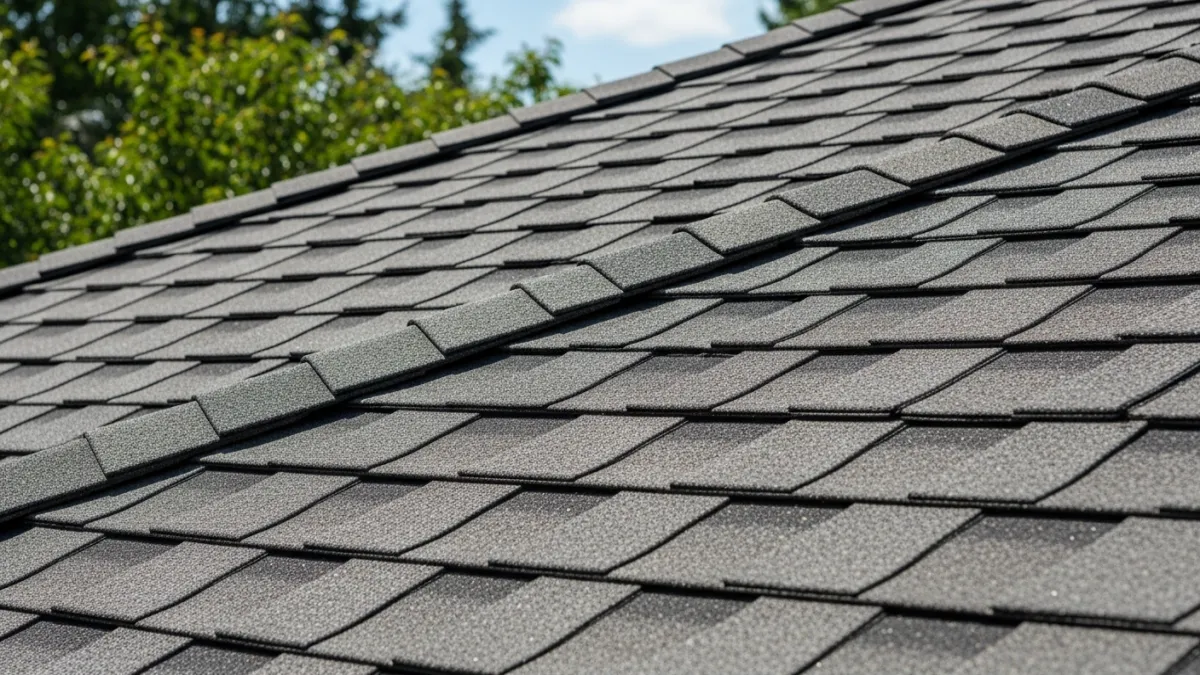
Continuous Ridge Vent (Best for Most Homes)
Runs the entire length of the roof ridge, providing continuous exhaust along the highest point of the roof. Combined with soffit intake, it creates a uniform airflow pattern across the entire underside of the roof deck. Examples: GAF Cobra Snow Country, GAF Cobra Ridge Vent III, Owens Corning VentSure, Air Vent ShingleVent II. NFA: 12–18 sq inches per linear foot. Largely invisible from the ground because the cap shingles are installed over the vent. Best for gable and standard hip roofs with continuous ridges.
Continuous Soffit Vent (Required Intake)
Continuous perforated aluminum or vinyl strip installed in the soffit panels along the eaves. Provides the intake side of the ventilation system. NFA: 7–9 sq inches per linear foot. Often blocked by insulation if rafter baffles aren't installed correctly, which is one of the most common ventilation defects we find in NoVA attics. Verify open soffit airflow during inspection — physically blocked soffits provide zero ventilation regardless of the perforation count.
Static Box Vent (Workhorse Alternative)
Square or rectangular vents installed near the ridge, typically four to a typical Northern Virginia roof. Used when a continuous ridge vent isn't practical (very short ridges, hip-only roofs without ridges). NFA: 50–60 sq inches per unit. Less effective than continuous ridge vents because airflow is concentrated rather than distributed. Box vents and ridge vents should never be combined on the same attic — pick one or the other.
Gable Vent (Older Homes)
Triangular or rectangular vents in the gable-end walls of the home. Common on older Northern Virginia homes. Effective when used as the primary exhaust system without other vent types added. Should not be combined with ridge vents — the wind-driven crosswind through the gable vent short-circuits the ridge airflow.
Power Attic Fan (Active Exhaust)
Electric or solar fan that actively exhausts attic air. Useful on homes where passive ventilation cannot achieve required NFA (low-pitch roofs, complex roof shapes, attics with limited intake). Common Northern Virginia options: Solar Star RM 1200, Broan-NuTone 355BK, QuietCool. Effective when paired with adequate soffit intake; problematic when soffit intake is insufficient because the fan can depressurize the attic and pull conditioned air from the living space through ceiling penetrations.
Turbine ("Whirlybird") Vent
Wind-driven rotating vent. Largely obsolete on residential homes today. Effective when wind is blowing but provides minimal ventilation in calm conditions. Not commonly recommended on new Northern Virginia installations.
The "Don't Mix" Rule
The single most common ventilation mistake on Northern Virginia homes is mixing exhaust vent types. The most frequent example: a homeowner adds a ridge vent during a roof replacement but leaves the existing gable vents or box vents in place. The result is a short-circuit in the airflow pattern. Air takes the path of least resistance — instead of being pulled all the way up from the soffits to the ridge, the ridge vent pulls air from the nearest existing exhaust vent (the gable, the box vent, or the power fan). The lower portion of the attic gets little or no airflow, dead spots form, and moisture and heat accumulate in those zones. The upper-slope south-facing shingles often show the result first as accelerated granule loss and curling.
Per the technical documentation of GAF, Owens Corning, CertainTeed, IKO, and Malarkey, mixing exhaust vent types can void the shingle warranty. The fix when adding a ridge vent is to seal off any other exhaust vents (block off the gable vents with rigid foam and trim, remove and patch box vents, disable power fans). The intake-only soffit vents stay in place — they're the intake, not the exhaust.
Cost: Roof Ventilation in Northern Virginia
| Scope | Standalone Cost | Bundled with Replacement | Notes |
|---|---|---|---|
| Continuous ridge vent (40 ft ridge) | $350–$900 | $200–$400 | Includes cap shingle integration |
| Continuous soffit vent (180 lf) | $400–$1,200 | $300–$700 | Often requires soffit panel removal |
| Box vent (per unit) | $150–$280 | $80–$150 | Typical install: 4 units |
| Solar attic fan | $450–$900 | $350–$700 | No electrical work required |
| Hardwired electric attic fan | $650–$1,400 | $450–$1,000 | Requires electrician and breaker |
| Rafter baffles (30-rafter bay attic) | $280–$650 | $180–$400 | Required to keep insulation off soffit |
| Gable vent (per unit) | $180–$420 | N/A — typically removed | Sealed off when ridge vent installed |
Prices shown are typical ranges for Northern Virginia as of 2026 and vary based on home size, accessibility, and current material costs. Contact us for a free on-site estimate.
Six Signs Your Northern Virginia Attic Isn't Venting
A handful of symptoms reliably show up first when ventilation is undersized or short-circuited, and most of them are easy to check yourself. Summer attic temperatures above 130°F are the clearest indicator — a pull-down attic stair plus an infrared thermometer tells you the answer in five minutes, and a properly vented NoVA attic peaks at 110 to 125°F even in late July. Ice dams in winter are the second classic sign: heat from the home escapes into the attic, melts snow on the warm portions of the roof, and refreezes at the cold eaves where ice builds up, with ventilation (combined with insulation) being the long-term fix. Visible condensation or frost on the underside of the roof deck during a winter attic inspection is the same problem caught a few months earlier in the cycle.
The remaining three symptoms tend to creep in more slowly but are often more expensive once they take hold. Musty or moldy smells in upper-floor rooms or the attic itself are usually the first sensory symptom of chronic moisture buildup, and they almost always precede a visible mold finding by months. Premature shingle aging on the south-facing slope — curling, blistering, and granule loss visible five to eight years before the rest of the roof shows comparable wear — is a textbook attic-bake symptom. And HVAC short-cycling combined with the upper floor running 5 to 10°F warmer than the lower floor in summer despite balanced thermostat zones points to excess attic heat radiating through the ceiling insulation and driving cooling loads up by a measurable margin every billing cycle.
Common Mistakes on Northern Virginia Roofs
A handful of installation defects show up so often on Northern Virginia attic inspections that they account for the majority of ventilation failures we see. Insulation packed against the soffit without rafter baffles is the most common one — it blocks the intake completely and is extremely common after attic insulation upgrades that prioritized R-value without preserving airflow. Ridge vent installed but the underlying slot not cut wide enough in the roof deck is a close second, where the vent looks correct from outside but cannot actually exhaust because the slot underneath is too narrow (standard cutout is one inch back from each side of the ridge board). Mixed exhaust types as discussed above — ridge vent installed but the old gable vents or box vents left in place — produces the short-circuit pattern that defeats the entire system.
The remaining defects involve adjacent systems intersecting with the attic. Bathroom fans venting into the attic instead of through the roof add moisture directly to the attic continuously, creating mold and rot, and they're common in older NoVA homes; they should be re-routed through a roof jack with insulated duct. Power fans installed without adequate soffit intake depressurize the attic and pull conditioned air from the living space through ceiling penetrations, raising HVAC load and energy bills rather than reducing them. And a vapor retarder that is missing or torn at the warm side of the insulation allows excessive moisture migration into the attic, which is particularly common in older NoVA homes that have had multiple insulation upgrades over the decades.
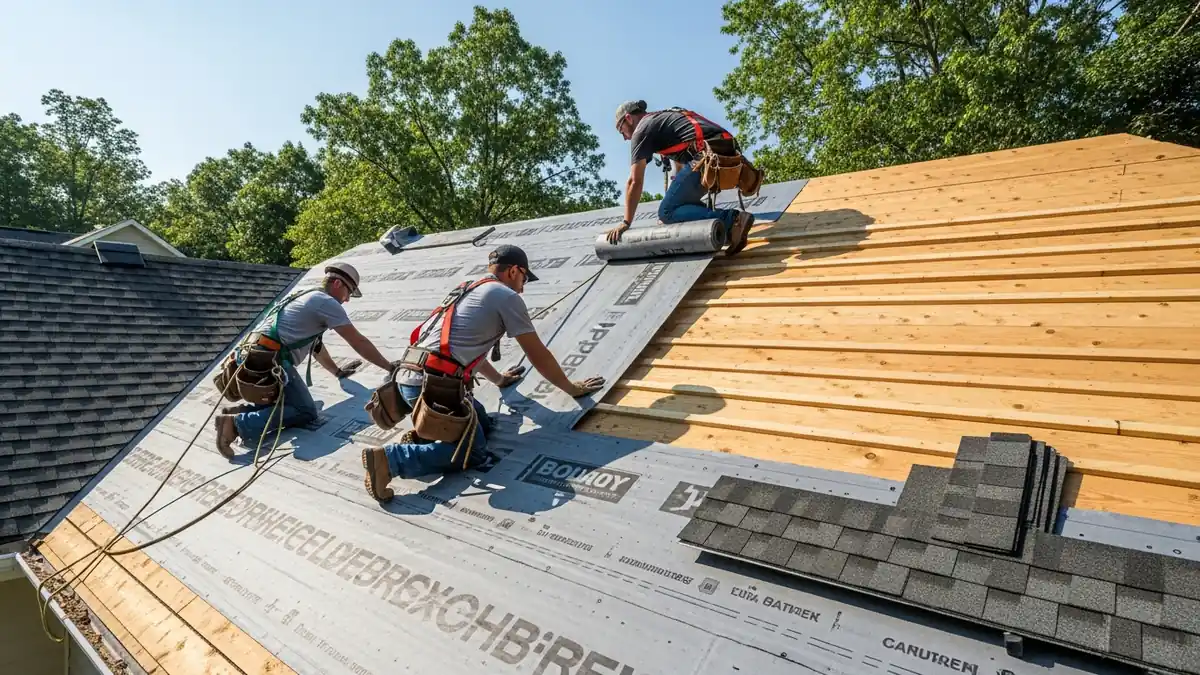
Ventilation and Roof Replacement: Always Bundle
If you're replacing your roof, fixing the ventilation system at the same time costs a fraction of doing it as a standalone project — and protects the new shingle's warranty. The most common bundled scope on a Northern Virginia replacement starts with a continuous ridge vent installed to current code (replacing any existing box vents or gable vents), followed by sealing off the existing gable vents with rigid foam and trim if the ridge vent is now the primary exhaust. Continuous soffit vents are added or upgraded to correct any blockage, rafter baffles are installed in every bay to keep insulation off the soffit intake, and any bathroom fan ducts currently venting into the attic are re-routed through proper roof jacks with insulated duct. The contractor then documents the NFA calculation and component selection for the manufacturer warranty submission, which is the paper trail that protects the shingle warranty if a future moisture or heat-related claim is ever filed.
Bundling these scopes adds typically $400–$1,200 to a roof replacement vs the same items run as standalone projects later. Beyond the labor savings, doing them at the same time avoids the secondary cost of pulling shingles around the ridge a second time later.
For more on how ventilation interacts with the rest of the roof system, see our guides on underlayment selection for Virginia's climate and best shingles for Virginia's humid climate.
Free Attic Ventilation Inspection
Woodbridge Roofers will measure your existing NFA, calculate what your home needs to code, and document the gaps — at no cost, whether you go on to do work or not. Most NoVA attics we inspect are under-vented; the fix is usually under $1,000 and protects your shingle warranty. Call (571) 570-7930 or book online.
Schedule Free InspectionFrequently Asked Questions
Related Articles
- Best Roof Underlayment for Virginia's Climate
- Best Roofing Shingles for Virginia's Humid Climate
- Roof Replacement Cost in Northern Virginia
- GAF vs Owens Corning Shingles in Virginia
Conclusion
Roof ventilation is the most underbuilt component on Northern Virginia homes — and the easiest to fix. Code requires 1 square foot of NFA per 150 sq ft of attic, balanced between intake and exhaust. The gold-standard system for most NoVA homes is a continuous ridge vent paired with continuous soffit vents, providing passive balanced airflow across the entire underside of the roof deck. Avoid mixing exhaust types, verify intake isn't blocked by insulation, and don't substitute power fans for adequate passive intake.
If you're replacing your roof, bundle the ventilation upgrade — it costs a fraction of standalone work and protects the new shingle's manufacturer warranty. If you're not replacing yet, an attic inspection takes 15 minutes and tells you whether your existing system meets code. Most NoVA attics we inspect don't, and the fix is usually under $1,000.
Call Woodbridge Roofers at (571) 570-7930 or book a free attic inspection. We serve Woodbridge, Dale City, Lake Ridge, Lorton, Manassas, Stafford, and surrounding communities.