Commercial Roof Inspection in Prince William County: Scope, Frequency, and Cost
Commercial Roof Inspection in Prince William County: Scope, Frequency, and Cost
Key Takeaways
- NRCA standard for commercial roofs in NoVA is twice-yearly inspection (spring and fall), plus after any major weather event or rooftop trade work
- Inspection cost in Prince William County: $400–$1,800 per visit depending on roof size and scope; annual programs $1,200–$4,500
- Common NoVA commercial roof issues: seam separation on older TPO, EPDM shrinkage, failed HVAC curb flashings, ponding water
- Manufacturer warranties (GAF EverGuard, Carlisle Sure-Weld, Firestone UltraPly) require documented certified-contractor inspection to remain in force
- A formal inspection report should include photographic documentation, prioritized findings, and a budget for recommended repairs within 5–10 business days
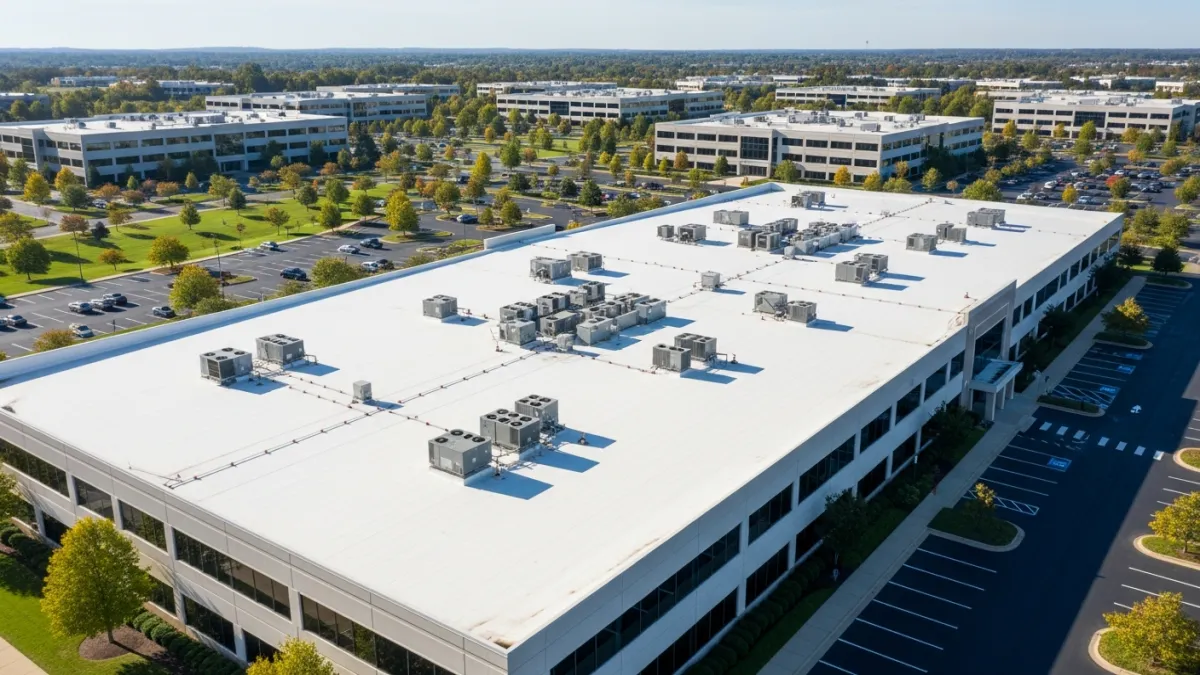
Commercial roofs across Prince William County — flat or low-slope membrane systems on retail strips, office buildings, warehouses, restaurants, churches, schools, and medical facilities — represent significant capital assets. A typical 30,000 sq ft commercial roof in NoVA is a $300,000–$600,000 replacement cost when it fails, and a planned replacement vs an emergency replacement after a leak event differ in total cost (including business disruption, interior damage, and accelerated scope) by 2–4x. Routine inspection is the single most cost-effective tool for managing this asset class. This guide walks Prince William County property managers and owners through what a proper commercial roof inspection includes, how often to schedule them, what they cost, and how to use the inspection program to preserve manufacturer warranties and budget capital correctly.
Why Inspections Matter Specifically in Prince William County
Northern Virginia's climate creates specific stressors that drive the inspection cadence. Prince William County typically logs 60–90 freeze-thaw events per winter, and each cycle stresses membrane seams, flashings, and adhesive bonds — water finds its way into small openings during the day and expands when temperatures drop overnight. Summer is the inverse problem: TPO and EPDM surface temperatures routinely exceed 160°F on July afternoons across Woodbridge, Manassas, and Lake Ridge, and that thermal cycling accelerates UV breakdown and the slow failure of adhesives and sealants. Between those two extremes, the membrane never really gets a rest.
On top of the climate cycle sits a steady cadence of severe weather. Routine summer thunderstorms produce 50–65 mph gusts several times a season, and the 2012 derecho remains a useful reference for what NoVA's worst day looks like — over 80 mph at many locations, which causes membrane uplift damage at edges and corners that progresses quietly until the next storm exposes it. Hail is less frequent but more insidious, with one to three measurable events per year and damage that is often invisible from the ground but produces punctures and accelerated UV breakdown over the following years; the same dynamics covered in our NoVA hail damage guide apply here. Add Prince William County's heavy tree canopy — pollen, leaf debris, moss and algae conditions around shaded drains — and the regular foot traffic from HVAC, electrical, telecom, and antenna technicians, each of whom risks unintended membrane damage from dropped tools or dragged equipment, and the case for a structured inspection program becomes hard to argue with.
Recommended Inspection Frequency by System Type
| Roof System | Frequency | Notes |
|---|---|---|
| TPO (single-ply thermoplastic) | 2x/year + after storms | Seam-test annually; UV degradation accelerates after year 12 |
| EPDM (single-ply rubber) | 2x/year + after storms | Watch shrinkage at edges/corners after year 15 |
| PVC (single-ply thermoplastic) | 2x/year + after storms | Long service life but seam attention important |
| Modified bitumen (mod-bit) | 2x/year + after storms | Granule loss and surface checking common after year 10 |
| Built-up roof (BUR) | 2x/year + after storms | Older system; heavy on maintenance after year 20 |
| Metal (standing seam) | 1–2x/year | Long life; focus on flashing and fasteners |
| Spray polyurethane foam (SPF) | 1x/year + after storms | Coating recoat required at 10–15 years |
In addition to those scheduled inspections, plan for an unscheduled visit within 30 days of any meaningful event on or near the building. Severe storms with 50+ mph gusts, hail, or hurricane remnants are the obvious triggers, but it is just as important to inspect after any HVAC, electrical, telecom, or antenna installation or service — those crews are the leading source of membrane damage in routine maintenance years. The same applies after any new roof penetration (skylight, vent, equipment curb), after adjacent construction that may have touched the roof (crane operations, scaffolding, paint work), and after a tenant change-out where the incoming tenant brings rooftop equipment requirements. Each of those events is a known leak risk, and catching the issue at 30 days is dramatically cheaper than catching it at the next scheduled inspection six months later.
What a Complete Commercial Roof Inspection Includes
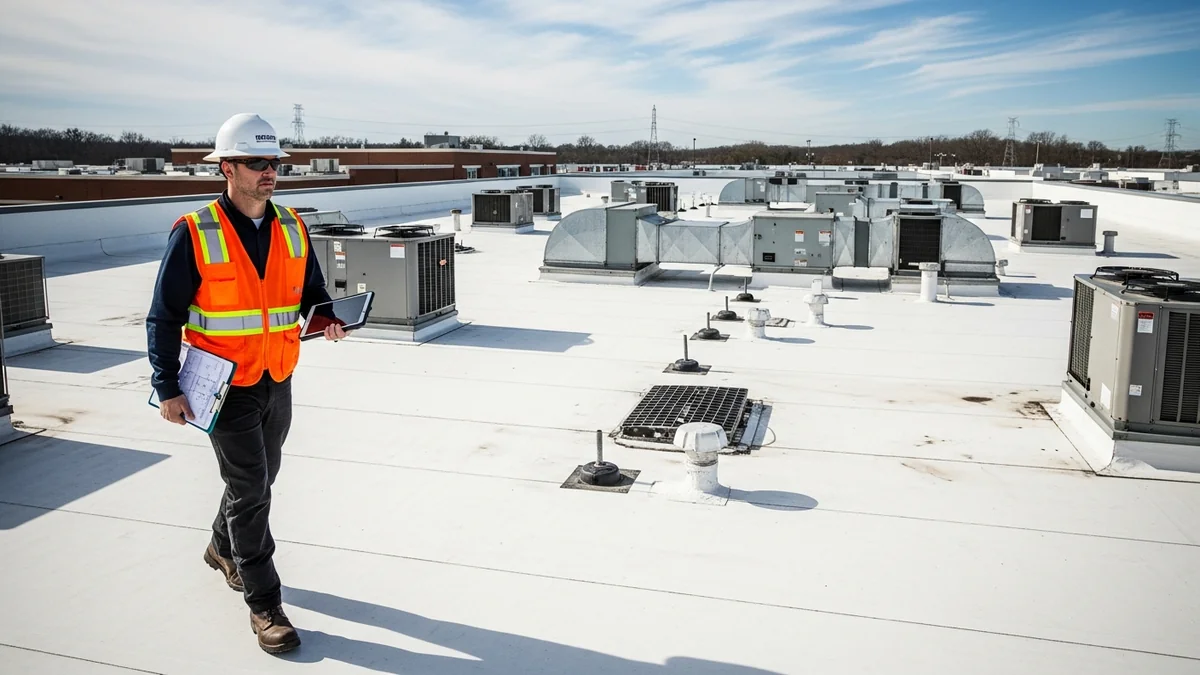
A proper NRCA-aligned commercial roof inspection in Prince William County addresses these areas:
- Site arrival and access verification. Confirm safe roof access (interior ladder, exterior ladder with anchor, or hatch). Document fall protection plan.
- Interior inspection first. Walk through the building looking for staining, water marks, ceiling tile damage, or efflorescence on walls. Interior signs of leaks help target rooftop investigation.
- Membrane visual inspection. Walk every accessible square foot of the roof. Document blistering, ridging, surface erosion, granule loss, biological growth, ponding water locations, and any visible damage.
- Seam probe test (single-ply systems). Use a seam probe to test adhesion at multiple locations across the roof. Failed seams are a leading cause of leaks on aging TPO and EPDM.
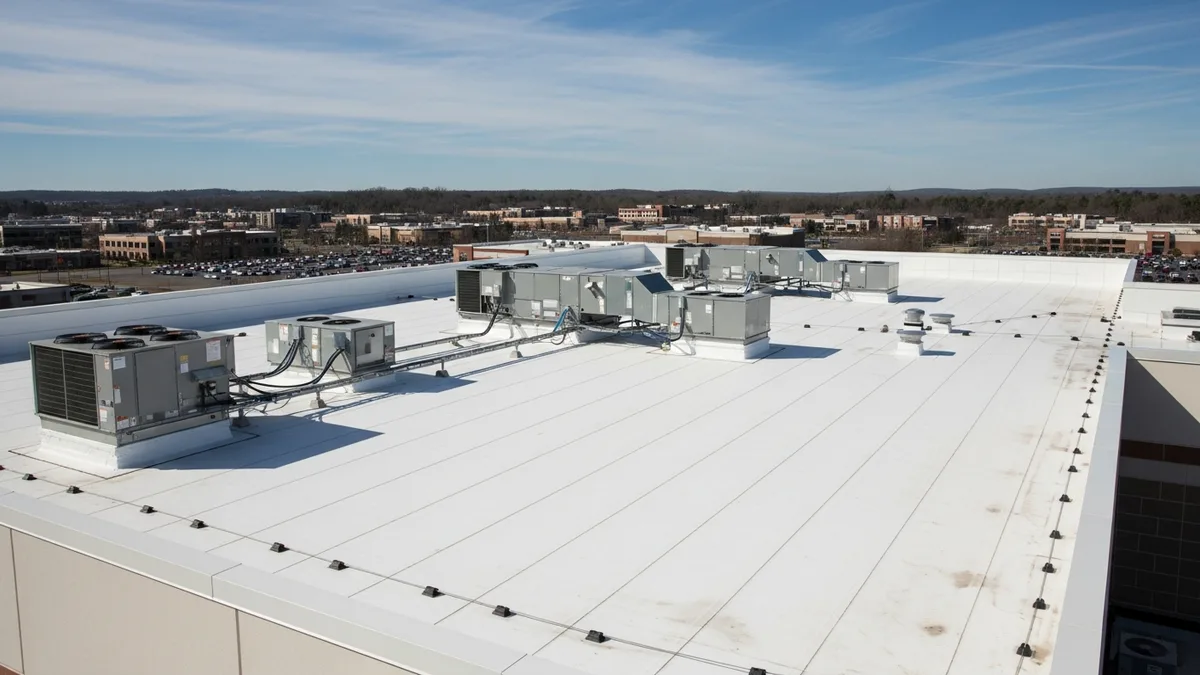
- Penetration inspection. Every plumbing vent, HVAC penetration, skylight, scupper, drain, expansion joint, and antenna mount. Most leaks originate at penetrations, especially failed pipe boots and HVAC curb flashings.
- Flashing inspection. Parapet wall flashings, edge metal, expansion joint covers, counter-flashings. Look for separation, sealant failure, and corrosion.
- Drain and scupper inspection. Clearance of debris, sealant condition, strainer presence and condition. Note any standing water within 48 hours of last rain (potential drainage issue).
- HVAC curb inspection. Counter-flashing integrity, condensation drain pan condition (broken or clogged pans cause concentrated water damage), service-disconnect condition.
- Photographic documentation. Wide shots of overall condition plus close-ups of every documented issue. Photos should be georeferenced or labeled by location for follow-up.
- Written report. Delivered within 5–10 business days. Findings prioritized by urgency (immediate / short-term / long-term / monitor), each with photo, location, recommended remediation, and budget estimate. Estimated remaining service life of overall system.
Cost Breakdown for Prince William County Commercial Roofs
| Roof Size / Scope | Single Inspection | Annual Maintenance Program |
|---|---|---|
| Small (under 5,000 sq ft) | $400–$650 | $1,200–$1,800 |
| Mid (5,000–15,000 sq ft) | $550–$950 | $1,800–$2,800 |
| Large (15,000–40,000 sq ft) | $800–$1,400 | $2,400–$3,800 |
| XL (40,000–80,000 sq ft) | $1,100–$1,800 | $3,200–$4,500 |
| Infrared moisture survey adder | +$0.10–$0.30/sq ft | Typically billed separately |
| Core sample + lab adder | +$250–$600 per sample | As-needed basis |
Annual maintenance programs typically include 2 inspections, written reports, and 4–8 hours of minor repair time (sealant work, flashing touchup, drain cleaning) bundled in. The bundled program is usually cheaper than two standalone inspections plus per-visit repair callouts.
The Warranty Connection
Major commercial roof manufacturer warranties are explicit about the inspection requirement, and reading the small print before the warranty matters is the difference between a covered claim and a $200,000 surprise. GAF EverGuard TPO and PVC warranties in the 15–30 year range require annual inspection by a GAF-certified contractor with documentation maintained by the building owner — discussed in more detail in our GAF certified contractor guide. Carlisle Sure-Weld and Firestone UltraPly carry similar requirements, with inspections by manufacturer-authorized contractors at intervals spelled out in the warranty document; Johns Manville TPO and Sika Sarnafil PVC follow the same pattern, with Sarnafil generally insisting on an annual visit by a Sarnafil-certified installer.
No-dollar-limit (NDL) warranties — the highest tier offered by most manufacturers — almost always have stricter inspection and maintenance documentation requirements than basic material warranties, reflecting the much broader risk the manufacturer is underwriting. Failure to maintain that documentation is routine grounds for warranty denial when a major problem develops 8, 15, or 22 years into the roof's life, and the carrier or manufacturer will ask for the inspection paper trail before they ask anything else. The cost of an organized inspection program — typically $1,200 to $4,500 per year for a mid-size NoVA commercial roof — is trivial compared to preserving warranty coverage on a $250K–$1.5M+ asset, and that math is the strongest single reason to keep an annual program in place rather than waiting for a leak to force the conversation.
Most Common Findings on Prince William County Commercial Roofs
Across hundreds of commercial inspections in Prince William and surrounding NoVA counties, the same handful of issues turn up again and again. Failed pipe boot flashings are the single most common leak source on commercial single-ply roofs, with EPDM and TPO boots typically failing at the 12–18 year mark as the rubber-to-membrane bond breaks down. HVAC curb flashing failure is a close second — counter-flashing slowly separates from the curb wall, often accelerated by HVAC service crews stepping on the curb during routine maintenance — and once that separation starts, water tracks straight into the building's interior. Ponding water that lingers more than 48 hours after rain is the third recurring finding, and it almost always points to inadequate slope or clogged drainage; persistent ponding accelerates membrane breakdown and triggers a code-driven correction at the next re-roof.
Seam separation rounds out the top five, particularly on first-generation TPO from the 2002–2010 era and on aging EPDM systems past year fifteen — which is why probe-testing seams is a non-negotiable step at every inspection. Edge metal corrosion or separation, often the legacy of past wind events like the 2012 derecho, shows up at corners and parapet returns. Drain blockage from leaf debris and granule accumulation reliably appears every fall, and an annual drain cleaning is one of the cheapest preventive measures on the inspection menu. Membrane punctures from foot traffic — dropped tools by HVAC techs, dragged equipment, missing work mats — are a steady background problem that gets worse as building rooftop equipment counts grow. Finally, coating failure on SPF and coated systems is the predictable late-life issue: those systems require a recoat at the 10–15 year mark, and missed recoats lead directly to substrate damage that turns a $5,000 maintenance cost into a $50,000 partial replacement. For broader context on commercial roofing in our area, see our commercial roofing overview, the TPO contractor selection guide, and our companion piece on flat versus low-slope systems.
What an Inspection Report Should Actually Look Like
A well-written commercial roof inspection report is the deliverable that justifies the program, and the gap between a real report and a thin one is enormous. The cover page should identify the property, the roof system (membrane type, age, manufacturer, original installer where known, warranty status), the inspector's name and credential, the inspection date, and the weather conditions at the time of the inspection — sun angle and surface dryness affect what is visible. The body of the report should walk the roof zone by zone, with a labeled diagram or aerial image of the roof divided into manageable sections, each finding tied to a location on that diagram. Every finding should carry its own photograph, a short narrative description, an urgency rating (immediate, short-term, long-term, or monitor), a recommended remediation, and a budget estimate for the recommended repair.
The report should also include a few summary artifacts that make it useful as a planning document, not just a service log. A one-page executive summary at the front lists the highest-priority items with their rough costs, which is the page the property manager actually reads. A separate section estimates the remaining service life of the overall membrane based on current condition and the manufacturer's published expectations, which feeds directly into capital reserve planning. A warranty status appendix lists the original installation specs, the manufacturer warranty document, and a record of inspections and repairs since installation — that documentation file is what protects the warranty when a major problem surfaces years later. If a report you receive from any contractor is missing these elements, push back; a thin report is a sign of a thin inspection, and the value of the program is almost entirely in the written deliverable.
How Inspections Pay for Themselves Over a Roof's Life
The commercial roof inspection program looks expensive on a single year's invoice and looks cheap on a 25-year capital plan, and the gap between those two views is where most building owners make their decision. A typical Prince William County mid-size commercial roof — call it 15,000 square feet of TPO at 12 years old — costs roughly $250,000 to replace today and somewhere north of $400,000 in the early 2030s once material and labor inflation are baked in. An organized inspection program at $2,500 a year, run consistently from year 5 onward, reliably extends membrane service life from a 22–25 year baseline to a 28–32 year window, and it is not unusual for a well-maintained TPO roof in Northern Virginia to make it to 30 years before a full reroof becomes necessary. The arithmetic on that is straightforward: $2,500 per year for 25 years is $62,500 spent, and pushing replacement out by five years saves the building owner well over $100,000 in real terms once inflation and the time value of money are considered.
The leak-related operating-cost savings are smaller in any single year but compound dramatically across a roof's life. A single ignored ceiling leak on a Prince William commercial property routinely runs $3,000 to $12,000 by the time you account for damaged inventory, displaced tenants, ceiling tile and drywall replacement, and the contractor markup on emergency response. Building owners who run an annual inspection program report seeing one to three of those incidents prevented each year; building owners who don't, generally see two to five of them happen. Layer in the warranty preservation discussed above, the lower insurance loss history that protects favorable renewal terms, and the more accurate capital reserves that make replacement financing easier to underwrite, and the case for a documented inspection program in Prince William County stops being a maintenance question and becomes a basic asset-management question. Our companion guide on general NoVA roof inspections covers the residential equivalent of this same calculus.
Building an Inspection Program for Your Property
Setting up an effective commercial roof inspection program in Prince William County is straightforward once you commit to the discipline of doing it consistently. Start by identifying the roof system in detail — pull original drawings or warranty documents to confirm membrane type, age, manufacturer, and warranty status — because every downstream decision (contractor selection, inspection frequency, coverage scope) depends on having that baseline documented. Then select a manufacturer-certified contractor for the system you actually have on the building. GAF, Carlisle, Firestone, Sika, and Johns Manville all maintain installer and inspector certifications, and matching the contractor to the membrane is what keeps the warranty intact.
From there, sign a maintenance agreement covering two inspections per year with written reports and a few hours of bundled minor repair time — multi-year agreements typically come with favorable pricing and lock in the inspection cadence you actually need. Build a single digital documentation folder containing the original installation specs, the warranty documents, every inspection report, every repair record, and every rooftop work log from HVAC, electrical, telecom, and antenna service crews; that folder is what defends the warranty if a major problem ever materializes. Coordinate with your roof contractor before any other trade gets on the roof and have them inspect afterward, then review each inspection report promptly and approve recommended repairs without letting them accumulate — minor flashing or seam issues identified at year 12 quietly become major leak events by year 14 if they're left alone. Finally, use the remaining-service-life estimate in each inspection report to plan capital reserves and start the contractor selection conversation 24–36 months before the membrane actually needs to come off, which is what gives you negotiating leverage when you eventually do reroof.
Need a Commercial Roof Inspection in Prince William County?
Woodbridge Roofers performs NRCA-aligned commercial roof inspections throughout Prince William, Fairfax, and Loudoun Counties. Same-week scheduling, written reports within 7 business days, photographic documentation of every issue, and prioritized repair recommendations with budget estimates. Annual maintenance programs available. Call (571) 570-7930.
Request an Inspection QuoteFrequently Asked Questions
Related Articles
- Commercial Roofing in Woodbridge, VA
- TPO Roofing Contractor in Northern Virginia
- Flat Roof vs Low-Slope in Northern Virginia
- Roof Inspection in Northern Virginia
Conclusion
A disciplined commercial roof inspection program in Prince William County is the most cost-effective tool available to commercial property managers and owners. Twice-yearly NRCA-aligned inspections by a manufacturer-certified contractor, combined with documented repair history, preserve manufacturer warranty coverage, prevent small issues from becoming major leak events, and provide the data needed for accurate capital reserve planning. The annual program cost is a small fraction of the value of the asset being protected.
If your commercial property hasn't had a formal inspection in the past 12 months, schedule one this quarter. If you're approaching a warranty milestone (year 5, 10, or 20 on the manufacturer warranty), schedule the inspection ahead of the milestone so any issues can be addressed under warranty.
Call Woodbridge Roofers at (571) 570-7930 or book a free phone consultation to discuss an inspection program for your Prince William County commercial property.