HOA Roof Replacement Rules in Prince William County: A Complete Guide
HOA Roof Replacement Rules in Prince William County: A Complete Guide
Key Takeaways
- The majority of Prince William County homes built since the 1980s are in HOA-governed communities with Architectural Review Committee requirements for roof replacements
- Starting roof work without ARC approval can result in fines, work stoppage orders, and being required to redo non-compliant installations at your expense
- The ARC process typically takes two to four weeks from submission to approval — factor this into your project timeline
- Working with a contractor experienced in your specific community streamlines the approval process because they know what the ARC accepts and rejects
- Emergency repairs after storm damage may be exempt from the standard ARC process, but you should still notify the HOA and submit documentation afterward
If you own a home in Prince William County, there's a high probability your community has a Homeowners Association with architectural review requirements. Communities like Braemar in Bristow, Stonebridge at Potomac Club, Lake Ridge, Montclair, Sudley Farm, Kingsbrooke, Victory Lakes, and dozens of others all require homeowners to submit exterior modification requests — including roof replacements — through an Architectural Review Committee (ARC) before work begins.
The ARC process exists to maintain visual consistency and property values within the community. When it works well, it ensures that your neighbor's lime green roof doesn't tank your home value. When homeowners don't understand the process, it becomes a source of frustration and delays. This guide walks you through exactly how to navigate the HOA roof replacement process in Prince William County — from understanding the requirements to preparing a complete submission to avoiding the common mistakes that cause delays and rejections.
The ARC Process Step by Step
Step 1: Obtain Current Architectural Guidelines
Before contacting contractors or selecting materials, request the current architectural guidelines from your HOA management company. These guidelines specify acceptable roofing materials (asphalt shingles, metal, slate, etc.), approved shingle colors and profiles, any prohibited materials, contractor requirements (some HOAs require specific licensing documentation), and the submission form and process. Do not rely on outdated guidelines or what your neighbor was told five years ago. Architectural standards are periodically updated, and the current version is the only one that matters for your submission.
Step 2: Select a Contractor and Materials
Choose a licensed roofing contractor who has experience working in your specific community. Ask them specifically whether they've completed projects in your community, which shingle colors and products have been approved by the ARC in their experience, and whether they'll prepare the ARC submission for you (most experienced contractors include this in their service). Select materials that comply with the guidelines. Your contractor should help narrow the options to products they know the ARC will accept.
Step 3: Prepare the ARC Submission
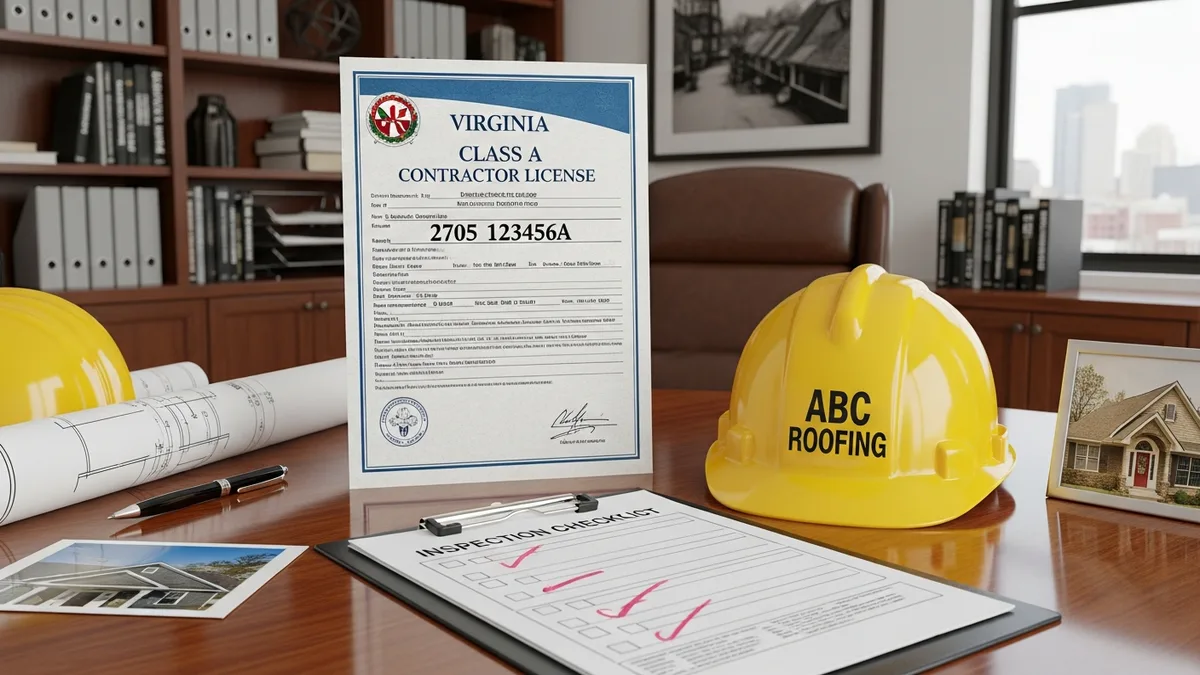
A complete ARC submission typically includes the completed ARC application form, contractor's Virginia DPOR license number, contractor's general liability and workers compensation insurance certificates, material specification sheet showing the exact product and color, a physical or digital color sample of the proposed shingle, a description of the work scope (full tear-off and replacement, not a layover), and the expected project timeline (start and completion dates). The number one reason for ARC delays is incomplete submissions. Missing a single document — especially the insurance certificate — typically results in the application being returned rather than approved conditionally. Include everything the first time.
Step 4: Wait for Approval
Most ARC committees meet on a regular schedule — biweekly or monthly. Your application is reviewed at the next meeting after submission. Total turnaround is typically two to four weeks, though some communities are faster and some slower. If your submission misses the ARC meeting by a day, you may wait until the next meeting cycle. Plan accordingly — submit as early as possible in the process.
Step 5: Proceed After Written Approval
Begin work only after receiving written approval from the ARC. Retain a copy of the approval letter and provide one to your contractor. Most approvals specify a completion timeline (often 30 to 60 days from approval). If weather or scheduling causes delays beyond the approved timeline, notify the HOA to request an extension rather than risking a compliance issue.
Common ARC Mistakes and How to Avoid Them
- Choosing an unapproved color: Some colors that look appropriate may not be on the approved list. Always select from the current approved palette. If you want a color not on the list, submit a request and be prepared for it to be denied
- Starting work before approval: This is the most expensive mistake. The HOA can issue fines, issue a stop-work order, and in extreme cases require you to remove and replace non-compliant materials at your expense
- Incomplete documentation: Missing insurance certificates, expired license documents, or wrong application forms cause returns and restart the review clock
- Not matching adjacent units: For townhome communities, some HOAs require that your new roof color match or complement adjacent attached units. Check whether this applies in your community
- Ignoring the timeline: If your approval specifies a completion date and you miss it, you may need to resubmit for re-approval. This creates unnecessary delays and frustration
Emergency Repairs and the ARC
Storm damage creates a unique situation regarding ARC requirements. Most HOAs recognize that emergency repairs cannot wait two to four weeks for committee review. The general approach is to make emergency repairs using materials that match or closely approximate the existing roof, notify the HOA management company of the damage and the emergency repair within 24 to 48 hours, and if a full replacement is needed as a result of the storm damage, submit the standard ARC application for the replacement project. Emergency tarping and temporary patching typically don't require ARC approval, but the permanent repair or replacement that follows does.
What the ARC Cannot Require
While the ARC has broad authority over exterior aesthetics, there are limits. The ARC generally cannot require you to use a specific contractor (they can require proper licensing and insurance, but not a specific company), require you to pay more than necessary for the project, prevent you from making code-required repairs or modifications, or prohibit changes that are required by Virginia building code even if they alter the appearance. If you believe an ARC decision is unreasonable, most HOA governing documents include an appeals process. Review your community's Declaration of Covenants and Bylaws for the specific process.
ARC-Approved Roofing Materials for Prince William County
While specific approved materials vary by community, most Prince William County HOAs accept these product types and colors:
- Architectural (dimensional) asphalt shingles: The standard across virtually all PWC communities. Three-tab shingles are typically no longer approved for replacements even if they were the original material. Popular approved products include GAF Timberline HDZ, Owens Corning Duration, and CertainTeed Landmark Pro
- Standard approved colors: Earth tones dominate approved palettes across the county — charcoal, weathered wood, hickory, driftwood, slate gray, and similar neutral tones. Bright or unconventional colors are rarely approved
- Standing seam metal: Acceptance varies widely. Some communities prohibit it outright, others allow it with color restrictions, and some accept it without restriction. Check your specific guidelines
- Synthetic slate and cedar shake alternatives: Premium synthetic products that replicate the appearance of natural slate or cedar shake are gaining acceptance in communities that value architectural distinction. These are less commonly addressed in guidelines, so approval may require a special request
Timeline Planning for HOA Roof Replacement
Here's a realistic timeline for a roof replacement in an HOA community in Prince William County:
| Phase | Timeline | Details |
|---|---|---|
| Initial inspection and estimate | Week 1 | Free inspection, material selection, estimate preparation |
| ARC submission and review | Weeks 2-5 | Submit application, wait for committee review and approval |
| Material ordering and scheduling | Weeks 5-7 | Order materials, schedule installation date, pull permit |
| Installation | Weeks 7-8 | 1-3 day installation depending on home size |
Total elapsed time from initial contact to completed installation is typically six to eight weeks. During peak season (spring and fall), contractor scheduling may extend this timeline. Start the process early rather than waiting until your roof is in crisis condition — emergency situations limit your options and compress the timeline in ways that can create problems with both the ARC process and the quality of work.
Townhome and Attached Unit Roofing in HOA Communities
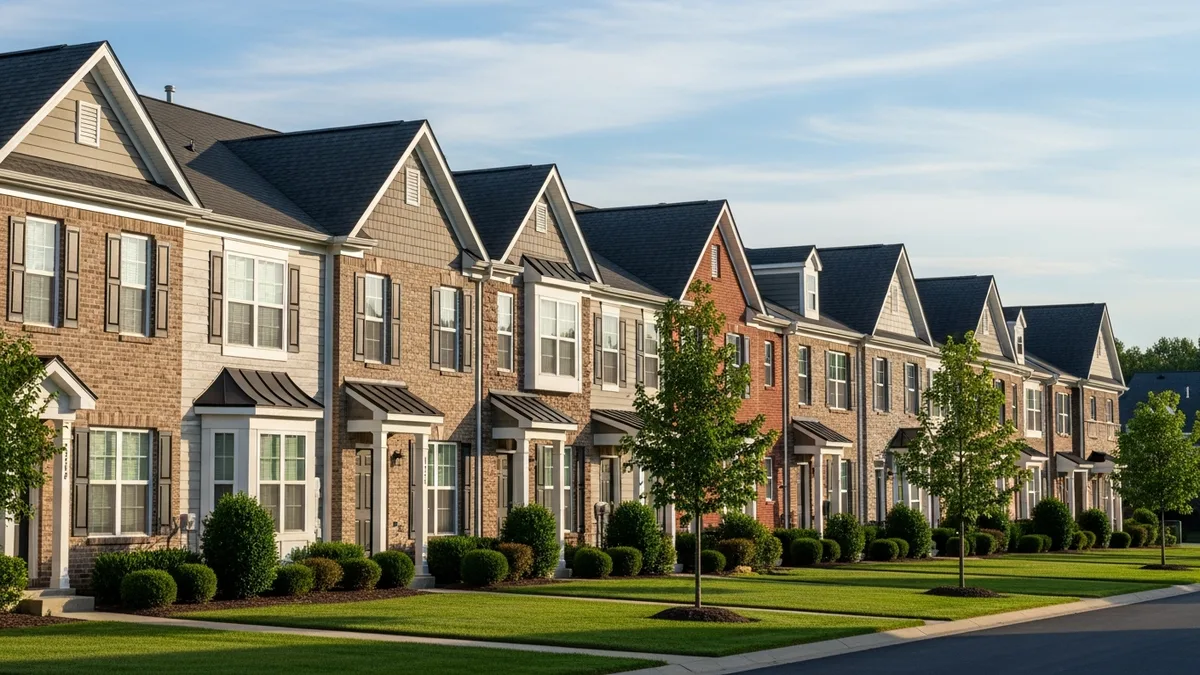
Roof replacement for townhomes and attached units in Prince William County HOA communities introduces additional considerations that single-family homeowners don't face. In many townhome communities, the roofline is shared across multiple attached units, and replacing one section without addressing the adjacent sections creates visible color mismatches and potential water management issues at the transition points. Some HOAs require that all attached units in a row be replaced simultaneously to maintain visual uniformity, while others allow individual replacement but mandate an exact color match to the existing roof on adjacent units.
The flashing details where one unit's new roof meets the neighboring unit's existing roof require careful attention. Improperly handled transitions between new and old roofing create leak vulnerabilities that may not show up for months or even years. An experienced contractor who has worked in townhome communities throughout Prince William County understands these transition details and can execute them properly. If your HOA requires coordinated replacement with adjacent units, your contractor should be able to facilitate communication with your neighbors and their contractors to ensure seamless integration at the shared roof sections.
HOA Bulk Replacement Programs
Some Prince William County HOAs negotiate bulk replacement contracts where the entire community or a large section is re-roofed by a single contractor at a negotiated group rate. These programs can offer cost savings of 10 to 20 percent compared to individual replacement, and they simplify the ARC process since the community selects the contractor and material uniformly. However, homeowners should still verify the contractor's licensing and insurance independently, review the material specification to ensure quality products are being used, and understand what warranty coverage the bulk program provides versus what an individual project with a manufacturer-certified contractor would include. If your community is considering a bulk program, ask whether homeowners retain the option to upgrade to premium materials at an additional cost rather than being limited to the standard specification selected for the group.
Conclusion
The HOA roof replacement process in Prince William County adds time to your project timeline but is straightforward when you understand the steps and prepare a complete submission the first time. Work with a contractor experienced in your specific community, submit all required documentation upfront, and factor two to four weeks for ARC review into your planning. The process protects your property value and your neighbors' property values, and navigating it smoothly is simply a matter of preparation.
Call us at (571) 570-7930 or book a consultation. We've navigated the ARC process in communities throughout Prince William County and can help prepare your submission for approval.