Roof Insurance Claim Denied in Virginia? Here's How to Appeal
Roof Insurance Claim Denied in Virginia? Here's How to Appeal
Key Takeaways
- Most Virginia roof claim denials cite one of five reasons: wear and tear, damage below deductible, late filing, prior unrepaired damage, or a cosmetic damage exclusion — each has a specific appeal path
- The single highest-leverage step after a denial is getting the denial in writing with the specific policy clause cited — most carriers will provide it, and you can demand it under Virginia's claims handling regulations
- A documented contractor supplement resolves the majority of denials and underpaid claims at no cost to the homeowner; public adjusters and attorneys are second and third lines of escalation
- Virginia's statute of limitations on a written insurance contract is 5 years per Virginia Code §8.01-246, but practical evidence preservation favors filing your appeal within 90 days
- Public adjuster fees are capped at 25% of the total claim by Virginia Code §38.2-812.2; attorney bad faith cases can additionally recover attorney fees and interest
Receiving a denial letter on a roof insurance claim in Virginia is frustrating, expensive, and — in a meaningful percentage of cases — wrong. Virginia carriers deny or underpay roof claims for a defined set of reasons, and almost every one of them has a documented appeal path that works. The fastest, cheapest, and most effective response in most cases is a contractor-led supplement with photo evidence, a detailed scope of work, and a written request to re-inspect — not a lawsuit, not a public adjuster, and definitely not silently accepting the denial. This guide walks through exactly why Virginia roof claims get denied, how to read the denial letter, what evidence to assemble, the step-by-step appeal process, and when to escalate beyond the carrier.
Northern Virginia homeowners file thousands of roof claims a year, and the volume spikes after every significant storm. Hail events along the I-95 corridor between Springfield and Stafford, microbursts that hit Lake Ridge and Montclair on summer evenings, the back-end of tropical systems tracking up from Hampton Roads, and the wind/ice combinations of January storms all generate legitimate claims — and a meaningful share get denied or underpaid on the first pass. The reasons range from genuine policy exclusions to adjuster errors to carrier-side time pressure during high-volume claims periods. Knowing which bucket your denial falls into determines what you do next.
This guide is structured the way a Virginia homeowner actually moves through a denial: read the letter, identify the cited reason, gather the right evidence, file the right kind of appeal, and escalate only if needed. We've also included a cost table for the appeal process itself so you can budget realistically — most appeals cost the homeowner nothing, but knowing the price tag at each escalation level helps you decide how far to push.
Step 1: Read the Denial Letter Carefully
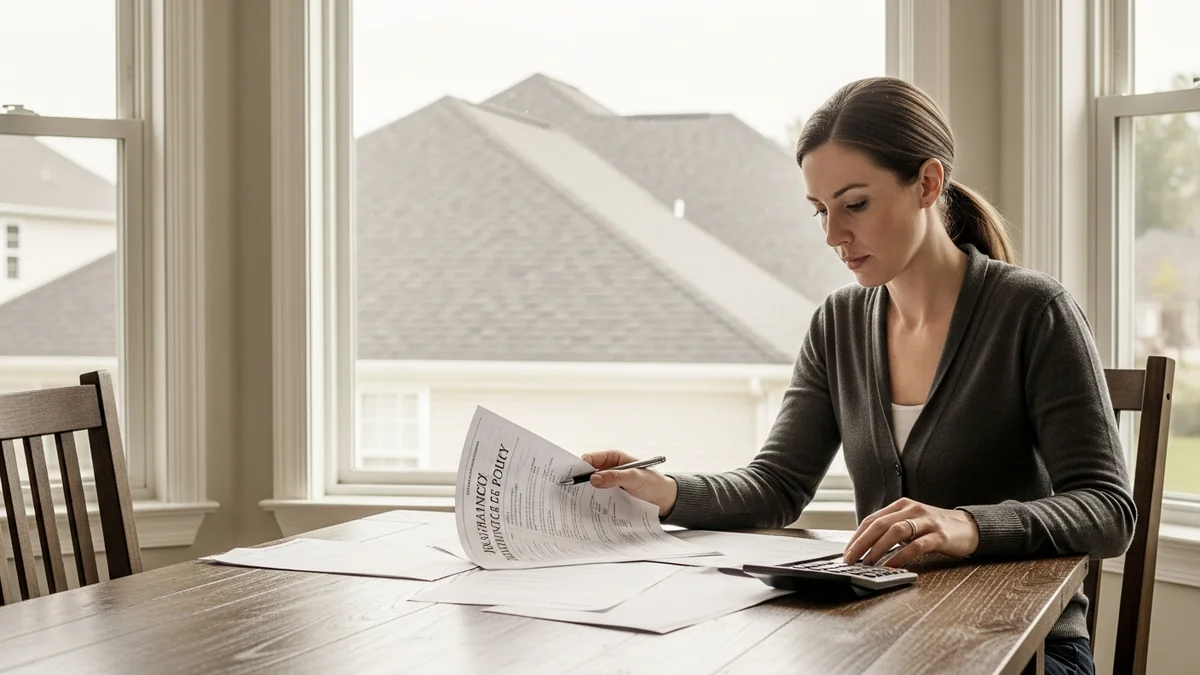
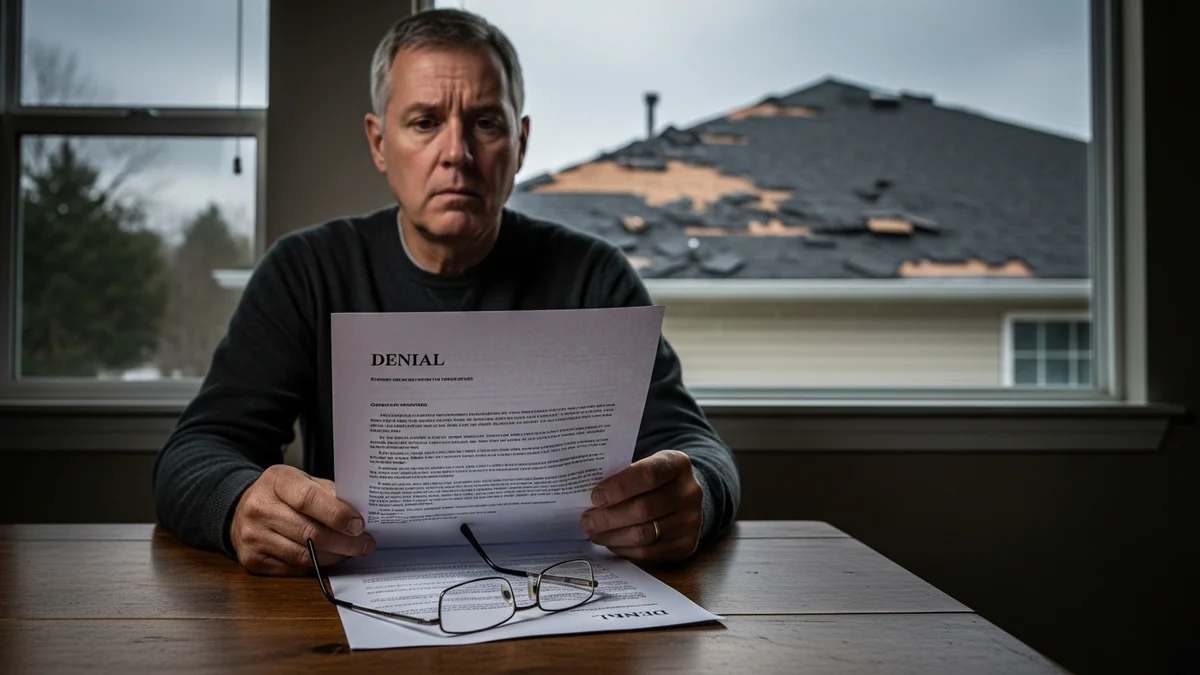
A Virginia denial letter is not a generic rejection. By regulation under 14 VAC 5-400-50 (Virginia's Unfair Claims Settlement Practices regulation), the carrier must give a written explanation that references the specific policy provision being applied. If the letter you received is vague — "claim is denied for failure to meet policy terms" — call the claims office and request a detailed written denial citing the exact clause. They are required to provide it.
Once you have the detailed denial in hand, identify which of the common reasons applies:
Reason 1 — Wear and Tear / Maintenance Exclusion
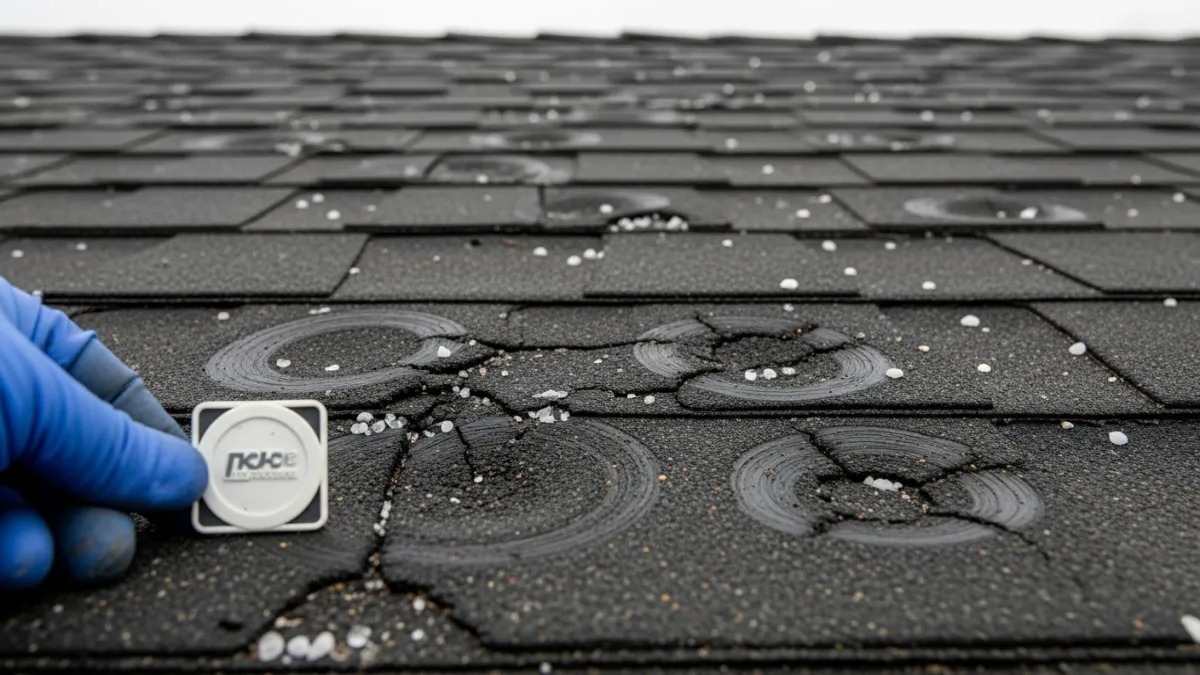
The most common denial. The carrier argues that your shingles failed because of age, weathering, granule loss, or deferred maintenance, not because of a storm. The cited clause is usually the policy's general exclusion for "wear, tear, deterioration, mechanical breakdown, latent defect" or similar language. Appeal strategy: document the storm event with NOAA reports and neighborhood damage photos, and have a contractor produce a damage report that distinguishes storm patterns (uniform impact marks, lifted shingle tabs, displaced ridge caps) from wear (random granule loss, curling, blistering). Wear and tear denials reverse frequently when the contractor's report is detailed and the storm date is independently verified.
Reason 2 — Damage Below Deductible
The adjuster's scope of damage is real, but the dollar value is below your deductible. Common when the policy carries a percentage-based wind/hail deductible — for example, a 2% deductible on a $500,000 home is $10,000, which can swallow the entire repair cost on a partial damage claim. Appeal strategy: a contractor's detailed scope often identifies damage the adjuster missed, particularly in less visible areas (back slopes, valleys, flashing, pipe boots, ridge caps, gutter aprons). Adding the missed scope frequently pushes the claim over the deductible. If the deductible itself is the issue, the appeal is moot but you may want to request a deductible reduction at the next renewal.
Reason 3 — Late Notice / Missed Deadline
Most Virginia policies require notice of loss within a defined window, often 12 months from the date of loss for property damage and as short as 60–180 days for wind/hail in some endorsements. If you're past the window, the carrier denies on late notice. Appeal strategy: establish a clear discovery date (when did you actually become aware of the damage?). Many wind/hail deductible exclusions accept a "delayed discovery" defense if the damage was not visible from the ground and was discovered during a routine inspection or a subsequent issue (like an interior leak). Contractor reports documenting that the damage matches a specific prior storm date — and that the damage was not reasonably discoverable until later — can rescue late-notice denials. This appeal is harder to win without strong evidence; if the delay is unjustifiable, the denial usually stands.
Reason 4 — Prior Unrepaired Damage
The carrier argues that the damage was already present before the policy period or before this loss event, and therefore is excluded. Common when there's a prior claim on the property or when the home was bought recently and the new owner has no documentation of the prior roof condition. Appeal strategy: pull pre-loss documentation — real estate listing photos (Bright MLS retains agent photos for years), prior insurance inspection reports, drone footage from prior tree work, or inspection reports from the home purchase. A clear "before storm vs after storm" photo comparison is highly persuasive. If pre-loss photos don't exist, a roofer's analysis of the damage age (fresh impact bruising vs weathered impact bruising looks different under contractor-grade flashlights) can support a fresh-damage claim.
Reason 5 — Cosmetic Damage Exclusion
Common on metal roofs and impact-resistant shingles. The carrier argues that the damage is purely aesthetic and does not affect the functional performance of the roof, and therefore is excluded under a cosmetic damage exclusion endorsement. Appeal strategy: functional damage proof — a contractor demonstrating that "cosmetic" hail dents have actually compromised the underlayment, fractured the protective coating on metal panels, or created hidden granule loss that accelerates UV damage. Manufacturer warranty exclusions for cosmetic damage that also note functional impact (some metal manufacturers will void warranty for hail damage they classify as cosmetic) strengthen the case that the damage is not purely aesthetic. This is the hardest of the five common denials to overturn but it does happen.
Step 2: Build the Evidence File
A successful appeal stands or falls on documentation, and most of the file can be assembled in one to two weeks with a single contractor visit and some online research. Start with the denial letter itself, with the specific policy clause cited, and pair it with a copy of your declarations page and the relevant policy form (the carrier provides the policy form on request, and reading the actual exclusion language rather than the summary is essential). Photo and video documentation of every damaged area is the heart of the file: drone footage covers slopes that ground-level photos miss, close-up macro shots reveal impact patterns, and wide shots establish context — 100 or more photos is normal on a contested claim. Pre-loss photos, if available, dramatically strengthen the package and can come from real estate listing archives via your agent, prior inspection reports, neighbor or HOA imagery, an insurance walk-through, or drone footage from prior tree work.
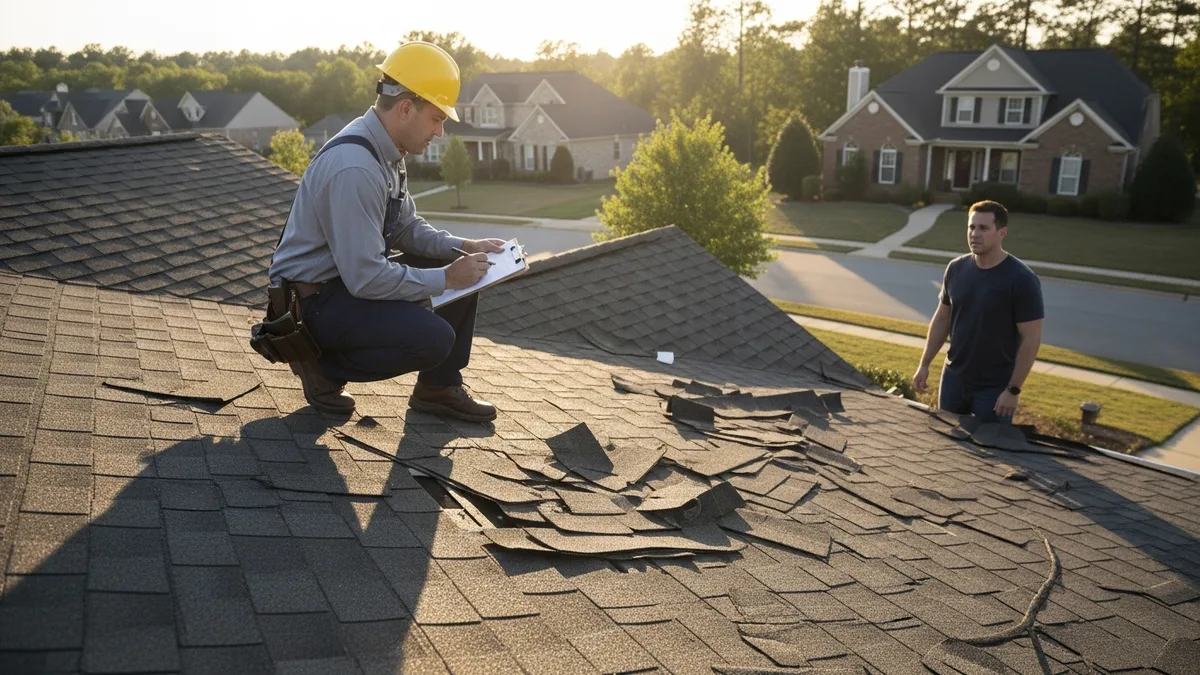
The technical core of the package is a detailed contractor scope of work itemizing every damaged component, prepared on Xactimate or a comparable estimating platform with line-item pricing matched to the local Virginia market. Pair the scope with a weather verification report for the date of loss using the NOAA Storm Events Database (free), Storm Prediction Center reports (free), or a paid CoreLogic Hail Verification ($30 to $80) that confirms hail size, wind speed, and the storm path crossing your address. Round out the file with neighborhood damage photos pulled from community Facebook groups and HOA pages if other homes in the area suffered visible damage from the same storm, a clean timeline of events covering the date of loss through every contact with the carrier, and any prior correspondence including emails and call notes. A good insurance restoration roofing contractor can assemble most of this for you as part of the supplement process at no cost — they have the inspection equipment, the estimating software, and the experience to prepare a denial-rebuttal package the carrier will take seriously.
Step 3: File a Supplement or Internal Appeal
A "supplement" is a written request for the carrier to revise the claim outcome based on additional evidence. It is not a separate legal proceeding — it is a normal part of the claims process and most carriers handle hundreds per month. The supplement letter should open with the original claim number and date of loss, then make a direct reference to the denial letter and the specific cited clause, and state plainly what you are requesting (full reversal, partial supplement for missed scope, re-inspection, or some combination). The body of the package presents the evidence file as numbered exhibits with the contractor's detailed scope of work positioned as the central exhibit, and the closing paragraph should include a specific request for re-inspection with your contractor present along with contact information for both you and the contractor. Brevity in the cover letter and depth in the exhibits is the right shape for this kind of submission.
Send the supplement by certified mail with return receipt and follow up by email and phone. Document every interaction with the carrier in writing — date, time, person spoken to, summary of what was said. Under Virginia regulations, the carrier must respond within 10 business days to acknowledge receipt and within 15 business days with a substantive response after you've provided all requested information.
In our experience, roughly 60–70% of well-documented supplements result in either a full reversal or a meaningful partial recovery. The remaining cases require escalation.
Step 4: Escalate to a Public Adjuster, the SCC, or an Attorney
If the carrier maintains the denial after a documented supplement, you have three escalation paths. They're not mutually exclusive but they have different costs, timelines, and use cases.
Public Adjuster
A Virginia-licensed public adjuster represents the homeowner (not the carrier) and negotiates directly with the insurer. They are licensed and regulated under Virginia Code Title 38.2 Chapter 8.2, with fees capped at 25% of the total claim under Virginia Code §38.2-812.2. In practice, most Virginia public adjusters charge 10–15% of additional recovery on a denied or underpaid claim, paid only if they recover money. This is the most cost-effective escalation for most denied roof claims under $30,000–$40,000.
Virginia State Corporation Commission, Bureau of Insurance
If you believe the carrier is mishandling the claim — failing to respond, misapplying clear policy language, refusing to investigate — you can file a complaint with the Virginia SCC Bureau of Insurance at no cost. Their consumer complaint process is online and typically generates a response from the carrier within 30 days. The SCC cannot adjudicate the merits of your claim, but the complaint creates a regulatory record and often prompts a re-review by the carrier's claims management. Use this when you suspect bad faith handling but don't yet want to engage an attorney.
Attorney (Insurance Bad Faith)
When the denial appears to violate the Virginia Unfair Claims Settlement Practices Act — for example, the carrier ignored documented evidence, failed to investigate, misrepresented policy terms, or refused to pay without reasonable basis — an attorney specializing in insurance bad faith can pursue the carrier for the original claim plus statutory damages, interest, and attorney fees. Most Virginia bad faith attorneys work on contingency at 33–40% of the recovery. This is the right move for higher-value claims (typically $40,000+) or when there's a clear pattern of misconduct, but the timeline is long (12–36 months) and the cost only makes sense at scale.
Cost of Each Appeal Path
Knowing the price tag at each escalation level helps you make a rational decision about how far to push. The numbers below reflect typical Northern Virginia / DMV market rates as of 2026.
| Escalation Path | Cost to Homeowner | Typical Timeline | Best For |
|---|---|---|---|
| Contractor supplement (DIY or contractor-led) | $0 | 2–6 weeks | Most denials and underpayments |
| SCC Bureau of Insurance complaint | $0 | 30–60 days | Suspected bad faith handling |
| Independent engineer report | $650–$1,800 | 2–4 weeks | Causation disputes (storm vs wear) |
| Public adjuster | 10–25% of recovery (contingency) | 2–6 months | Mid-size denied claims, complex scope disputes |
| Appraisal clause invocation | $500–$2,500 (your appraiser fee) | 2–4 months | Disputes over scope or value, not coverage |
| Bad faith litigation (attorney) | 33–40% contingency + costs | 12–36 months | Large claims with documented carrier misconduct |
Costs shown reflect typical Northern Virginia market rates as of 2026 and vary by provider, claim complexity, and jurisdiction. Public adjuster fees are statutorily capped at 25% under Virginia Code §38.2-812.2 but most market rates are well below the cap.
The Appraisal Clause: A Powerful Middle Path
Most Virginia homeowner policies contain an appraisal clause that allows either party to invoke a binding appraisal process when the dispute is over the amount of loss (not whether it's covered). Each side selects an independent appraiser; the two appraisers select an umpire; and the three of them issue a binding determination of the loss value.
Appraisal is faster and cheaper than litigation and is well-suited to disputes where coverage is admitted but scope is contested — for example, when the carrier admits storm damage but claims only $4,500 worth, while your contractor's scope is $14,500. Invoke appraisal in writing, citing the clause in your policy. Most policies require a response within 20 days. Your appraiser fee runs $500–$2,500 depending on claim complexity, plus you'll typically split the umpire's fee (a few hundred to $1,500) with the carrier.
Appraisal does not apply to coverage denials — only to value disputes. If the carrier is denying that the damage is covered at all, appraisal is not your remedy and you'll need to pursue supplement, public adjuster, or litigation paths instead.
Real Northern Virginia Denial Scenarios
Three quick scenarios from typical Northern Virginia roof claim denials and how they actually played out:
Scenario A — Lake Ridge, Wear-and-Tear Denial
A 12-year-old architectural shingle roof, hit by a July microburst. Adjuster denied, citing wear and tear. Contractor produced a detailed scope showing 47 wind-creased shingles concentrated on the windward slope (a wind-pattern signature, not a wear pattern), backed by a NOAA wind report showing 65 mph gusts crossing the address at 3:47 PM on the date of loss. Supplement filed with photo evidence and weather report. Reversed in 22 days; full payout of $13,800 minus $1,500 deductible.
Scenario B — Dale City, Below-Deductible Denial
Hail event in May. Adjuster's scope of $1,800 in damage was below the homeowner's $2,500 wind/hail deductible, so the claim was closed with no payout. Contractor re-inspected and found additional hail damage on the rear slope (not visible from the front), 11 cracked pipe boots, and extensive granule loss requiring full replacement of two slopes. Supplemented scope of $9,400 cleared the deductible. Net payout after deductible: $6,900.
Scenario C — Woodbridge, Cosmetic Damage Exclusion
Standing seam metal roof, hit by quarter-sized hail. Carrier denied under a cosmetic damage exclusion endorsement, claiming hail dents on metal panels do not affect functional performance. Homeowner pulled the manufacturer's warranty documentation showing that hail damage of this size voids the panel warranty regardless of "cosmetic" classification. Manufacturer letter included as an exhibit in supplement. Carrier acknowledged loss of warranty as functional impact and agreed to a partial settlement covering panel replacement on the most damaged slope. Not a full reversal but a meaningful recovery from a $0 outcome.
What NOT to Do After a Denial
A few mistakes consistently hurt Virginia homeowners' appeal outcomes, and the worst of them are easy to avoid once you've seen them written down. Don't sign anything labeled "release," "settlement," or "satisfaction" without contractor or attorney review — once signed, you have waived the right to additional recovery on that claim. Don't repair the damage before the appeal is documented unless absolutely necessary for safety; the damage itself is your evidence, and if emergency tarping is required, photograph extensively before and after. Don't argue with the adjuster on the phone without taking notes — every conversation is on the record from your side, so treat it like a deposition and follow up by email summarizing what was discussed.
A second cluster of mistakes involves who you hire and how you communicate. Don't hire a "storm chaser" contractor who showed up unsolicited after the storm — they are gone in 60 days, your claim is open for a year, and any warranty they wrote is worthless once they leave the state. Don't accept the first adjuster scope as the final scope, since adjusters can spend 10 to 20 minutes per home during peak storm response and miss real damage; always have a contractor inspect independently. Don't let the deadline lapse on the policy's notice or supplement window — track every deadline in writing as soon as the dates are known. And don't post about the claim publicly on social media before resolution; carriers monitor public posts and any inconsistency between your social posts and your claim narrative gets used against the claim during review.
When the Denial Stands
Some denials are correct. If your roof failed because of age, if the damage truly is below the deductible after a thorough re-inspection, if you genuinely missed the notice deadline without a defensible reason, or if the cosmetic damage exclusion language is unambiguous and your damage is genuinely cosmetic — accept the outcome and start budgeting for the work out of pocket. Pursuing an unwinnable appeal costs time and money.
For roof replacement out of pocket in Northern Virginia, expect $8,500–$22,000 for a standard asphalt shingle replacement on a 1,800–2,500 sq ft home, with most homes landing between $11,500 and $17,500. Detailed Northern Virginia roof replacement cost breakdowns are available in our cost guide. Financing programs can spread the cost over 60–144 months at competitive rates and are usually faster to close than a contested insurance appeal.
Got a Denial Letter? We'll Look at It For Free.
Woodbridge Roofers handles dozens of supplemented and overturned roof claims every year across Prince William County and Northern Virginia. We'll inspect your roof, review the denial letter against the actual policy language, and tell you honestly whether an appeal is worth pursuing — at no cost to you. Call (571) 570-7930 or book online.
Schedule Free InspectionFrequently Asked Questions
Related Articles
- ACV vs RCV Roof Insurance in Virginia
- Does Homeowners Insurance Cover Roof Replacement in VA?
- How to File a Roof Insurance Claim in Virginia
- Hail Damage Roofing in Northern Virginia
Conclusion
A denied roof insurance claim in Virginia is the start of a process, not the end of one. The carrier's first decision is rarely the final word, and the appeal paths — contractor supplement, SCC complaint, public adjuster, appraisal, attorney — are well-defined and routinely successful when the evidence is solid. The single most important move after a denial is to read the letter carefully, identify the cited reason, and then build a documented evidence file before responding. Most successful appeals start with a contractor's detailed scope of work and end with a supplemented payout that closely matches the original claim.
Don't accept a denial passively, and don't escalate prematurely. The contractor supplement path resolves the majority of cases at no cost, and the higher-cost paths (public adjuster, appraisal, litigation) exist for the cases that truly need them. If you've received a denial on a roof claim in Woodbridge, Dale City, Lake Ridge, Lorton, Manassas, Stafford, Dumfries, or anywhere in Northern Virginia, get a contractor's eyes on it before you accept the outcome.
Call Woodbridge Roofers at (571) 570-7930 or book a free phone consultation. We'll inspect the roof, review the denial against the actual policy language, and give you a straight answer on whether the appeal is worth pursuing — and if it is, we'll prepare the supplement and represent you through the re-inspection.