Metal Roofing vs Asphalt Shingles: Which Is Better for Virginia Homes?
Metal Roofing vs Asphalt Shingles: Which Is Better for Virginia Homes?
Key Takeaways
- Asphalt shingles cost $8,500 to $16,000 installed on a standard Northern Virginia home and last 20 to 25 years, making them the most affordable upfront roofing option
- Standing seam metal costs $16,000 to $24,000 installed and lasts 40 to 60 years, making it the better long-term value for homeowners who plan to stay in their home for 15 or more years
- Metal roofing reduces cooling costs by 10 to 25 percent in Virginia's hot summers due to its reflective surface, partially offsetting the higher initial cost
- HOA restrictions are the most common barrier to metal roofing in Northern Virginia planned communities — check your community's architectural guidelines before committing to metal
- Both materials handle Virginia's climate effectively when properly installed, but the "better" choice depends on your budget, timeline in the home, HOA rules, and aesthetic preferences
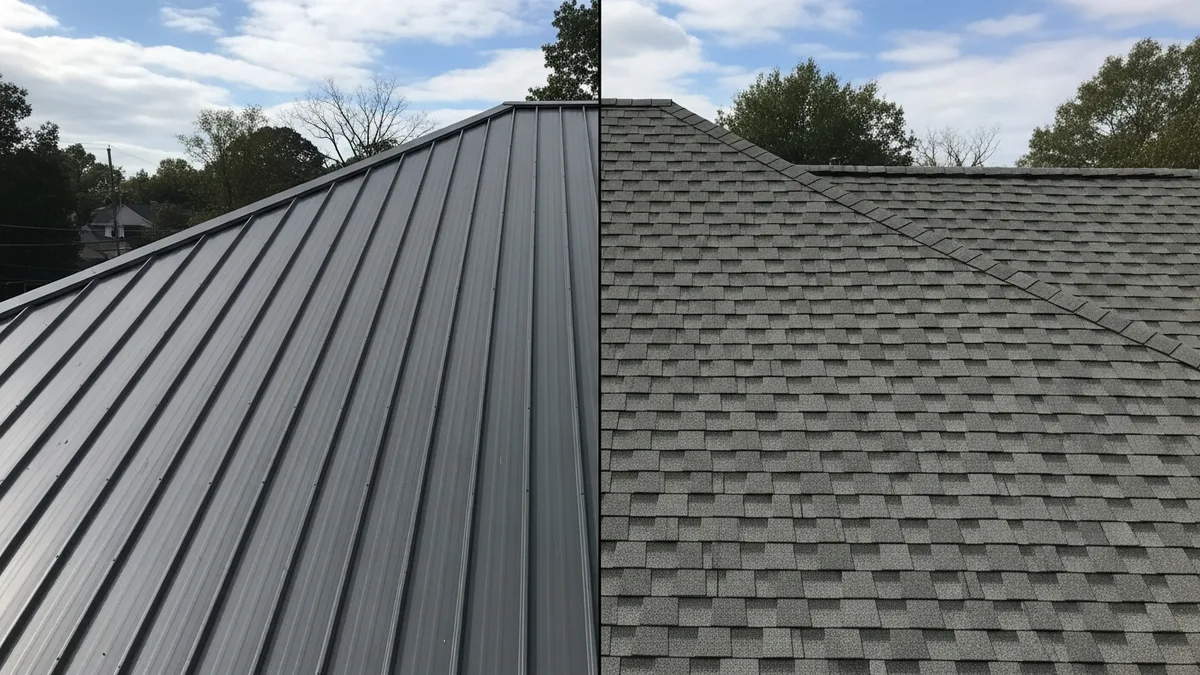
The metal vs asphalt decision is the most common roofing question we hear from Northern Virginia homeowners. Both materials are proven performers in Virginia's climate — the hot, humid summers, freeze-thaw winters, severe thunderstorms, and occasional remnants of tropical systems. Neither is universally "better." The right choice depends on your specific situation: your budget, how long you plan to stay in the home, your HOA's rules, your aesthetic preferences, and your tolerance for the higher upfront cost of a material that eliminates re-roofing for decades.
This guide provides a direct, numbers-based comparison of metal and asphalt roofing for Virginia homes. No vague generalities — specific cost ranges, lifespans, performance metrics, and the practical considerations that should drive your decision. By the end, you'll have the information to choose confidently based on your own priorities, not a contractor's preference for one material over the other.
Cost Comparison: Metal vs Asphalt in Northern Virginia
Cost is where most homeowners start, and it's where the biggest difference between these two materials shows up:
| Cost Category | Asphalt Shingles | Standing Seam Metal |
|---|---|---|
| Installed cost (2,000 sq ft home) | $8,500 - $16,000 | $16,000 - $24,000 |
| Cost per square foot | $4.25 - $8.00 | $8.00 - $14.00 |
| Expected lifespan | 20 - 25 years | 40 - 60 years |
| Cost per year of life | $425 - $640/year | $400 - $480/year |
| Re-roofing needed in 50 years | 2 times | 0 - 1 time |
| 50-year total cost | $25,500 - $48,000 | $16,000 - $24,000 |
Prices shown are typical ranges for Northern Virginia as of 2025 and include material, labor, tear-off, and disposal. Contact us for a free on-site estimate.
The Breakeven Calculation
Here's the math that matters. If asphalt costs $12,000 and metal costs $20,000, the premium for metal is $8,000. If asphalt lasts 22 years and metal lasts 50 years, the asphalt roof will need to be replaced once more in that 50-year window at an inflated cost (assume $15,000 to $18,000 in future dollars). Total asphalt cost over 50 years: $27,000 to $30,000. Total metal cost over 50 years: $20,000. The breakeven point — where metal's higher upfront cost is recovered through avoided re-roofing — falls at approximately 15 to 18 years for most Northern Virginia homes.
The decision rule is straightforward: If you plan to stay in your home for 15 or more years, metal is likely the better financial decision. If you're selling within 10 years, asphalt provides good performance at lower upfront cost. If your timeline is 10 to 15 years, it's a judgment call that depends on your priorities.
Performance in Virginia's Climate
Wind Resistance
Virginia's severe thunderstorms produce wind gusts that regularly exceed 60 mph, with some events reaching 80 to 100 mph. Standing seam metal panels are rated for 140 to 160 mph winds — they are mechanically fastened to the roof structure and cannot be lifted or peeled like individual shingles. Premium asphalt shingles like GAF Timberline HDZ are rated for 130 mph, which provides strong protection but still relies on adhesive seal strips that can fail over time through thermal cycling. In the highest-wind areas of Northern Virginia — open terrain in western Prince William County, elevated ridge lots, and properties near the Potomac — metal has a clear wind-resistance advantage.
Heat and Energy Efficiency
Metal roofing reflects 60 to 70 percent of solar energy compared to 15 to 25 percent for dark asphalt shingles. In Northern Virginia's 90+ degree summer days, this difference translates to attic temperatures 20 to 40 degrees lower under metal than under asphalt. Homeowners report cooling cost reductions of 10 to 25 percent after switching from asphalt to metal. On a home spending $200 to $400 per month on cooling during peak summer, that's $20 to $100 per month in savings — a significant contribution toward offsetting the higher initial investment.
Snow and Ice
Metal's smooth surface sheds snow and ice effectively, which can prevent ice dam formation. However, this snow-shedding can be a liability: snow slides off metal roofs in sheets, potentially damaging gutters, landscaping, or people below. Snow guards (metal brackets that control snow release) should be installed on metal roofs over entryways, walkways, and driveways. Asphalt shingles hold snow in place, which can contribute to ice dam formation but doesn't create the sudden-release hazard. For more on winter roofing issues, see our guide to snow damage in Woodbridge.
Algae and Moss Resistance
Metal roofing naturally resists algae and moss growth because its smooth, non-porous surface doesn't provide the foothold that biological organisms need. Asphalt shingles, with their granular texture, are susceptible to algae colonization — especially on shaded north-facing slopes in Virginia's humid climate. Algae-resistant shingle formulations (with copper or zinc granules) mitigate this for 15 to 25 years, but standard asphalt shingles without this protection will show algae streaking within 5 to 10 years in most Northern Virginia locations.
HOA Restrictions on Metal Roofing
This is the practical barrier that eliminates metal roofing as an option for many Northern Virginia homeowners. Many planned communities — particularly those in Prince William County (Braemar, Victory Lakes, Stonebridge at Potomac Club, Montclair) and Fairfax County — restrict roofing materials to asphalt shingles, with metal requiring special approval or being prohibited outright. Before investing time in comparing materials, check your HOA's architectural guidelines to determine whether metal is even an option. If your HOA restricts metal, focus on choosing the best asphalt shingle product for your conditions and budget. See our HOA roof replacement guide for more on navigating the approval process.
Home Resale Value
Metal roofing typically adds 1 to 6 percent to a home's resale value, according to multiple real estate industry studies. This is partly because the next buyer inherits a roof that won't need replacement for decades, reducing a major future expense. However, the resale premium depends heavily on the local market's familiarity with metal roofing. In communities where metal is common (rural Virginia, historic areas), buyers readily see the value. In suburban HOA communities where every home has asphalt shingles, buyers may not value metal as highly or may have concerns about aesthetics. A quality asphalt shingle installation with a transferable warranty also adds value — a new roof is a selling point regardless of material.
When to Choose Asphalt vs Metal
Choose Asphalt Shingles When:
- Your budget is under $16,000 and you need a new roof now
- You're selling the home within 10 years
- Your HOA prohibits or restricts metal roofing
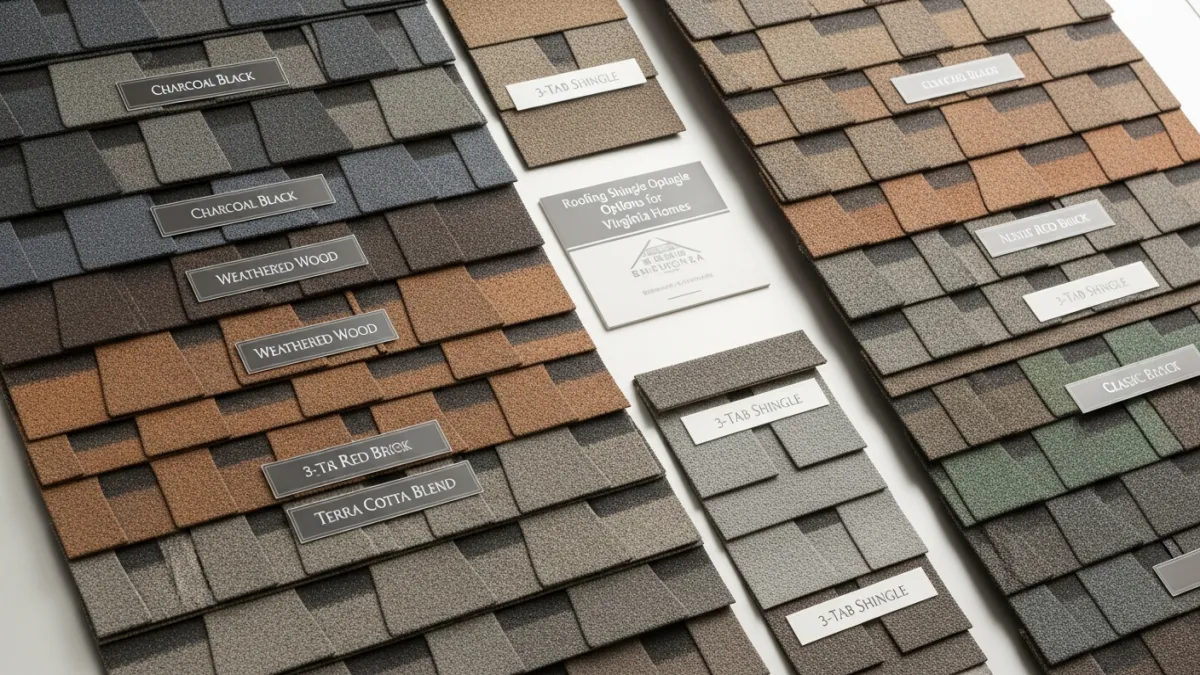
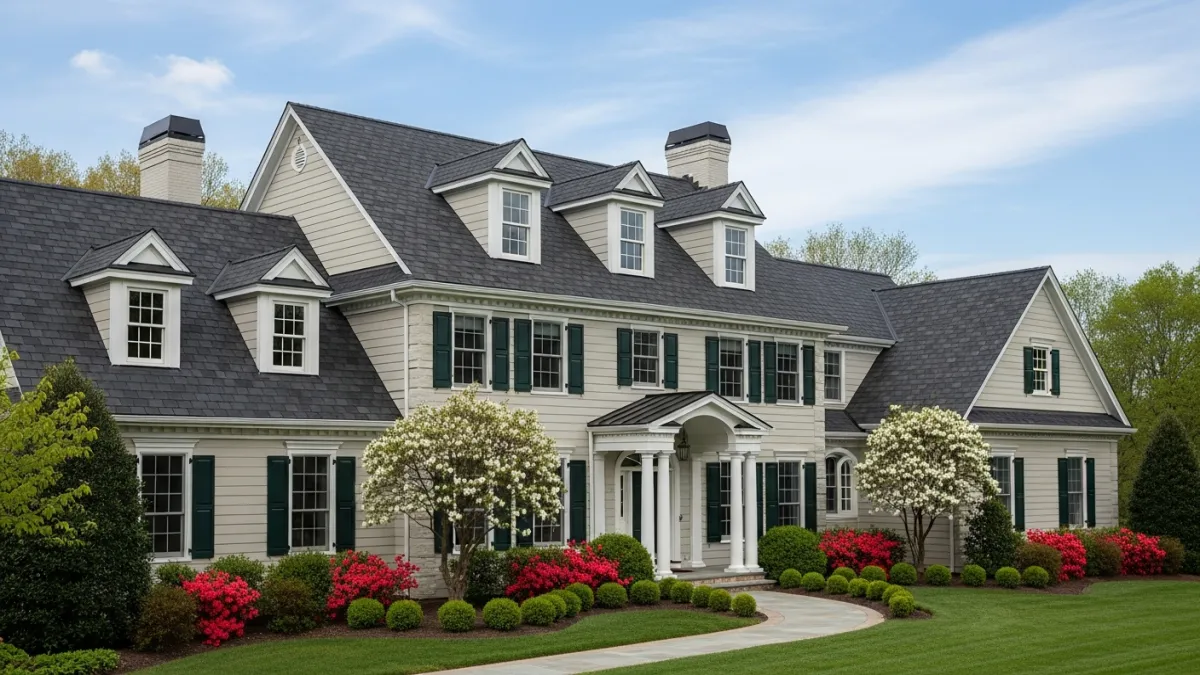
- You prefer the traditional dimensional appearance of architectural shingles
- You want the widest selection of colors and profiles to match your home's style
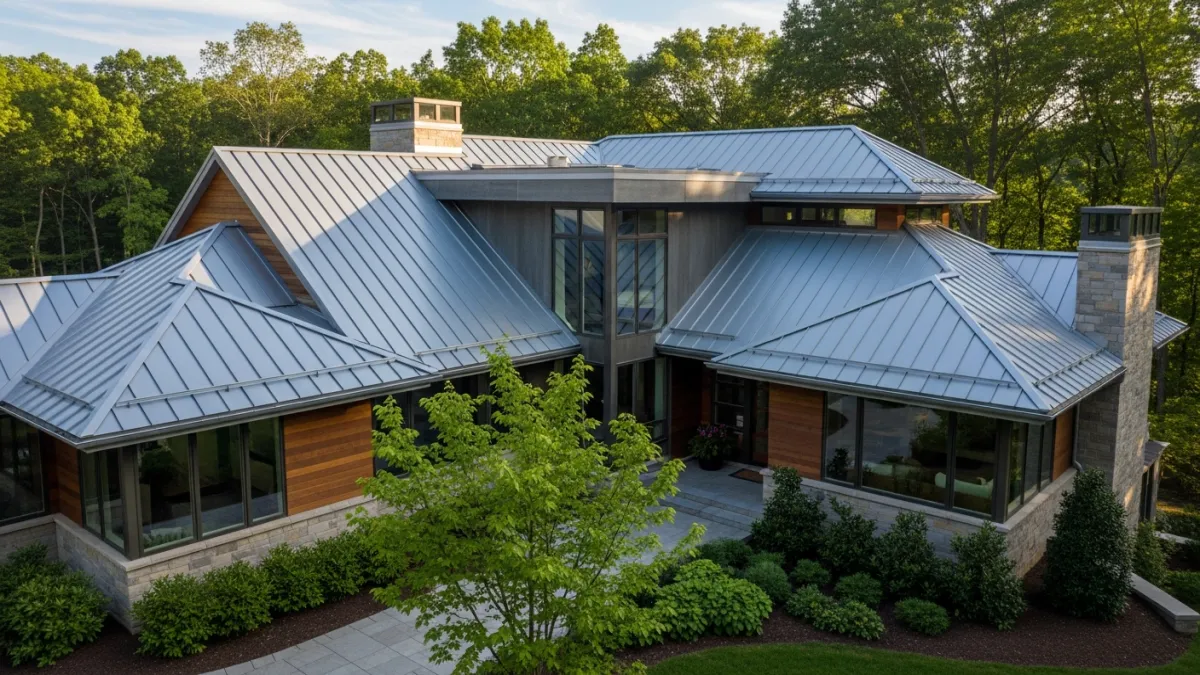
Choose Standing Seam Metal When:
- You plan to stay in the home for 15 or more years
- Your HOA allows metal roofing or you don't have an HOA
- You want to eliminate future re-roofing costs
- Energy efficiency and lower cooling bills are priorities
- Your home is in a high-wind area with above-average storm exposure
- You want zero algae and moss maintenance on the roof
Installation Differences and What to Expect
The installation process differs significantly between metal and asphalt, and understanding these differences helps set realistic expectations for your project timeline and the disruption to your daily routine. A standard asphalt shingle tear-off and re-roof on a typical Northern Virginia home takes one to three days depending on roof complexity, crew size, and weather. The crew arrives early, strips the old shingles, inspects and repairs the decking, installs underlayment with ice-and-water shield per current Virginia code, and lays the new shingles — often completing the entire job in a single day for straightforward roof layouts.
Standing seam metal installation is a more involved process. The panels are typically custom-fabricated on-site or pre-cut to the exact dimensions of each roof slope, which requires precise measurement before the installation day. The installation itself takes three to five days for most homes because each panel must be mechanically fastened and the seams locked together individually. Transitions around chimneys, valleys, and wall penetrations require custom metal fabrication that takes more time than the standard flashing used with asphalt shingles. The noise level during metal installation is also higher than asphalt work, which is worth noting if you work from home or have young children.
Maintenance Requirements Over Time
Long-term maintenance is another area where the two materials diverge. Asphalt shingles require periodic inspection for lifted tabs, granule loss, and flashing deterioration. In Northern Virginia's climate, you should schedule a professional inspection at least once per year and after any significant storm event. Algae treatment or cleaning may be needed every few years on shaded slopes, even with algae-resistant products, once the protective granules begin to wear. For a deeper look at seasonal upkeep, our fall roof maintenance guide covers the essential tasks to keep any roof performing through winter.
Metal roofing requires far less ongoing maintenance. There are no granules to lose, no adhesive strips to fail, and no organic material for algae to colonize. The primary maintenance tasks are checking fastener points and sealant at penetrations every few years and ensuring snow guards remain secure. Over a 40-year metal roof lifespan, the cumulative maintenance cost savings compared to asphalt can add up to $2,000 to $5,000 — another factor that tilts the long-term economics in metal's favor for homeowners who plan to stay in their property.
Conclusion
The metal vs asphalt decision for Virginia homeowners comes down to numbers and timeline. Asphalt costs less upfront but requires replacement every 20 to 25 years. Metal costs more upfront but provides 40 to 60 years of service with lower maintenance and energy costs. If your timeline in the home is 15 years or more and your HOA allows metal, the long-term economics favor metal. If you need an affordable roof now and you're not certain about your long-term plans, quality asphalt shingles provide excellent performance at a lower initial investment.
Call us at (571) 570-7930 or book a free consultation to discuss both options for your Virginia home.