Roofing Contractors in Dumfries, VA
Specialized Roofing Systems
A Town With Its Own Permit Desk
Dumfries is an incorporated town inside Prince William County, and that changes how a roof job starts. The Town has its own building official, its own historic district and its own zoning staff on Main Street. Before you compare roofing bids, find out which rules apply to your address, because a house just outside the town line answers to the county instead.
Woodbridge Roofers handles residential and commercial roofing for Dumfries addresses: repairs, full replacements, new installations and inspections on shingle, metal and low-slope roofs. Townhouses and single-family homes around Main Street, and the shopping centers and offices on the Route 1 corridor, each get a written scope, and every scope of work names the material, the flashing details and anything that needs a permit.
Start with a phone call. The 15-minute phone consultation is the one free step: you describe the leaks, stains or storm damage, we ask the questions that separate a patch from a replacement, and you decide whether an on-site visit makes sense. Call (571) 570-7930, Monday to Saturday, 8 to 5, and have your street address ready so we can place it inside or outside the Town.
Which Office Handles a Dumfries Roof Permit
A roof inside the Town of Dumfries falls under the Town, not the county building office. The Town's fee schedule says a building permit is required under the Uniform Statewide Building Code for construction, repair, alteration and addition on all properties and structures within the Town, and that applications go to the Dumfries Building Official. Town Hall is at 17739 Main Street, Suite 200, and the number for permit questions is 703-221-3400.
The state code treats some roofing as ordinary repair. In the text the Town publishes, replacing any amount of roof covering on a Group R residence is ordinary repair unless the building sits where the design wind speed is above 100 miles per hour, and replacing 100 square feet or less of roof covering is ordinary repair in every use group. Decking has its own limit of 100 square feet, with an exception for decking that forms a fire-rated wall termination. Confirm your roof with the Building Official before work starts.
Old Town and the Certificate of Appropriateness
Dumfries received its charter in 1749, and the Town has designated a historic district overseen by an Architectural Review Board. According to the Town's planning pages, improvements or changes inside the district require a Certificate of Appropriateness, and the Town charges an application fee for one. The district is drawn on the Town's zoning map.
Roof material, color and profile are exactly the kind of exterior change worth raising early. Whether a like-for-like re-roof counts as a change the Board reviews is a question for Town staff, so get the answer in writing before a start date is set. If your parcel is on the map, ask for the design guidelines the Town has adopted and match the shingle or panel to them.
Route 1 Flat Roofs and the 100 Square Foot Line
Commercial buildings follow a stricter line. Under the same adopted text, replacing more than 100 square feet of roof covering on a non-residential building is not ordinary repair, so a re-cover or tear-off on a store, office or garage along Route 1 should be planned as a permitted job. Multi-family buildings can fall into a different use group than a single house, so ask the Building Official how yours is classified.
Low-slope roofs here are usually TPO, EPDM, PVC or coated systems. The recurring trouble spots are ponding near drains, seams around penetrations, and flashing at parapets and rooftop units. An inspection that maps those points gives an owner a repair list in order of urgency before a replacement is ever scoped.
Town Lots, County Neighbors and HOAs
Triangle and Montclair sit outside the Town limits in unincorporated Prince William County, so a relative a mile away may deal with the county's Building Development Division at 703-792-6930 while you deal with the Town. The county also tells homeowners to check with their homeowners association, because covenants can require approval for roofing work. The Town keeps a Homeowner Associations page for residents, and a written request with the shingle name and a color sample is the cleanest way to get a yes. If a replacement needs to be spread out, roof financing is explained on its own page.
WHAT WE DO IN DUMFRIES
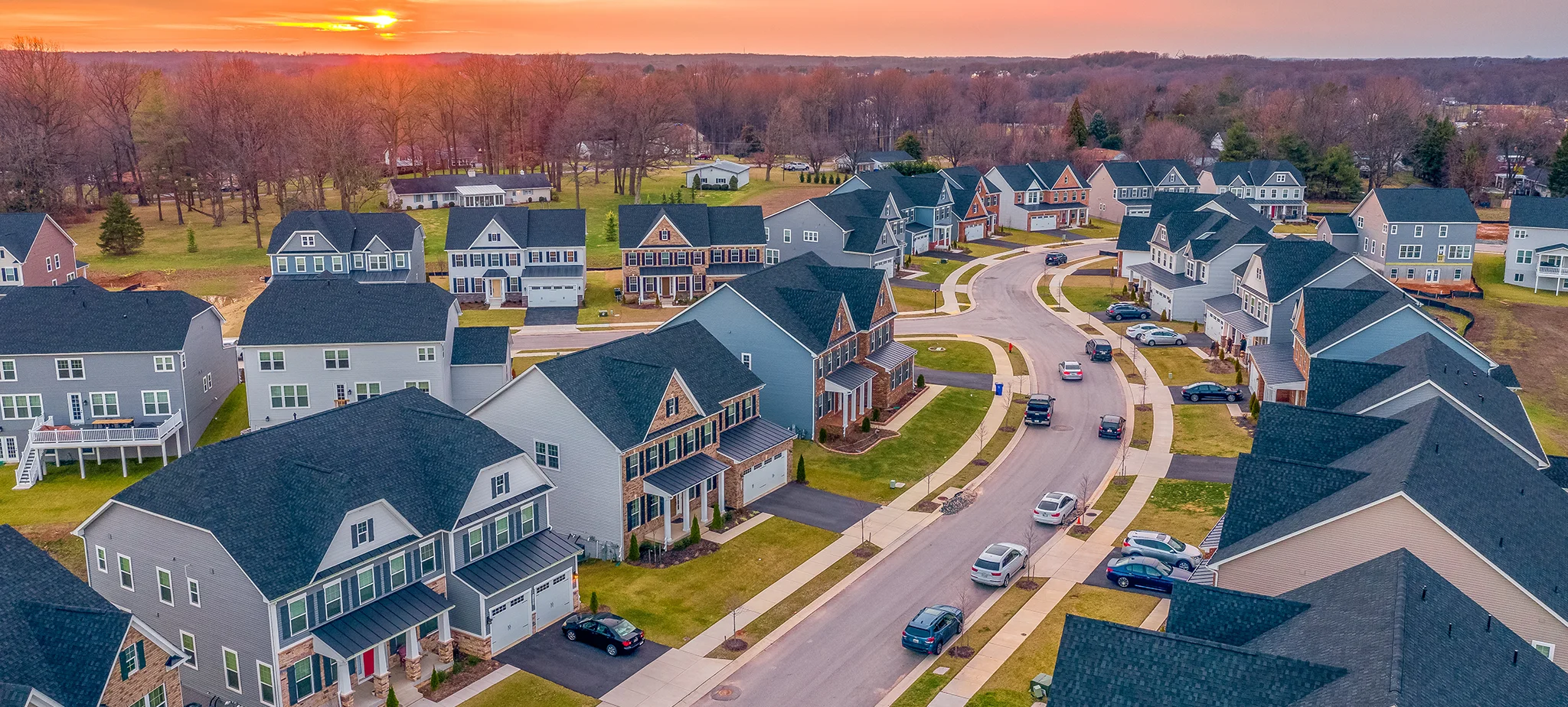
INSTALLATION
New roof installation in Dumfries covers shingle, metal and low-slope systems on new construction, additions and tear-offs. The plan lists the deck repairs, underlayment, flashing at walls and chimneys, ventilation and drip edge before work begins. For a house near Old Town, the material and color are checked against the Town's historic district rules first.

REPAIR
Repairs start by finding where water actually enters, which is often several feet from the stain on the ceiling. Typical Dumfries calls involve lifted or missing shingles, failed flashing at chimneys and walls, cracked pipe boots, and seam or drain problems on flat roofs. Each repair is described in plain terms so you can compare it with a replacement.

REPLACEMENT
A full replacement is worth considering when leaks keep returning, the deck is soft, or large areas of the covering have failed. Dumfries owners should confirm permit status with the Town first, using the Building Official's number, 703-221-3400. The sequence of tear-off, deck check, underlayment and finish is laid out in our roof replacement process guide.

INSPECTION
An inspection covers the roof surface, flashing, penetrations, gutters, attic ventilation and visible decking from the attic side. Findings are listed with photographs and an order of priority, so repairs can be sequenced. The same record helps when you need to document roof conditions for a claim after wind, hail or a fallen limb.