Wind Damage Roof Repair in Northern Virginia: Assessment and Restoration
Wind Damage Roof Repair in Northern Virginia: Assessment and Restoration
Key Takeaways
- Northern Virginia thunderstorms routinely produce wind gusts of 60 to 80 mph, which is sufficient to lift, crack, and remove asphalt shingles on residential homes
- Wind damage is often uneven across a roof — the windward side and edges experience the most stress, while sheltered slopes may show no damage at all
- Not all wind damage is immediately visible from the ground — creased shingles, broken seal strips, and bruised underlayment may only be detectable by a professional roof-level inspection
- Virginia homeowner insurance policies typically cover wind damage with a standard deductible, but you must document and report damage promptly
- Wind damage repair costs range from $350 for isolated shingle replacement to $8,000 or more for extensive damage requiring partial or full re-roofing
Northern Virginia sits in one of the most active severe thunderstorm corridors on the East Coast. From May through September, supercell thunderstorms, derecho-type wind events, and the remnants of tropical systems regularly push wind speeds above the 60 mph threshold that begins causing damage to residential roofs. The June 2012 derecho, the September 2018 remnants of Tropical Storm Michael, and multiple severe thunderstorm events each year demonstrate that wind damage to roofs is not an exceptional occurrence in this area — it's a recurring reality that Northern Virginia homeowners should understand and prepare for.
This guide covers how wind damages different types of roofing, how to assess your roof after a wind event, the insurance claim process specific to Virginia, repair options and costs, and how to choose a contractor for wind damage restoration.
How Wind Damages Residential Roofs
The Mechanics of Wind Uplift
Wind doesn't push shingles off your roof — it lifts them. As wind flows over a roof surface, it creates an area of lower air pressure above the shingle compared to the trapped air pressure underneath. This pressure differential creates uplift force that pulls the shingle away from the roof deck. The force is greatest at the roof's edges (eaves, rakes, and ridges) and on the windward slopes facing into the storm. This is why damage patterns after a wind event are typically concentrated on specific areas of the roof rather than evenly distributed.
The shingle's primary defense against uplift is the adhesive seal strip — a thermoplastic adhesive applied during manufacturing that bonds each shingle tab to the one below. When this seal is strong (on newer shingles in warm weather), it can resist 110 to 130 mph winds on premium products. When the seal has degraded through age, thermal cycling, or previous wind events, much lower wind speeds can lift the tabs.
Types of Wind Damage
- Lifted tabs (broken seal): The shingle tab is lifted and the seal strip is broken, but the shingle remains attached. The shingle may or may not re-seal when temperatures warm. Lifted tabs allow water intrusion during subsequent wind-driven rain
- Creased shingles: The shingle was lifted and folded back, creating a permanent crease in the material. Creased shingles won't lay flat again and are structurally compromised
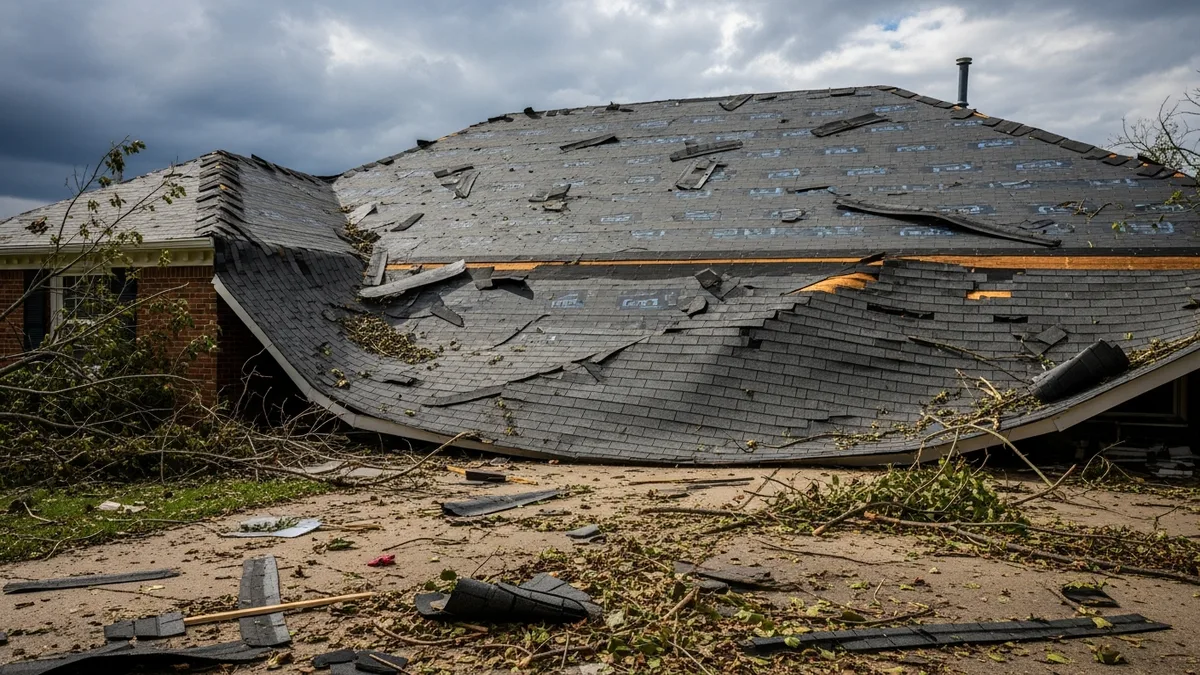
- Missing shingles: Complete removal of shingle pieces, exposing the underlayment or deck below. The most visually obvious form of wind damage
- Displaced flashing: Wind can shift or loosen flashing at chimney, wall, and valley transitions, creating gaps that allow water penetration
- Debris impact: Tree branches, neighbor's shingles, and other airborne debris can puncture, dent, or displace roofing materials
Assessing Wind Damage After a Storm
Ground-Level Assessment (Homeowner)
After any storm with wind gusts exceeding 50 mph, walk around your home and look for visible missing shingles or exposed underlayment, shingle pieces in the yard or on neighboring properties, damaged or displaced gutters, debris on the roof surface, new dents or cracks in siding near the roof line, and any new water stains on interior ceilings or walls. Document everything with photos and video from multiple angles. Note the date and time of the storm, as this information is needed for insurance claims.
Professional Roof-Level Inspection
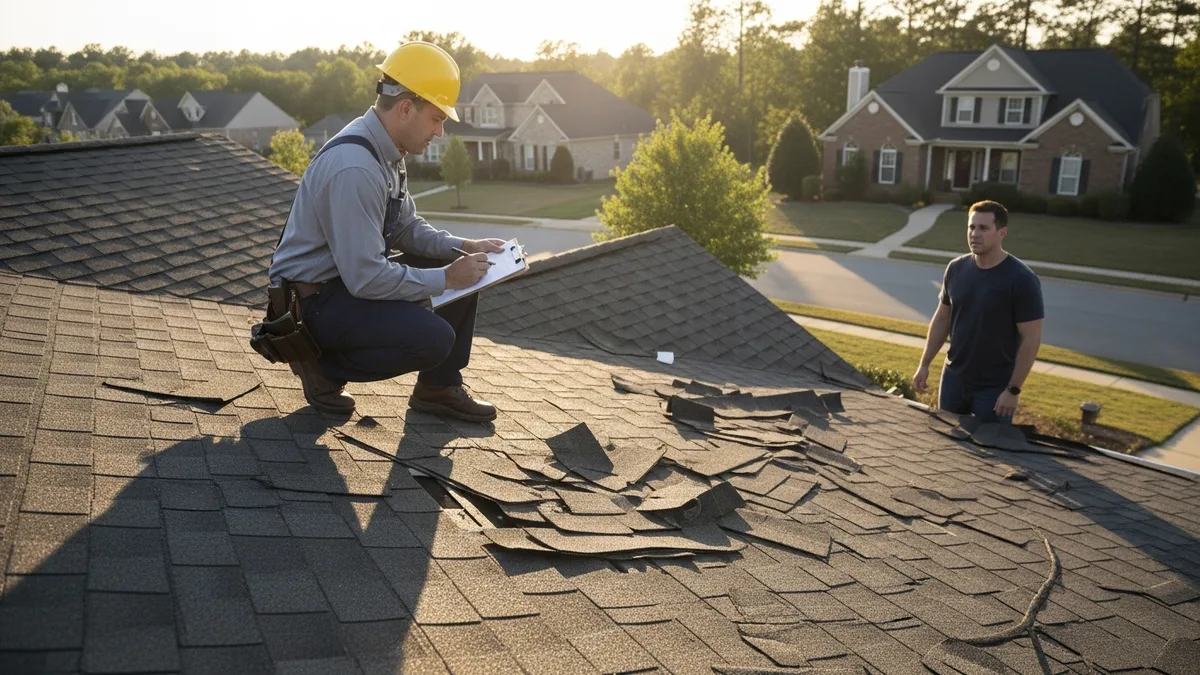
Many forms of wind damage are not visible from the ground. A professional roof-level inspection identifies lifted tabs where the seal strip has broken but the shingle is still in place, creased shingles that won't lay flat, displaced flashing that has shifted but not separated, bruised or torn underlayment exposed by lifted shingles, and compromised pipe boots or vent caps. We offer free storm damage inspections throughout Northern Virginia. Schedule a professional assessment after any significant wind event, even if you don't see obvious damage from the ground.
Filing a Wind Damage Insurance Claim in Virginia
Virginia homeowner insurance policies generally cover wind damage under the dwelling coverage (Coverage A) section of your policy. Here's the process for filing a successful claim:
- Document immediately: Photos and video of all damage, interior and exterior. The sooner you document, the more clearly the damage can be attributed to the specific storm event
- Mitigate further damage: Your policy requires you to take reasonable steps to prevent additional damage. This may include emergency tarping of exposed areas, which your contractor can handle
- File the claim promptly: Contact your insurance company within 24 to 48 hours of the storm. Delayed claims may face additional scrutiny
- Request a contractor be present: When the adjuster schedules the property inspection, have your roofing contractor present. A knowledgeable contractor identifies damage the adjuster might miss and ensures the full scope is captured in the initial assessment
- Review the adjuster's assessment: The initial assessment may not capture everything. If your contractor identifies damage not included in the adjuster's report, a supplement can be filed to add the missing items
- Understand your deductible: Most Virginia homeowner policies have a standard deductible (typically $1,000 to $2,500) for wind damage claims. Some policies have a separate wind/hail deductible that may be percentage-based
For a complete guide to the insurance claim process, see our article on how to file a roof insurance claim in Virginia.
Cost of Wind Damage Repair in Northern Virginia
| Repair Scope | Low End | High End | Notes |
|---|---|---|---|
| Replace a few missing shingles | $200 | $600 | Minor localized damage |
| One slope re-shingle | $1,500 | $4,000 | Concentrated wind damage |
| Multiple slope repair | $3,000 | $8,000 | Often meets replacement threshold |
| Emergency tarping | $200 | $500 | Temporary storm protection |
| Full replacement (storm totaled) | $8,500 | $18,000 | Insurance typically covers |
Choosing a Contractor for Wind Damage Repair
- Local and licensed: Verify Virginia DPOR license and local business presence. Avoid storm chasers — out-of-state contractors who follow storms and may not be around for warranty service
- Insurance experience: Choose a contractor who regularly handles insurance claims, can be present during the adjuster's inspection, and knows how to file supplements when needed
- Do not sign an Assignment of Benefits (AOB): An AOB transfers your insurance rights to the contractor. This limits your control over the claim and is rarely in the homeowner's best interest
- No upfront payment for insurance work: On a legitimate insurance claim, the contractor performs the work and is paid from the insurance proceeds. A contractor who demands full payment before work begins on an insurance job is a red flag
- Manufacturer certification: Certified contractors (GAF Master Elite, Owens Corning Preferred) provide access to stronger warranty protection on the repair materials
Preventing Wind Damage
- Install high-wind-rated shingles: Products rated for 110 to 130 mph wind resistance (like GAF Timberline HDZ at 130 mph) provide significantly better protection than standard products
- Use enhanced nailing patterns: Six nails per shingle instead of four increases wind resistance by 20 to 30 percent. This is especially important in western Prince William County and on exposed lots
- Maintain tree canopy: Trim dead wood and keep branches at least six feet from the roof to reduce both abrasion and impact damage during storms
- Address minor damage promptly: A few lifted tabs after a storm don't look like an emergency, but they weaken the entire system and lead to progressive failure in subsequent events
- Consider impact-resistant shingles: Class 4 products resist both wind and hail damage, and may qualify for insurance premium discounts
Long-Term Effects of Unrepaired Wind Damage
One of the most common mistakes homeowners make after a wind event is underestimating the consequences of leaving minor damage unaddressed. A few lifted shingle tabs or a small area of displaced flashing may not look urgent, but these compromised areas create entry points for water that cause progressive damage over the following weeks and months. Water intrusion through broken seal strips saturates the underlayment and can reach the roof deck, where it promotes wood rot that weakens the structural substrate. In Northern Virginia's humid climate, mold colonization can begin within 48 to 72 hours of sustained moisture exposure in enclosed spaces like attic cavities.
The financial impact escalates quickly. A repair that would have cost $300 to $600 immediately after the storm can grow into a $2,000 to $5,000 problem if water penetrates the decking and requires sheathing replacement, insulation removal, and mold remediation. We regularly see this pattern in communities throughout Prince William County — homeowners who delayed a seemingly minor repair after one storm end up with interior ceiling damage and structural issues by the time the next storm hits weeks later.
Cumulative Wind Damage and Insurance Implications
Insurance adjusters distinguish between damage from a single identifiable storm event and cumulative deterioration from neglected maintenance. If you delay filing a claim and the damage worsens through subsequent storms or normal weather exposure, the insurer may attribute the additional deterioration to lack of maintenance rather than the original storm event. This distinction can significantly reduce your claim payout or result in a denial. Documenting damage immediately after each wind event — even if you choose to monitor rather than repair right away — preserves your ability to file a successful claim. Keep dated photos, note the specific storm date and reported wind speeds from local weather data, and have your contractor provide a written assessment that connects the observed damage to the weather event.
Conclusion
Wind damage to Northern Virginia roofs is a recurring reality that homeowners should be prepared to handle quickly and effectively. Document damage immediately, file insurance claims promptly, and choose a local licensed contractor with insurance claim experience. Address minor damage before it becomes major — a few lifted tabs today become missing shingles and active leaks in the next storm. And when your roof is due for replacement, invest in high-wind-rated products that provide meaningful protection against Northern Virginia's severe weather.
Call us at (571) 570-7930 for storm damage assessment, or book a consultation for wind damage repair in Northern Virginia.