3-Tab vs Architectural Shingles in Virginia: Why Almost No One Should Still Choose 3-Tab
3-Tab vs Architectural Shingles in Virginia: Why Almost No One Should Still Choose 3-Tab
Key Takeaways
- Architectural shingles last 25–30 years in Northern Virginia vs 18–22 years for 3-tab — and carry better wind warranties (110–130 mph vs 60–70 mph)
- The cost difference is only 10–18% for a full NoVA roof replacement, making architectural the better value on a per-year basis
- Architectural shingles add 4–7% to home resale value compared to 3-tab on otherwise identical homes
- 3-tab shingles are increasingly called out as a negative on home inspection reports in Northern Virginia's $400K–$900K market
- The only scenarios where 3-tab still makes sense: low-budget rentals, detached sheds and garages, or HOA-mandated styles
For decades the default residential asphalt shingle in Virginia was the 3-tab — a single-layer flat-profile shingle with three cutouts (tabs) per piece that gave a uniform repeating pattern across the roof. Starting in the early 2000s, architectural (dimensional, laminate) shingles took over the residential market and now account for over 90% of new and replacement residential installs in Northern Virginia. The remaining 3-tab market is mostly investment property flips, detached structures, and a small number of HOA-mandated retains. This guide explains why the shift happened, what the real performance and cost differences look like in 2026 for Northern Virginia homeowners, and the narrow set of cases where 3-tab still makes sense.
The short answer: architectural shingles cost only modestly more than 3-tab, last 5–10 years longer, hold up dramatically better in NoVA wind events, and add measurable value at resale. For a primary residence in 2026, choosing 3-tab is almost always the wrong call.
What Each Shingle Actually Is
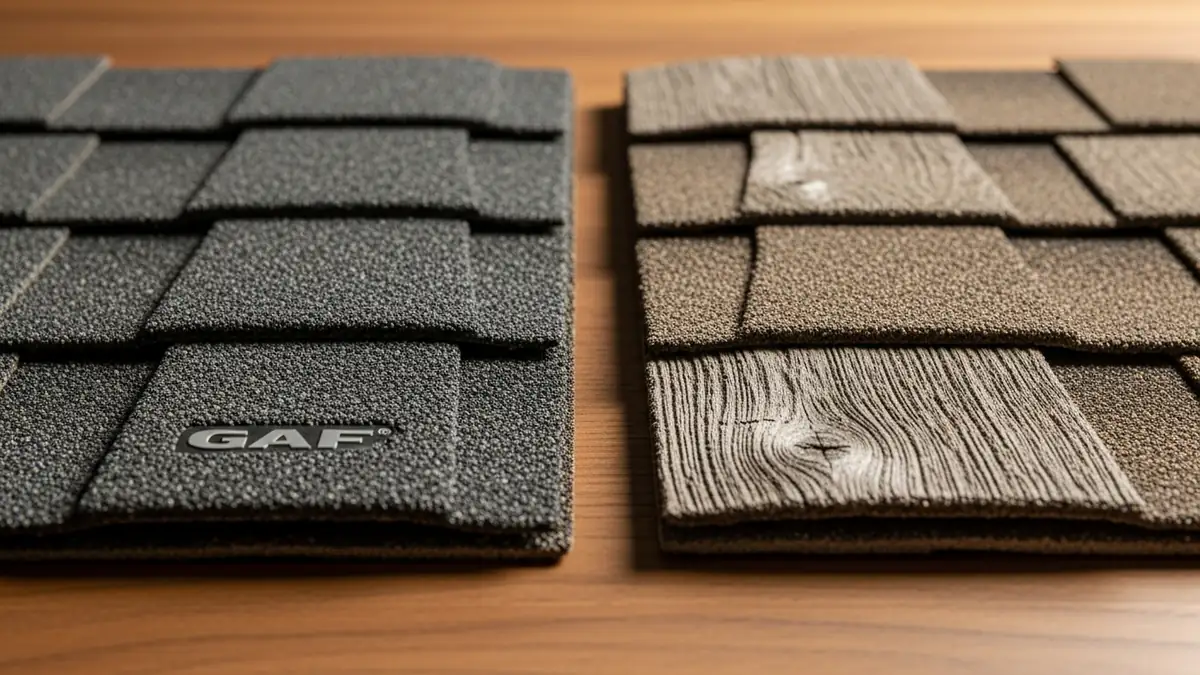
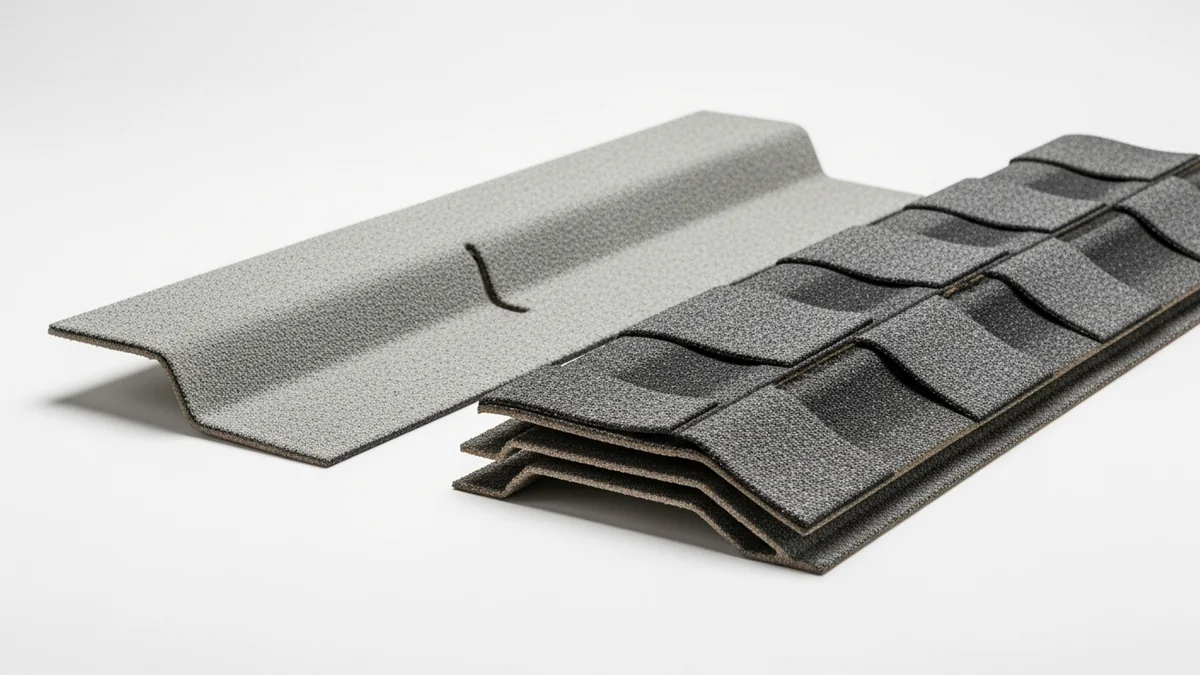
3-Tab Shingles. A single layer of asphalt-saturated fiberglass mat coated with mineral granules, cut into a strip with three uniform tabs separated by two cutouts. Weight approximately 200–240 pounds per square (the industry term for 100 square feet of roof coverage). Lays flat with a uniform repeating pattern. The original mass-market residential asphalt shingle, dating to the early 20th century in essentially current form. Manufacturers: GAF Royal Sovereign, Owens Corning Supreme, CertainTeed XT 25, IKO Marathon, Tamko Elite Glass-Seal.
Architectural Shingles. Two or more layers of asphalt-saturated mat laminated together with random tab patterns to create a thicker, dimensional appearance that visually approximates wood shake or slate roofing. Weight approximately 240–480 pounds per square depending on product line. Originally developed in the 1980s as a premium product, but became the residential default by the mid-2000s as production volume drove prices down. Manufacturers: GAF Timberline HDZ (the dominant U.S. architectural shingle), Owens Corning Duration / TruDefinition, CertainTeed Landmark, IKO Cambridge / Dynasty, Tamko Heritage.
Side-by-Side Comparison
| Attribute | 3-Tab | Architectural |
|---|---|---|
| Service life in NoVA climate | 18–22 years | 25–30 years |
| Wind warranty | 60–70 mph | 110–130 mph |
| Weight per square | 200–240 lb | 240–480 lb |
| Manufacturer warranty | 20–25 year limited | 30 year to lifetime |
| Algae resistance | Available, less common | Standard on most lines |
| Class 4 IR availability | No | Yes (multiple lines) |
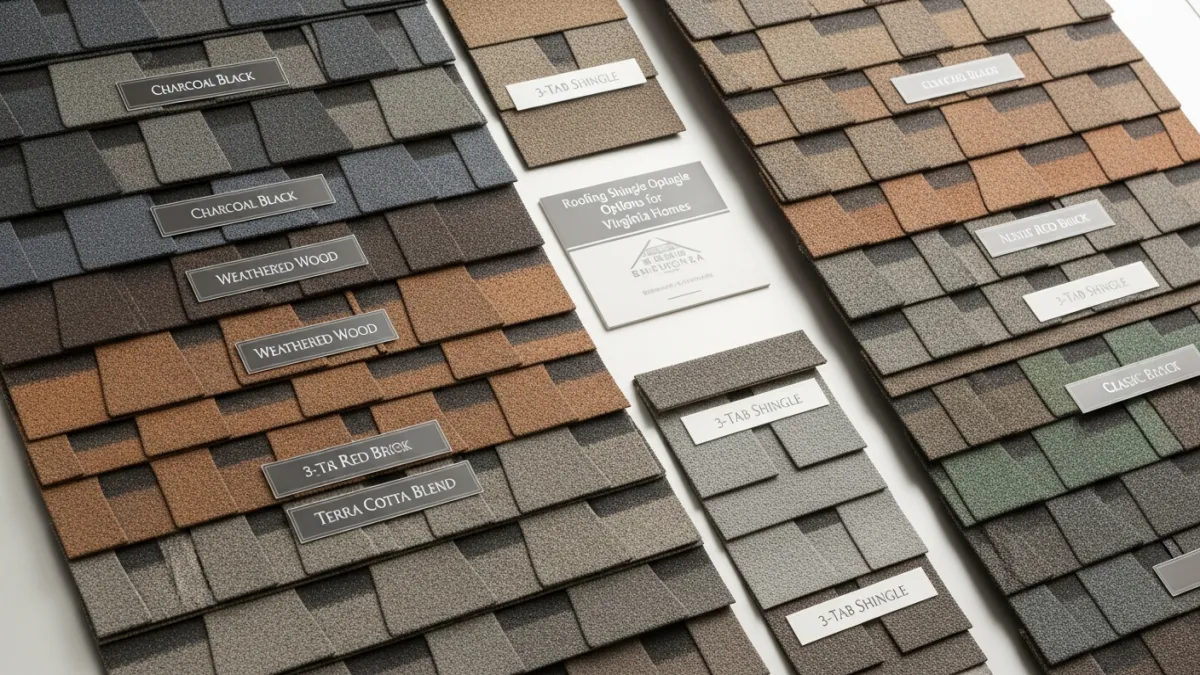
| Color and style options | 8–14 colors | 20–40 colors and blends |
| Resale value impact (NoVA) | Often a negative call-out | +4–7% over comparable 3-tab |
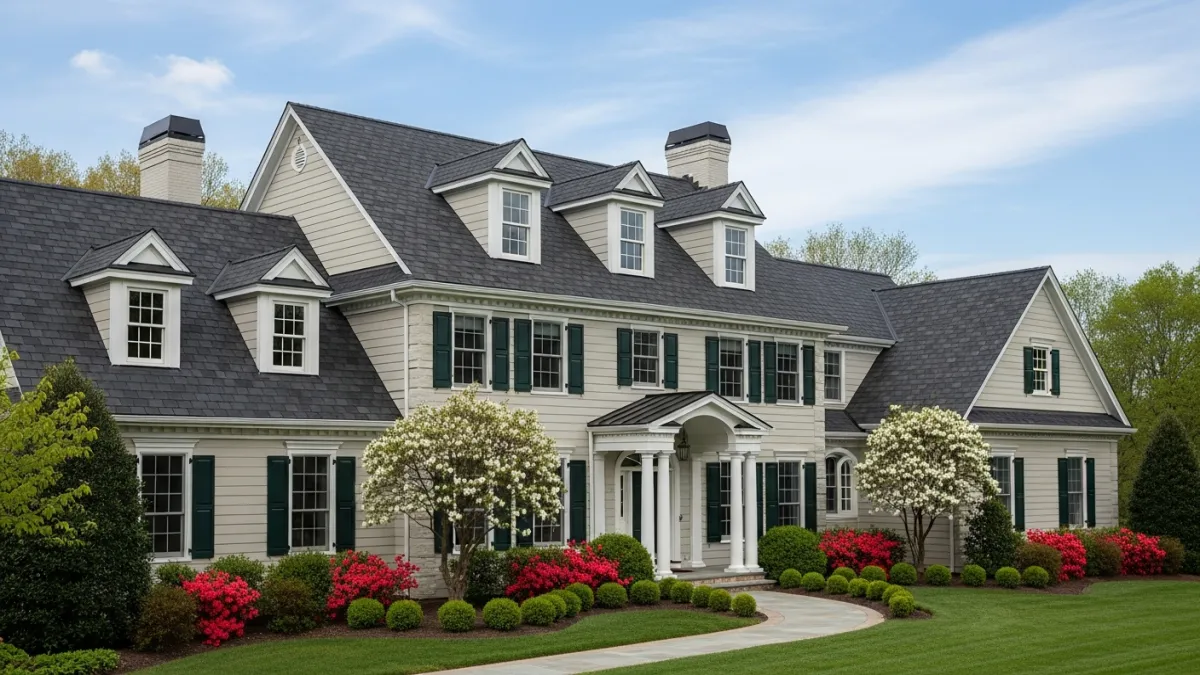
| Curb appeal | Flat, repeating pattern | Dimensional shake or slate look |
| Solar-ready compatibility | Not recommended | Standard (Class 4 preferred) |
Northern Virginia Cost Comparison
| Home Size (typical NoVA) | 3-Tab Installed | Architectural Installed | Premium |
|---|---|---|---|
| 1,400 sq ft townhome | $6,200–$8,400 | $7,400–$10,800 | $1,200–$2,400 |
| 1,800 sq ft single-family | $8,400–$11,500 | $10,200–$14,800 | $1,800–$3,300 |
| 2,200 sq ft single-family | $9,200–$12,800 | $11,500–$16,800 | $2,300–$4,000 |
| 2,800 sq ft single-family | $11,800–$15,200 | $14,500–$20,800 | $2,700–$5,600 |
| Cost per year (2,200 sq ft) | ~$545/year (20-yr life) | ~$460/year (28-yr life) | Architectural cheaper per year |
Costs are typical 2026 ranges for Woodbridge, Manassas, Lake Ridge, Dale City, and surrounding Northern Virginia communities. See our full cost guide for what drives variation within these ranges.
Why the NoVA Wind Rating Matters
Northern Virginia experiences a meaningful number of wind events that exceed the rated capacity of 3-tab shingles in any given decade. Routine summer thunderstorms produce gusts in the 45–60 mph range several times each season, and severe thunderstorm warnings often push that into the 60–75 mph band. The June 2012 derecho was the headline event — many NoVA locations measured 80 mph sustained winds, with microbursts well over 90 mph — but the more important pattern is the steady drumbeat of smaller storms that arrive every few years. Hurricane remnants such as Sandy, Florence, and Ida have all produced 50–70 mph sustained winds across the DMV, and winter nor'easters reliably deliver 40–60 mph gusts. None of these are once-in-a-lifetime events.
3-tab shingles rated to 60–70 mph routinely lose tabs in any of these events. Once a tab blows off, the underlying tar seal is broken on adjacent shingles, and the roof becomes susceptible to progressive damage in subsequent storms — a pattern documented in detail in our wind damage repair guide. Architectural shingles rated to 110–130 mph easily handle every wind event NoVA sees in a typical decade, which is one of the strongest practical arguments against installing 3-tab in 2026. Homeowners who have already weathered storm losses should also review our storm damage response guide and our insurance claim walkthrough before deciding what to install next.
Resale and Inspection Implications
In Northern Virginia's current residential market, architectural shingles are the buyer expectation for any home above approximately $350,000, and a 3-tab roof on such a home generates several friction points during resale. Buyer's agents in Woodbridge, Lake Ridge, Manassas, and Fairfax routinely flag a 3-tab roof as a negative the moment their clients walk the curb — even a relatively new 3-tab roof is read as a "cheap" finish, and that perception is hard to walk back during the offer conversation. The friction continues into the inspection. Most home inspectors note shingle type in the report and often add commentary about expected remaining life; a 3-tab roof with five or more years of wear is routinely written up as "approaching end of life," even when it realistically has another 8–12 years left.
The numbers compound during the appraisal stage as well. Comparable-home appraisals adjust for roof type and generally penalize 3-tab versus architectural by roughly 4–7% of home value, which on a typical NoVA single-family home is a five-figure swing. A surprising number of buyers will then layer on a request for a roof-replacement credit at closing — sometimes regardless of the roof's actual condition — because the listing photo and the inspection note give them the leverage to ask. Finally, HOA architectural standards increasingly play a role: communities such as Westridge, Stonebridge at Potomac Town Center, and several Lake Ridge and Cardinal Forest sub-communities now prohibit 3-tab on replacement, requiring architectural going forward. Sellers planning to list a NoVA home in the next five years should treat an aging 3-tab roof as one of the higher-impact items to address before listing, and buyers should factor a 3-tab roof into their offer with the expectation that they'll replace it with architectural within the first decade of ownership.
When 3-Tab Still Makes Sense (Rare)
Despite the broader case against 3-tab, there are narrow scenarios where it remains a defensible choice. The most common is a tight-budget investment property flip where the goal is minimum capital outlay before resale and the property sits in a starter-home price tier — there 3-tab can still save $1,500–$3,500 versus architectural, although NoVA's price tiers have moved enough since 2015 that this argument has weakened considerably. Detached structures such as sheds, freestanding garages, and gazebos are another reasonable use case; appearance and long-term warranty matter less, and 3-tab is genuinely fine. A small number of older NoVA neighborhoods — typically 1970s and 1980s communities with original architectural standards — still specify 3-tab as part of the period look, which is rare but does happen. Rental properties where the landlord directly controls the maintenance budget can sometimes pencil out, although even there the per-year cost analysis usually favors architectural across the holding period. The last legitimate case is matching an existing roof on a historic home where 3-tab is part of the period-appropriate aesthetic — uncommon in NoVA, but occasionally relevant for older Occoquan, downtown Manassas, or Fredericksburg-area homes covered in our historic home roofing guide. Outside these scenarios, architectural shingles are the standard choice for any Northern Virginia primary residence in 2026.
If You're Going Architectural, Which Line?
The dominant architectural shingle lines in Northern Virginia each carve out a slightly different position. GAF Timberline HDZ is the most-installed architectural shingle in both the U.S. and Northern Virginia, combining LayerLock technology, StainGuard Plus algae resistance, and a 130 mph wind warranty when installed correctly. It is widely available through GAF Master Elite contractors who can extend coverage with the Golden Pledge warranty — which our GAF contractor guide explains in more depth. Owens Corning TruDefinition Duration is the most common second choice across NoVA, leaning on SureNail strip technology for high pull-resistance and vibrant color blends, and matching GAF's 130 mph wind rating under proper installation. CertainTeed Landmark, with its NailTrak nailing zone and dual-layer construction, has strong distribution across the region and remains a solid pick when buyers want extensive color options without paying GAF or OC premiums.
In the value tier, IKO Cambridge and Dynasty deliver legitimate architectural performance at a lower price point, which makes them a sensible budget alternative when GAF or Owens Corning pricing is out of range. At the premium end of the architectural category, lines such as GAF Timberline AS II, Owens Corning Duration FLEX, and CertainTeed NorthGate ClimateFlex add impact resistance and extended service life — worth considering if your home has a hail history, if you plan to add solar later, or if you simply want the longest possible service window. For a deeper head-to-head, see GAF Timberline vs Owens Corning Duration, our best shingles for Virginia overview, and the Class 4 impact-resistant shingle breakdown if hail or insurance discounts are part of your decision.
How NoVA's Climate Punishes Cheap Shingles
Northern Virginia is one of the more punishing residential roofing climates in the mid-Atlantic, and that environment is what ultimately drives the long-term economics against 3-tab. Summer attic temperatures in Woodbridge, Manassas, and Lake Ridge regularly push 130–150°F by mid-July, which accelerates the loss of volatile oils from the asphalt mat. Thinner 3-tab shingles begin to show that aging — granule loss, edge curling, and mat brittleness — within 10–12 years on most south- and west-facing slopes, while a properly ventilated architectural shingle holds its mat condition meaningfully longer. The reason is mass: more asphalt and a thicker mat simply have more thermal capacity and more material to lose before the shingle starts to fail visibly. Our humid-climate shingle guide walks through the same dynamic in more detail.
Winter is the second half of the squeeze. NoVA averages 30 to 50 freeze-thaw cycles each winter, depending on the neighborhood and elevation, and every cycle works micro-cracks deeper into the asphalt mat. A 3-tab shingle, with its single-layer construction, has nowhere to absorb that movement and tends to shed granules at the cut edges within a decade. Ice damming along eaves — covered in detail in our ice dam guide — adds another stressor: standing meltwater backs up under shingle tabs, and 3-tab's lower seal-strength means more lifted tabs and more leak paths. Architectural shingles, with their thicker mat and laminated layers, ride these cycles far better. Combine wind, heat, freeze-thaw, and ice damming and the practical service-life delta between 3-tab and architectural in NoVA is closer to 10 years than the 5-year gap shown on most national averages — and that delta is exactly why the per-year cost math works in architectural's favor on this side of the country.
Insurance, Financing, and Total Cost of Ownership
The sticker-price gap between 3-tab and architectural is the headline number most homeowners focus on, but it ignores three soft costs that almost always favor architectural in NoVA. The first is insurance. Several mid-Atlantic carriers — particularly those writing in storm-exposed sections of Prince William and Fairfax County — quietly weight 3-tab roofs into higher hail and wind risk tiers, even before any claim is filed. After a wind or hail claim, that weighting turns into a measurable premium increase or, more commonly now, a non-renewal. Our homeowners insurance and roof replacement explainer and claim denial guide walk through how carriers in Virginia handle older 3-tab roofs and what to do if you receive a non-renewal notice tied to roof age or shingle type.
The second soft cost is financing. Lenders writing roof-specific financing in Northern Virginia generally treat architectural shingles as the standard-collateral product and 3-tab as the budget-tier exception, and that distinction shows up in approval terms. Architectural projects close more cleanly with the longer-term, lower-rate offers profiled in our NoVA roof financing guide; 3-tab projects are more often pushed to shorter terms or higher-rate consumer credit. The third soft cost is the resale and appraisal swing already covered above. Stack the insurance impact, the financing impact, and the resale haircut on top of the simple per-year cost-of-ownership math, and the case for architectural becomes overwhelming. The only honest argument left for 3-tab in 2026 is "I need the lowest possible upfront number and I am leaving this house in under five years" — and even that is a thinner argument than it used to be, given the storm exposure and HOA pressure NoVA homeowners now face.
Ready to Upgrade From 3-Tab? Get a Free Architectural Shingle Quote.
Woodbridge Roofers replaces aging 3-tab roofs with premium architectural shingles every week throughout Prince William, Fairfax, and Loudoun Counties. Free in-home consultation, transparent pricing, financing available, and access to GAF and Owens Corning warranty programs. Call (571) 570-7930.
Schedule In-Home ConsultationFrequently Asked Questions
Related Articles
- Best Roofing Shingles for Virginia
- GAF vs Owens Corning Shingles in Virginia
- Roof Replacement Cost in Northern Virginia
- Class 4 Impact-Resistant Shingles in Virginia
Conclusion
The case for architectural shingles over 3-tab in Northern Virginia is overwhelming for almost every primary residence: longer service life, dramatically better wind performance against NoVA storms, better warranties, dramatically better curb appeal, and measurable resale premium for a cost difference of only 10–18%. On a per-year basis, architectural is actually cheaper than 3-tab once service life is factored in.
3-tab still has a small role for very tight-budget rental properties, detached structures, and a handful of HOA-mandated styles. For everyone else in NoVA, architectural is the right answer in 2026.
Call Woodbridge Roofers at (571) 570-7930 or book a free in-home consultation to compare architectural shingle options on your specific home and get a transparent installed quote.